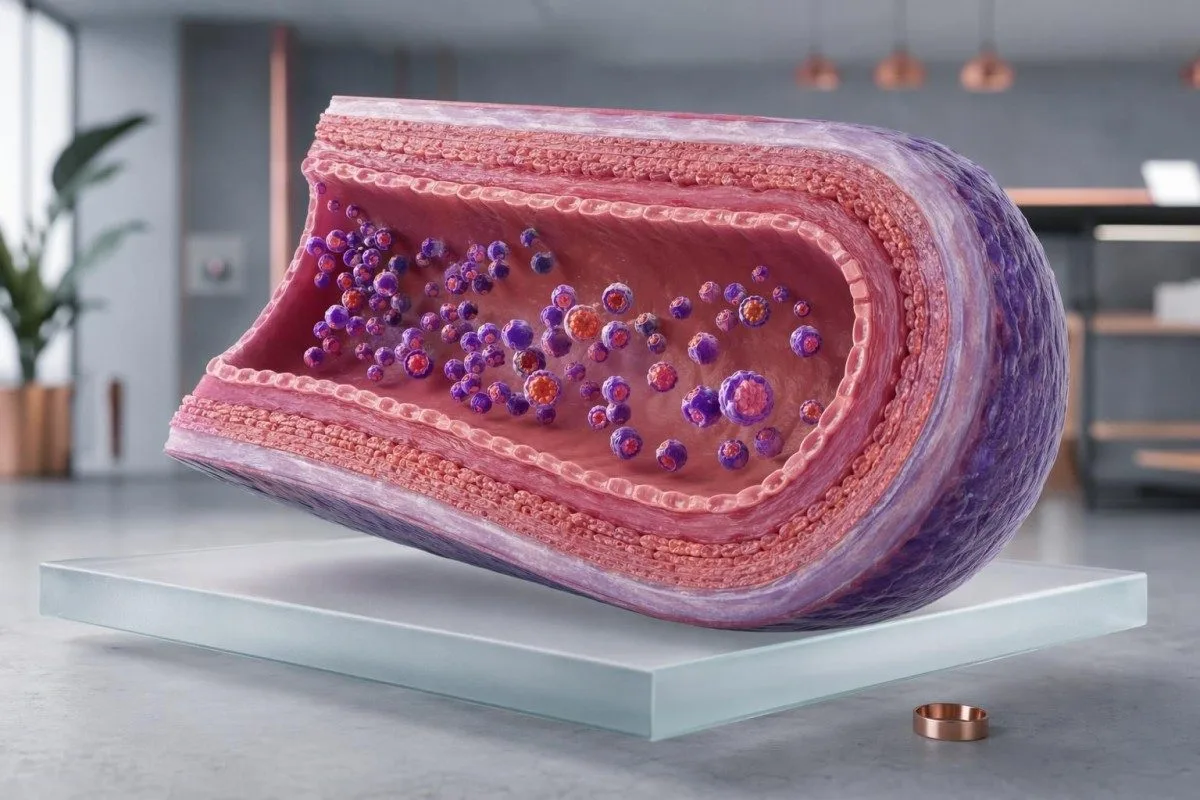
Bidh tomhas àbhaisteach de cholesterol LDL a’ tomhas na tha de cholesterol a’ siubhal taobh a-staigh mìrean LDL. Tha tuairmse air àireamh nam mìrean a’ sealltainn cia mheud “carbad” atherogenic a tha air an rathad — agus faodaidh an diofar sin a bhith cudromach.


- Àireamh nam mìrean LDL a’ tuairmseachadh an àireamh de mhìrean LDL san fhuil, mar as trice air aithris mar LDL-P ann an nmol/L; thathar gu tric a’ meas gu bheil luachan fo 1000 nmol/L nas lugha de chunnart.
- Faodaidh LDL-C coimhead àbhaisteach nuair a tha mìrean LDL beag agus pailt, gu h-àraidh le strì an aghaidh insulin, triglycerides àrd, HDL ìosal, no àrdachadh cuideim bhoilg.
- Pròifil lipid NMR ’s e an deuchainn cumanta a bhios ag aithris LDL-P, tomhasan de LDL-P beag, tomhasan de mhìrean HDL, agus uaireannan sgòr airson strì an aghaidh insulin.
- Tha ApoB na chàirdeas dlùth ri àireamh nam mìrean LDL oir tha aon phròtain ApoB aig gach mìrean LDL, VLDL, IDL, agus Lp(a).
- Tha neo-chòrdalachd cudromach nuair a tha LDL-C fo 100 mg/dL ach LDL-P os cionn 1300 nmol/L, no nuair a tha ApoB nas àirde na bha dùil airson LDL-C.
- deuchainn adhartach air ìomhaigh lipid as fheumaile do dhaoine le tinneas an t-siùcair, syndrome metabolach, tinneas cridhe teaghlaich tràth, Lp(a) àrd, galar dubhaig leantainneach, no calcium coronach nach eil air a mhìneachadh.
- triglycerides os cionn 150 mg/dL agus HDL-C fo 40 mg/dL ann an fir no fo 50 mg/dL ann am boireannaich gu tric a’ comharrachadh LDL le dìth cholesterol agus beairteas ann am mìrean.
- bidh targaidean làimhseachaidh ag atharrachadh: bidh stiùiridhean na SA a’ cleachdadh ApoB gu h-àraidh mar fhactar a tha a’ neartachadh cunnart, agus bidh stiùiridhean Eòrpach a’ toirt seachad amasan ApoB leithid fo 65 mg/dL do dh’euslaintich le fìor chunnart.
- Ath-dheuchainn mar as trice as fheàrr an dèidh 8-12 seachdainean de dhaithead, cungaidh-leigheis, cuideam, agus inbhe tìoroide seasmhach; faodaidh LDL-P gluasad gu mòr an dèidh tinneas no call cuideim mòr.
- Kantesti AI urrainn dha mìneachadh LDL-P còmhla ri LDL-C, ApoB, triglycerides, HbA1c, hs-CRP, comharran dubhaig, einnseanan grùthan, agus pàtrain cunnart teaghlaich ann an timcheall air 60 diog.
Carson a dh’fhaodas LDL-C àbhaisteach cunnart nam mìrean a fhalach fhathast
Àireamh nam mìrean LDL urrainn dha cunnart atherosclerosis a nochdadh nuair a tha LDL-C a’ coimhead àbhaisteach, oir tha na h-artairean fosgailte do mhìrean, chan ann dìreach do chuideam cholesterol. Mar 1 Cèitean 2026, bhiodh mi a’ faighneachd mu dheuchainn lipid adhartach nuair nach eil LDL-C agus an cunnart iomlan a’ freagairt: tinneas an t-siùcair, triglycerides àrd, HDL ìosal, tinneas cridhe teaghlaich tràth, Lp(a) àrd, no calcium coronach ged a tha LDL-C iomchaidh.
is e LDL-C an cargu cholesterol taobh a-staigh mìrean LDL, agus tha àireamh mhìrean LDL a’ cunntadh an àireamh tuairmseach de charbadan LDL a tha a’ giùlan a’ chargu sin. Faodaidh dithis a bhith le LDL-C de 95 mg/dL le chèile, ach dh’fhaodadh aon 850 mìrean LDL gach co-ionann microliter a ghiùlan agus am fear eile 1600 nmol/L le NMR, oir tha nas lugha de cholesterol anns gach mìrean.
Chì mi am pàtran seo gu tric anns an anailis againn air deuchainnean fala 2M+: triglycerides 180 mg/dL, HDL-C 38 mg/dL, HbA1c 5.8%, agus tha an aithisg LDL-C ag ràdh faisg air àbhaisteach. Nuair a bhios na comharran sin a’ cruinneachadh, Kantesti AI bidh iad a’ comharrachadh mì-chòrdadh a dh’fhaodadh a bhith ann eadar LDL-C agus mìrean seach a bhith a’ làimhseachadh an àireamh LDL-C mar rud a tha a’ toirt fois.
Tha stiùireadh cholesterol 2018 AHA/ACC ag aithneachadh ApoB mar fhactar a tha a’ neartachadh cunnart, gu h-àraidh nuair a tha triglycerides 200 mg/dL no nas àirde (Grundy et al., 2019). ’S e sin an adhbhar practaigeach gum faod euslaintich le raon LDL àbhaisteach fhathast raon LDL idhidh còmhradh lipid nas doimhne a bhith aca.
Dòigh shìmplidh air a mhìneachadh do dh’euslaintich: tha LDL-C a’ tomhas meud trafaig cholesterol, ach tha àireamh mhìrean LDL a’ tomhas cia mheud càr a bhios a’ bualadh air loidhne na h-artaire. Mar as motha chàraichean, ’s ann as motha na cothroman airson gleidheadh, oxidation, freagairt dìon, agus cruthachadh plac.
Na tha àireamh nam mìrean LDL dha-rìribh a’ tomhas
Àireamh nam mìrean LDL a’ tomhas cia mheud mìrean LDL a tha a’ cuairteachadh san phlasma, mar as trice air aithris mar LDL-P ann an nmol/L. Chan eil LDL-P co-ionann ri LDL-C, agus bidh e gu tric a’ freagairt nas dlùithe ri ApoB na ri luachan cholesterol àbhaisteach.
Tha aon phròtain ApoB-100 air gach mìrean LDL air a phasgadh timcheall air cridhe lipid, agus mar sin ApoB bidh e gu tric air a chleachdadh mar shàr-chomharra practaigeach airson àireamh mhìrean atherogenic. Tha ApoB a’ gabhail a-steach LDL, IDL, fuigheall VLDL, agus Lp(a), agus tha LDL-P a’ cuimseachadh gu sònraichte air mìrean LDL a thèid a thomhas le dòighean meud-mhìrean.
Anns a’ chlinig, bidh mi mar as trice a’ mìneachadh ApoB mar an cunntas nas fharsainge agus LDL-P mar an cunntas sònraichte airson LDL. Ma tha ApoB aig euslainteach de 115 mg/dL le LDL-C de 92 mg/dL, chan eil mi ag ràdh gu bheil sin cunnart àbhaisteach; bidh mi a’ coimhead airson strì an aghaidh insulin, cholesterol fuigheall, mì-ghnìomh tìoroide, galar dubhaig, no Lp(a) àrd.
An Deuchainn fala ApoB mar as trice nas fhasa òrdachadh na LDL-P ann am mòran dhùthchannan, agus tha taic làidir stiùiridh aige. Faodaidh LDL-P luach a bharrachd a chur ris fhathast nuair a tha obair-lann mu thràth a’ tabhann pròifil lipid NMR no nuair a tha meud LDL agus LDL beag-P gu clinigeach buntainneach.
Dh’innis Otvos agus co-obraichean anns an Journal of Clinical Lipidology, nuair a bha LDL-C agus LDL-P neo-chunbhalach, gun robh cunnart cardiovascular a’ leantainn nas dlùithe ri LDL-P na ri LDL-C ann an dàta co-bhuidhne ioma-chinnidh (Otvos et al., 2011). Tha an lorg sin a’ freagairt ri m’ eòlas làitheil: is ann far a bheil an neo-chunbhalachd a tha am fiosrachadh feumail.
Mar a bhios pròifil lipid NMR ag aithris LDL-P
An Pròifil lipid NMR a’ toirt cunntas air àireamh gràinean LDL le bhith a’ cleachdadh comharran niùclasach magnetach bho ghràineanan lipoprotein. Mar as trice bidh anns a’ mhòr-chuid de dh’aithisgean LDL-P iomlan, LDL-P beag, meud LDL, tomhasan gràinean HDL, triglycerides, agus LDL-C air a thomhas.
Chan eil deuchainn NMR a’ cunntadh gràineanan aon ri aon mar neamhnaidean fo mhiocroscop. Bidh e a’ lorg comharran sònraichte bho bhuidhnean methyl air gràineanan lipid, agus an uair sin a’ cleachdadh algairimichean dearbhte gus dùmhlachd nan gràinean a mheas ann an nmol/L.
Faodaidh aithisg àbhaisteach LDL-P fo 1000 nmol/L a sheòrsachadh mar ìosal, 1000-1299 nmol/L mar meadhanach, 1300-1599 nmol/L mar chrìochnaichte àrd, 1600-2000 nmol/L mar àrd, agus os cionn 2000 nmol/L mar glè àrd. Tha na roinnean sin nan comharran cunnart, chan e breithneachadh fèin-ghluasadach.
Nuair a bhios mi a’ dèanamh ath-sgrùdadh air pannal lipid adhartach, bidh mi a’ toirt aire do bheil meud LDL beag, meadhanach, no mòr dìreach an dèidh dhomh a bhith air sgrùdadh a dhèanamh air an luchd ghràinean iomlan. Chan eil LDL beag gun chron, ach ’s e an àireamh glè àrd de ghràineanan sam bith a tha a’ brosnachadh atherosclerosis an prìomh chùis.
Is e an rud, chan eil àrd-ùrlaran NMR agus raointean iomraidh co-ionann thar obair-lannan. Bidh cuid de dh’ obair-lannan Eòrpach buailteach a bhith a’ gluasad gu aithris ApoB, agus tha mòran de dh’ obair-lannan speisealta anns na SA a’ tabhann LDL-P; bu chòir do dh’ euslaintich gluasadan a choimeas taobh a-staigh an aon obair-lann cho tric ’s a ghabhas.
Raointean iomraidh agus gearraidhean neo-chòrdalachd a tha cudromach
Thathar gu tric a’ beachdachadh air LDL-P fo 1000 nmol/L mar àireamh gràinean le cunnart nas ìsle, agus mar as trice tha LDL-P os cionn 1600 nmol/L a’ moladh barrachd luchd ghràinean a tha a’ brosnachadh atherosclerosis. Tha neo-chunbhalachd cudromach gu clinigeach nuair a tha LDL-C iomchaidh ach tha LDL-P, ApoB, no non-HDL-C fhathast àrd.
Thathar gu tric a’ gairm LDL-C fo 100 mg/dL mar “near optimal” do dh’inbhich le cunnart cuibheasach, ach faodaidh an leubail sin a bhith a’ mealladh euslainteach le LDL-P de 1700 nmol/L. Ann an staid far a bheil gràineanan pailt, tha nas lugha de cholesterol aig gach gràinnean LDL, agus mar sin tha LDL-C a’ fo-mheas an àireamh de ghràineanan a tha a’ coimhead ris na h-artairean.
Bidh triglycerides a’ cuideachadh le bhith a’ nochdadh a’ mhì-mheas. Bidh ìre triglyceride os cionn 150 mg/dL gu tric a’ comharrachadh cus VLDL agus gràineanan LDL nas lugha, le nas lugha de cholesterol, agus is ann air sgàth sin a chuireas mi an raon triglyceride an coimeas, seach a bhith ga leughadh leis fhèin.
’S e pàtran practaigeach de neo-chunbhalachd a th’ ann LDL-C fo 100 mg/dL le ApoB os cionn 90 mg/dL ann an euslainteach le cunnart meadhanach, no ApoB os cionn 80 mg/dL ann an euslainteach le cunnart àrd. Feumaidh euslaintich le cunnart glè àrd, leithid an fheadhainn le galar coronach aithnichte, targaidean eadhon nas ìsle co-cheangailte ri gràineanan gu tric.
Am pàtran metabolach a tha a’ stiùireadh àrdachadh LDL-P
Bidh LDL-P àrd le LDL-C àbhaisteach gu tric a’ nochdadh ann an strì an aghaidh insulin, syndrome metabolach, tinneas an t-siùcair seòrsa 2, fiseòlas grùthan geir, agus suidheachaidhean le triglycerides àrd. Mar as trice tha am pàtran triglycerides àrd, HDL-C ìosal, LDL-C a tha coltach àbhaisteach, agus àireamh ghràinean gu h-obann àrd.
Dh’fhaodadh gum bi neach-gnìomh 48-bliadhna le LDL-C de 101 mg/dL a’ faireachdainn faochadh gus an seall am pannal eile triglycerides de 212 mg/dL, HDL-C de 36 mg/dL, insulin luath de 18 µIU/mL, agus LDL-P de 1780 nmol/L. Chan e duilgheadas cholesterol a-mhàin a tha seo; ’s e duilgheadas “trafaig” metabolach a th’ ann.
Bidh strì an aghaidh insulin a’ meudachadh cinneasachadh VLDL san òr, agus faodaidh iomlaid VLDL-triglyceride gràineanan LDL a dhèanamh nas lugha agus nas pailte. Bidh insulin luath os cionn mu 15 µIU/mL no HOMA-IR os cionn 2.0-2.5 gu tric a’ toirt taic don uidheamachd seo, ged a tha na gearraidhean eadar-dhealaichte a rèir an deuchainn agus an sluagh.
Ma tha seo coltach ris a’ phàtran agad, tha an stiùireadh HOMA-IR fhiach a leughadh mus gabh thu ris gur e freagairt nas làidire le statin a-mhàin a th’ ann. Nam eòlas-sa, bidh cuairt-thomhas na sliasaid, àm cadail, einnseanan an grùin, agus glucose às dèidh biadh gu tric a’ mìneachadh carson a tha LDL-P àrd a dh’aindeoin LDL-C cuibheasach.
Faodaidh HbA1c a bhith air dheireadh air atharrachaidhean nan gràinean. Chunnaic mi LDL-P a’ leasachadh le 300-500 nmol/L às dèidh 12 seachdainean de lùghdachadh ann an gualaisgean ath-leasaichte agus trèanadh strì, fhad ’s nach do ghluais HbA1c ach bho 5.8% gu 5.6%.
Cò bu chòir iarraidh mu dheuchainn lipid adhartach
Bu chòir do dh’ euslaintich faighneachd mu dheidhinn an pannal lipid adhartach nuair nach eil LDL-C àbhaisteach a’ freagairt ri cunnart pearsanta. ’S e na buidhnean as luachmhoire daoine le tinneas cridhe teaghlaich tràth, tinneas an t-siùcair, syndrome metabolach, triglycerides àrd, HDL ìosal, Lp(a) àrd, galar dubhaig leantainneach, no calcium coronaich.
Tha mi nas dualtaiche LDL-P no ApoB a mholadh do dhuine 42-bliadhna le athair a fhuair stent aig 49 na do lùth-chleasaiche 24-bliadhna le LDL-C de 88 mg/dL, triglycerides de 55 mg/dL, HDL-C de 72 mg/dL, agus gun eachdraidh teaghlaich. Tha coltachd mus dèan thu deuchainn cudromach.
Bidh Lp(a) àrd ag atharrachadh a’ chòmhraidh oir bidh gràineanan Lp(a) cuideachd a’ giùlan ApoB agus ’s urrainn dhaibh an t-uallach gràinean atherogenic a thomhasar a thogail. Ma tha Lp(a) agad os cionn 50 mg/dL no os cionn 125 nmol/L, ath-sgrùdaich an stiùireadh cunnart Lp(a) agus faighnich don lighiche agad mar a bheir e buaidh air na targaidean.
Tha deuchainn lipid adhartach cuideachd reusanta nuair a tha calcium artery coronaich os cionn 0 ro aois 45 ann an fir no ro aois 55 ann am boireannaich, eadhon ged a tha LDL-C a’ coimhead àbhaisteach. Mar as trice bidh sgòr CAC de 100 no barrachd a’ toirt orm làimhseachadh a dhèanamh nas cinntiche a thaobh cunnart.
Chan fheum a h-uile duine deuchainn NMR. Ma tha LDL-C 190 mg/dL no nas àirde, tha an toradh fhèin a’ comharrachadh hypercholesterolemia dona; faodaidh feitheamh ri LDL-P mus dèan thu gnìomh dàil a chur air cùram.
Mar a bhios stiùiridhean a’ cleachdadh ApoB an coimeas ri LDL-P
Bidh prìomh stiùiridhean a’ cleachdadh ApoB nas soilleire na LDL-P oir tha ApoB air a choitcheannachadh, tha e ri fhaighinn gu farsaing, agus tha e a’ riochdachadh nan gràinean atherogenic uile. Tha LDL-P fhathast feumail gu clinigeach, ach chan eil e cho tric air a sgrìobhadh a-steach do thargaidean làimhseachaidh.
Tha stiùireadh AHA/ACC a’ liostadh ApoB de 130 mg/dL no nas àirde mar fhactar a tha a’ neartachadh cunnart, gu h-àraidh nuair a tha triglycerides 200 mg/dL no nas àirde (Grundy et al., 2019). Tha an stairsneach ApoB sin a’ freagairt gu garbh ri uallach gràinean àrd, chan ann dìreach ri tomad cholesterol àrd.
Tha stiùireadh dyslipidaemia 2019 ESC/EAS a’ toirt targaidean làimhseachaidh airson ApoB: fo 65 mg/dL do dh’ euslaintich le fìor chunnart, fo 80 mg/dL do dh’ euslaintich le cunnart àrd, agus fo 100 mg/dL do dh’ euslaintich le cunnart meadhanach (Mach et al., 2020). Tha na targaidean sin nas teinne na tha mòran euslaintich an dùil nuair a tha LDL-C a’ coimhead dìreach beagan neo-àbhaisteach.
Bithear a’ cleachdadh targaidean LDL-P gu tric le obair-lannan agus clionaigean lipid, ach chan eil lighichean ag aontachadh gu mionaideach dè cho làidir ’s a bu chòir làimhseachadh a dhèanamh air LDL-P crìochach de 1350 nmol/L ann an neach le cunnart ìosal. ’S e aon de na raointean sin far a bheil co-theacsa nas cudromaiche na an àireamh.
Airson sealladh nas fharsainge air lipids àbhaisteach mus tèid thu gu comharran adhartach, mar as trice bidh mi a’ comharrachadh euslaintich gu ar Bidh comharran fala a tha ag amas air casg a’ tomhas cunnart coronach bliadhnaichean mus tòisich comharraidhean.. Chan eil cholesterol iomlan àbhaisteach a’ cur às do thoradh ApoB àrd no LDL-P àrd.
Mar a leughas Kantesti cunnart nam mìrean san t-suidheachadh
Bidh AI Kantesti a’ mìneachadh àireamh nan gràinean LDL le bhith a’ sgrùdadh a bheil LDL-P a’ freagairt air a’ chòrr den dealbh mheatabolaig, sèididh, dubhaig, tìoroide, grùthan, agus cunnart teaghlaich. Chan eil an àrd-ùrlar againn a’ làimhseachadh luach lipid adhartach singilte mar dhearbhadh.
Nuair a bhios mise, Thomas Klein, MD, a’ dèanamh lèirmheas air toradh LDL-P, bidh mi a’ faighneachd beagan cheistean dìreach: A bheil an t-euslainteach an aghaidh insulin? A bheil triglycerides os cionn 150 mg/dL? A bheil ApoB àrd? A bheil TSH neo-àbhaisteach? A bheil ALT agus GGT a’ comharrachadh fiosaig grùthan geir?
Bidh lìonra neòil Kantesti a’ coimeas LDL-P ri còrr is 15,000 bith-mhàtairean agus dàimhean pàtrain-lab ionnsaichte bho dhàta cruinneil, gun urra. An inbhean dearbhaidh meidigeach mìneachadh mar a bhios lèirmheas clionaigeach, cùisean coimeasachaidh, agus cuingealachaidhean sàbhailteachd a’ cumadh ar loidsig mìneachaidh.
Pàtran feumail: LDL-P de 1650 nmol/L, hs-CRP de 0.4 mg/L, triglycerides de 85 mg/dL, HDL-C de 66 mg/dL, agus ApoB de 82 mg/dL. Chan eil an cothlamadh sin a’ ciallachadh an aon rud ri LDL-P de 1650 nmol/L le hs-CRP de 4.2 mg/L, triglycerides de 240 mg/dL, agus HbA1c de 6.3%.
Do luchd-leughaidh a tha ag iarraidh an ìre dearbhaidh teicnigeach, tha slat-tomhais einnsean AI Kantesti air fhoillseachadh mar mheasadh ro-clàraichte air sgèile-sluaigh le cùisean “hyperdiagnosis trap” aig dàta dearbhaidh clionaigeach. B’ fheàrr leam an ìre sgrùdaidh sin airson mìneachadh deuchainn-lab YMYL.
Dè nì thu ma tha LDL-P àrd ach LDL-C àbhaisteach
Ma tha LDL-P àrd fhad ’s a tha LDL-C àbhaisteach, chan e clisgeadh an ath cheum; ’s e stratamaidachadh cunnart a th’ ann. Dearbhaich an toradh, thoir sùil air ApoB no non-HDL-C, coimhead airson draibhearan mheatabolaig, agus co-dhùin dian an làimhseachaidh a rèir cunnart cardiovascular iomlan.
Tha LDL-P singilte de 1450 nmol/L ann an neach 35 bliadhna a dh’aois le cunnart ìosal na shuidheachadh eadar-dhealaichte bho an aon LDL-P ann an neach 61 bliadhna a dh’aois a tha a’ smocadh le hip-fhulangas agus calcium coronarach. Bidh an àireamh a’ tòiseachadh air a’ chòmhradh; chan eil i ga chrìochnachadh.
Mar as trice tha mi ag iarraidh ApoB, non-HDL-C, triglycerides, HDL-C, HbA1c, glucose luath, TSH, creatinine/eGFR, ALT, agus uaireannan co-mheas albumin-creatinine anns an fhuaim. Ma tha pian broilleach, cuideam le oidhirp, no giorrad analach ùr ann, bu chòir don deasbad obair-lainn stad a chur agus thig measadh clionaigeach èiginneach an toiseach.
Tha roghainnean cungaidh an urra ri roinn cunnart agus breithneachadh an lighiche. Faodaidh statins LDL-C a lùghdachadh le 30-50% aig dian meadhanach gu àrd, ach uaireannan bidh ApoB agus LDL-P fhathast nas àirde na bha dùil, agus is e sin as coireach gu bheil deuchainn leanmhainn cudromach.
Do dhaoine a tha a’ feuchainn ri tuigsinn dè na deuchainnean cairdich a tha dha-rìribh a’ ro-innse tachartasan, an stiùireadh comharra cridhe coimeas lipidean, ApoB, hs-CRP, troponin, BNP, agus comharran glùcois gun a bhith a’ dèanamh tagradh gu bheil iad uile a’ freagairt an aon cheist.
Biomarcadairean atherosclerosis a chuireas crìoch air an dealbh
Bith-mhàtairean atherosclerosis a chuireas co-theacsa ri àireamh nan gràinean LDL a-steach ApoB, non-HDL-C, Lp(a), hs-CRP, HbA1c, insulin luath, co-mheas albumin-creatinine anns an fhuaim, agus calcium artery coronarach. Chan eil deuchainn fala singilte a’ tomhas làn uiread a’ phlaic.
Tha ApoB ag innse dhuinn mu luchd nan gràinean, tha Lp(a) ag innse mu chunnart gràinean oighreachail, tha hs-CRP ag innse mu thòn sèididh, agus tha HbA1c ag innse mu nochdadh glycation. Tha calcium coronarach, nuair a thèid a chleachdadh gu ceart, a’ sealltainn plaic calcified a tha ann mu thràth ann am balla na h-artaire.
Thathar gu tric a’ meas gu bheil hs-CRP fo 1 mg/L a’ ciallachadh cunnart cardiovascular sèididh nas ìsle, 1-3 mg/L cunnart cuibheasach, agus os cionn 3 mg/L cunnart nas àirde mura h-eil galar no leòn an làthair. An coimeas hs-CRP mìneachadh carson nach eil CRP àbhaisteach agus CRP àrd-mhothachail eadar-mhalairteach.
Tha mi faiceallach le comharran sèididh rè tinneas. Chan eil an aon mhìneachadh vascùrach aig euslainteach le LDL-P de 1250 nmol/L agus hs-CRP de 9 mg/L dà latha às dèidh influenza ri cuideigin le hs-CRP de 4 mg/L air trì deuchainnean seasmhach.
Faodaidh co-mheas albumin-creatinine anns an fhuaim os cionn 30 mg/g cuideam microvasgùrach endothelial is dubhaig a chomharrachadh, gu h-àraidh ann an tinneas an t-siùcair no hip-fhulangas. Anns an t-suidheachadh sin, dh’fhaodadh LDL-P beagan àrd barrachd cuideam practaigeach a ghiùlan na bhiodh e ann an lùth-chleasaiche seasmhachd fallain eile.
Atharrachaidhean dòigh-beatha a dh’fhaodas cuideam nam mìrean a lùghdachadh
Faodaidh dòigh-beatha àireamh nan gràinean LDL a lùghdachadh nuair a tha an draibhear an aghaidh insulin, triglycerides àrd, geir visceral cus, no fallaineachd ìosal. Mar as trice thig na gluasadan gràinean as motha bho chall cuideim de 5-10%, carbs ath-leasaichte nas ìsle, snàithleach solubhail nas àirde, agus trèanadh cunbhalach an aghaidh strì còmhla ri trèanadh aerobic.
Faodaidh snàithleach solubhail timcheall air 5-10 g gach latha bho choirce, legumes, psyllium, chia, no glasraich LDL-C a lùghdachadh gu beagan agus dh’fhaodadh e ApoB a leasachadh ann an cuid de dh’euslaintich. Mar as trice bidh mi a’ tòiseachadh le biadh an toiseach, agus an uair sin a’ beachdachadh air psyllium ma ghabhas an t-euslainteach ris an t-sèididh anns a’ chiad 1-2 seachdainean.
Bidh LDL-P air a stiùireadh le triglicearidean gu tric a’ freagairt ri bhith a’ lùghdachadh deochan le siùcar, gràinean ath-leasaichte, greimean-bìdh anmoch air an oidhche, agus cus deoch-làidir. Airson pàtrain grùthan geir, tha an stiùireadh daithead grùthan geir nas buntainniche na duilleag coitcheann daithead le geir ìosal.
Tha cudrom air an dòs eacarsaich. Is e targaid practaigeach 150-300 mionaid gach seachdain de ghnìomhachd aerobic meadhanach, còmhla ri 2-3 seiseanan strì, ach tha mi air faicinn gu bheil comharran ghràinean a’ leasachadh eadhon le cuairtean 20-mionaid às dèidh a’ phrìomh bhiadh as motha.
Tha caochlaideachd onarach an seo. Feumaidh cuid de dh’euslaintich caol le ApoB àrd gu ginteil no hypercholesterolemia teaghlaich cungaidh-leigheis eadhon le daithead sàr-mhath, fhad ’s as urrainn do mhòran euslaintich le strì an aghaidh insulin LDL-P a ghluasad gu mòr le bhith ag atharrachadh an àrainneachd metabolach.
Ath-dheuchainn agus caochlaideachd obair-lann
Mar as trice bu chòir LDL-P ath-aithris an dèidh 8-12 seachdainean ma tha làimhseachadh, cuideam, daithead, inbhe an tìoroide, no tinneas air atharrachadh o chionn ghoirid. Faodaidh coimeas LDL-P thar diofar àrd-ùrlaran NMR no rè tinneas acrach sgeulachdan gluasad meallta a chruthachadh.
Faodaidh tinneas viral, fìor easbhaidh calorie, torrachas, atharrachadh cungaidh-leigheis tìoroide, no call cuideim luath luachan lipid a mhilleadh airson grunn sheachdainean. Is ann ainneamh a bhios mi a’ dèanamh co-dhùnadh cunnairt maireannach bho aon phannal lipid adhartach a chaidh a chruinneachadh aig àm mì-rianail fiseòlasach.
Chan eil feum air fastadh an-còmhnaidh airson cholesterol àbhaisteach, ach faodaidh fastadh cuideachadh nuair ’s e triglicearidean, cholesterol remnant, agus mì-chòrdadh LDL-P na prìomh cheistean. an stiùireadh cholesterol gun fastadh againn a’ mìneachadh cuin a tha biadh mus tèid deuchainn fhathast a’ cunntadh agus cuin a bhios e a’ cur troimh-chèile air an uisge.
Faodaidh Kantesti gluasad LDL-C, ApoB, LDL-P, triglicearidean, agus HDL-C a leantainn thar luchdachadh suas, ach tha an AI againn fhathast a’ comharrachadh atharrachaidhean mòra ann an dòighean-lann mar rabhadh. Dh’fhaodadh diofar 12% LDL-P a bhith na fhuaim; mar as trice tha lùghdachadh seasmhach 35-50% às dèidh leigheis gu clinigeach cudromach.
Glèidh am PDF. Bidh portal-lannan ag atharrachadh, bidh raointean iomraidh ag ùrachadh, agus bidh euslaintich a’ dìochuimhneachadh an do chleachd iad an aon obair-lann; le bhith a’ cumail an aithisg thùsail a’ cur casg air uiread iongantach de mhearachd clionaigeach.
Ceistean ri thoirt don dotair agad
Is iad na ceistean as fheàrr mu àireamh ghràinean LDL: feadhainn sònraichte, stèidhichte air cunnart, agus ceangailte ri gnìomh. Faighnich a bheil LDL-P ag atharrachadh do roinn cunnairt, a bheil ApoB gu leòr, agus dè an targaid leigheis a tha freagarrach airson d’ aois, eachdraidh, agus toraidhean ìomhaigheachd.
Bu toil leam gum bi euslaintich a’ tighinn le còig àireamhan: LDL-C, non-HDL-C, triglicearidean, HDL-C, agus ApoB no LDL-P. Ma tha Lp(a) agad cuideachd, HbA1c, cuideam-fala, inbhe smocaidh, agus eachdraidh slàinte teaghlaich, bidh an turas tòrr nas fheumaile.
Am measg cheistean feumail tha: A bheil mo LDL-P mì-chòrdte ri LDL-C? Am bu chòir dhuinn dearbhadh le ApoB? A bheil na triglicearidean agam a’ moladh strì an aghaidh insulin? Am biodh ìomhaigheachd calcium coronaich ag atharrachadh an leigheis? Dè an targaid a bu chòir dhuinn ath-sgrùdadh ann an 8-12 seachdainean?
’S urrainn dhut do phannal lipid a luchdachadh suas gu feuchainn air anailis AI an-asgaidh mus tig thu don choinneamh agus thoir leis an mìneachadh don neach-clionaig agad. Chan eil Kantesti a’ dol an àite cùram meidigeach, ach tha e a’ cuideachadh euslaintich gus am pàtran ceart a mhothaicheas iad a dheasbad.
Ma tha toradh ag ràdh gu bheil LDL-P àrd, na tig a-steach dìreach ag iarraidh ainm cungaidh-leigheis. Tig a-steach ag iarraidh dè a dh’adhbhraich an àireamh ghràinean àrd, ciamar a chaidh cunnart a mheasadh, agus ciamar a thèid soirbheachas a thomhas.
Brataichean dearga agus cuin nach eil LDL-P gu leòr
Chan eil LDL-P gu leòr nuair a tha comharraidhean, LDL-C glè àrd, eas-òrdughan lipid oighreachail, tinneas nan dubhagan, tinneas an tìoroide, fiseòlas torrachais, no comharran cridhe neo-àbhaisteach an làthair. Anns na cùisean sin, ’s e pìos de mheasadh meidigeach nas fharsainge a th’ ann an LDL-P.
Lorg cùram èiginneach airson teannachadh broilleach, fannachadh, fìor dhroch anail ghoirid, comharraidhean neurolach ùra, no pian a’ sgaoileadh dhan ghial no don ghàirdean chlì. Chan eil LDL-P àbhaisteach a’ cur às do syndrome coronaich acrach, agus ’s e an deuchainn buntainneach san àm sin gluasad troponin.
Tha LDL-C de 190 mg/dL no nas àirde a’ moladh hypercholesterolemia bun-sgoile dona gus an tèid dearbhadh a chaochladh, eadhon mus till LDL-P. Bu chòir xanthomas tendon, arcus corneal ro aois 45, no iomadh càirdean le tachartasan tràtha a bhrosnachadh gu measadh lipid oighreachail.
Tha adhbharan àrd-sgoile cumanta. Faodaidh hypothyroidism, call pròtain raon-nephrotic, galar grùthan cholestatach, tinneas an t-siùcair nach eil fo smachd, cuid de chungaidhean-leigheis, agus gluasad na menopause uile LDL-C, ApoB, agus LDL-P atharrachadh ann an diofar dhòighean.
Ma tha obair nan dubhagan mar phàirt den dealbh cunnairt agad, dèan coimeas eadar deuchainn nan gràinean leis an iùl aois eGFR. Faodaidh galar dubhaig leantainneach cunnart cardiovascular a thogail eadhon nuair nach eil LDL-C a’ coimhead eagallach.
Foillseachaidhean rannsachaidh Kantesti agus lèirmheas meidigeach
Tha susbaint meidigeach Kantesti air a sgrùdadh an aghaidh inbhean clionaigeach, fianais stiùiridh, agus sgrùdaidhean sàbhailteachd pàtrain-lann fìor. Bidh Tòmas Klein, MD, agus na luchd-sgrùdaidh meidigeach againn a’ làimhseachadh mìneachadh adhartach air lipidean mar chonaltradh mu chunnart, chan ann mar dhearbhadh fèin-ghluasadach.
Ar Bòrd Comhairleachaidh Meidigeach a’ mìneachadh mar a bhios sinn a’ bruidhinn air cuspairean YMYL leithid àireamh gràinean LDL, ApoB, agus biomarcadairean atherosclerosis. Is fheàrr leam mì-chinnt follaiseach: tha LDL-P feumail ann an eas-aonta, ach tha bunait nas làidire aig ApoB ann an stiùiridhean eadar-nàiseanta.
’S e companaidh slàinte-teicneòlais san RA a th’ ann an Kantesti LTD a tha a’ togail sgrùdadh fala AI stèidhichte air cumhachd fuadain airson euslaintich agus clionaigich thar 127+ dùthaich. Faodaidh tu barrachd a leughadh mun bhuidheann, teisteanasan, agus riaghladh clionaigeach air Mu dheidhinn Kantesti.
Klein, T., & Kantesti Medical Research Group. (2026). Raon àbhaisteach aPTT: Stiùireadh clotadh fala D-Dimer, Protein C. Zenodo. https://doi.org/10.5281/zenodo.18262555. Ceangal ResearchGate: Rannsachadh foillseachaidhean air ResearchGate. Ceangal Academia.edu: Rannsachadh foillseachaidhean air Academia.
Klein, T., & Kantesti Medical Research Group. (2026). Stiùireadh Pròtainean Serum: Globulins, Albumin & Co-mheas A/G Deuchainn Fala. Zenodo. https://doi.org/10.5281/zenodo.18316300. Ceangal ResearchGate: Rannsachadh foillseachaidhean air ResearchGate. Ceangal Academia.edu: Rannsachadh foillseachaidhean air Academia.
Ceistean Bitheanta
Dè an àireamh de ghràineagan LDL a tha math?
Tha àireamh phàirtean LDL (LDL-P) a thathar a’ cleachdadh gu cumanta mar ìre nas ìsle de chunnart air pròifil lipid NMR fo 1000 nmol/L. Thathar gu tric a’ meas gu bheil LDL-P eadar 1000 agus 1299 nmol/L meadhanach, 1300 gu 1599 nmol/L àrd air an taobh chrìche, 1600 gu 2000 nmol/L àrd, agus os cionn 2000 nmol/L glè àrd. Bu chòir na raointean sin a mhìneachadh còmhla ri LDL-C, ApoB, triglycerides, HDL-C, inbhe an tinneas an t-siùcair, bruthadh-fala, smocadh, eachdraidh slàinte teaghlaich, agus calcium crùnaidh ma tha e ri fhaighinn.
An urrainn do LDL-C a bhith àbhaisteach ach àireamh nan gràinean LDL àrd?
Faodaidh LDL-C a bhith àbhaisteach fhad ’s a tha àireamh gràinean LDL àrd nuair a tha gràinean LDL beag agus a’ giùlan nas lugha de cholesterol gach gràin. Tha am pàtran seo cumanta le strì an aghaidh insulin, triglycerides os cionn 150 mg/dL, HDL-C ìosal, fiseòlas grùthan geir, tinneas an t-siùcair seòrsa 2, agus cuid de phàtranan lipid oighreachail. Dh’fhaodadh gum bi barrachd nochdaidh do ghràinean atherogenic aig euslainteach le LDL-C de 95 mg/dL agus LDL-P de 1700 nmol/L na tha LDL-C leis fhèin a’ moladh.
A bheil ApoB nas fheàrr na àireamh mìrean LDL?
Tha ApoB gu tric nas practaigeach na àireamh gràinichean LDL oir tha e air a choitcheannachadh, ri fhaighinn gu farsaing, agus air a thaic le prìomh stiùiridhean. Mar as trice bidh aon phròtain ApoB aig gach gràin atherogenic, agus mar sin tha ApoB a’ measadh an àireamh iomlan de ghràinean LDL, IDL, remnant VLDL, agus gràinean Lp(a). Faodaidh LDL-P a bhith feumail fhathast nuair a tha pròifil lipid NMR ri fhaighinn, gu h-àraidh airson pàtrain neo-chòrdalachd a tha a’ buntainn ri gràinean beaga LDL.
Cuin a bu chòir dhomh iarraidh air pròifil lipid NMR?
Bu chòir dhut faighneachd mu pròifil lipid NMR nuair nach eil LDL-C àbhaisteach a’ freagairt air do chunnart clionaigeach. Am measg nan adhbharan àrd-thoraidh tha triglycerides os cionn 150–200 mg/dL, HDL-C fo 40 mg/dL ann an fir no fo 50 mg/dL ann am boireannaich, tinneas an t-siùcair, syndrome metabolach, Lp(a) àrd, galar cridhe teaghlaich ro-luath, galar dubhaig leantainneach, no calcium coronach a dh’aindeoin LDL-C àbhaisteach. Ma tha LDL-C mu thràth 190 mg/dL no nas àirde, mar as trice cha bu chòir co-dhùnaidhean làimhseachaidh feitheamh ri deuchainn NMR.
A bheil lùghdachadh ann an àireamh nan gràinean LDL a’ lùghdachadh cunnart cridhe?
Tha ceangal làidir aig lùghdachadh air an eallach de ghràinean atherogenic ri cunnart nas ìsle airson galar cardiovascular, ged a bhios a’ mhòr-chuid de dheuchainnean toraidh a’ cleachdadh buaidhean làimhseachaidh co-cheangailte ri LDL-C agus ApoB seach LDL-P a-mhàin. Faodaidh statins, ezetimibe, leigheasan a tha ag amas air PCSK9, call cuideim, leasachadh air strì an aghaidh insulin, agus triglycerides nas ìsle lùghdachadh a dhèanamh air an eallach de ghràinean gu diofar ìrean. Is e an targaid as sàbhailte LDL-P no ApoB a lùghdachadh ann an dòigh a tha a’ freagairt air cunnart iomlan an euslaintich agus air fulangas an làimhseachaidh.
An urrainn do dhaithead àireamh nan gràinean LDL a lùghdachadh?
Faodaidh daithead àireamh nan gràinean LDL a lùghdachadh nuair is e strì an aghaidh insulin, triglycerides àrd, no cus geir visceral am prìomh adhbhar. Faodaidh call cuideim de 5-10%, 5-10 g gach latha de fhreumhag solubhail, nas lugha de charbohydrates ath-leasaichte, agus deochan le siùcar nas lugha a bhith a’ cuideachadh le LDL-P ann am mòran phàtranan metabolach. Dh’fhaodadh gum bi feum aig daoine le hypercholesterolemia teaghlaich no le ApoB àrd gu ginteil air cungaidh-leigheis eadhon le daithead sàr-mhath.
Dè cho tric ’s a bu chòir LDL-P ath-aithris?
Mar as trice thèid LDL-P ath-aithris an dèidh 8–12 seachdainean nuair a thèid atharrachadh a dhèanamh air cungaidh-leigheis, daithead, cuideam, inbhe an tìoroide, no plana eacarsaich. Faodaidh deuchainn a dhèanamh nas tràithe a bhith meallta, oir bidh lipoproteinichean ag atharrachadh rè tinneas, call cuideim luath, fiseòlas na torrachais, no cuingealachadh mòr air calaraidhean. Airson sgrùdadh fad-ùine, tha gluasadan (trends) bhon aon dhòigh deuchainn san aon obair-lann nas earbsaiche na bhith a’ coimeas toraidhean aon-ùine bho àrd-ùrlaran eadar-dhealaichte.
An urrainn do thyroid fo-ghnìomhach àrdachadh a thoirt air àireamh nan LDL particle?
Seadh. Faodaidh hypothyroidism àrdachadh a thoirt air LDL-C, non-HDL-C, ApoB, agus gu tric luchd nan particle le bhith a’ slaodadh glanadh nan particle atherogenic. Ma tha comharran thyroid no TSH neo-àbhaisteach an làthair, faodaidh làimhseachadh agus stèidheachadh galar thyroid ron ath dheuchainn a shoilleireachadh do chunnart lipid bunaiteach.
A bheil feum agam air fastadh mus dèan mi deuchainn LDL-P no ApoB?
Gu tric chan eil; mar as trice faodar ApoB agus LDL-P a thomhas air sampall nach eil air fastadh. Dh’fhaodadh gun tèid iarraidh ort fastadh airson 9–12 uairean ma bha triglyseridean àrd, ma bha na toraidhean air an taobh chrìche, no ma tha an lighiche agad ag iarraidh an coimeas as glaine le deuchainnean fastaidh roimhe.
An urrainn do dhaithead glè-ìosal ann an gualaisg no daithead keto àireamh nan gràinean LDL àrdachadh?
Tha, bidh cuid de dhaoine a’ faicinn LDL-C, ApoB, no LDL-P ag èirigh às dèidh dhaibh tòiseachadh air daithead glè-ìosal ann an gualaisg, gu h-àraidh le call cuideim luath no le tòrr geir shàthaichte. Dèan ath-sgrùdadh aon uair ’s gu bheil an cuideam seasmhach agus faighnich mu bhith ag atharrachadh ìm, ola cnò-chnò, agus feòil làn geir airson ola ollaidh, cnothan, iasg, agus barrachd snàithleach solubhail.
Faigh Mion-sgrùdadh Deuchainn Fala le Cumhachd AI an-diugh
Thig còmhla ri còrr is 2 mhillean neach air feadh an t-saoghail a tha a’ earbsa Kantesti airson mion-sgrùdadh sa bhad, ceart air deuchainnean obair-lann. Luchdaich suas na toraidhean deuchainn fala agad agus faigh mìneachadh coileanta air biomarcair 15,000+ ann an diogan.
📚 Foillseachaidhean Rannsachaidh le Iomraidhean
Klein, T., Mitchell, S., & Weber, H. (2026). Raon Àbhaisteach aPTT: D-Dimer, Pròtain C Stiùireadh air Clotadh Fuil. Rannsachadh Leigheis AI Kantesti.
Klein, T., Mitchell, S., & Weber, H. (2026). Stiùireadh Pròtainean Serum: Deuchainn Fuil Globulins, Albumin & Co-mheas A/G. Rannsachadh Leigheis AI Kantesti.
📖 Iomraidhean Meidigeach Taobh a-muigh
⚕️ Àicheadh Meidigeach
Tha an artaigil seo dìreach airson adhbharan foghlaim agus chan eil e a’ dèanamh comhairle mheidigeach. Cuir fios an-còmhnaidh gu solaraiche cùram slàinte teisteanasach airson co-dhùnaidhean breithneachaidh is leigheis.
Comharran earbsa E-E-A-T
Eòlas
Lèirmheas clionaigeach air a stiùireadh le lighiche air sruthan-obrach mìneachaidh obair-lann.
Eòlas
Fòcas air leigheas obair-lann air mar a bhios bith-chomharraidhean (biomarkers) a’ giùlan ann an co-theacsa clionaigeach.
Ùghdarrasachd
Air a sgrìobhadh le Dr. Thomas Klein le ath-sgrùdadh le Dr. Sarah Mitchell agus Prof. Dr. Hans Weber.
Earbsachd
Mìneachadh stèidhichte air fianais le slighean leanmhainn soilleir gus dragh a lughdachadh.