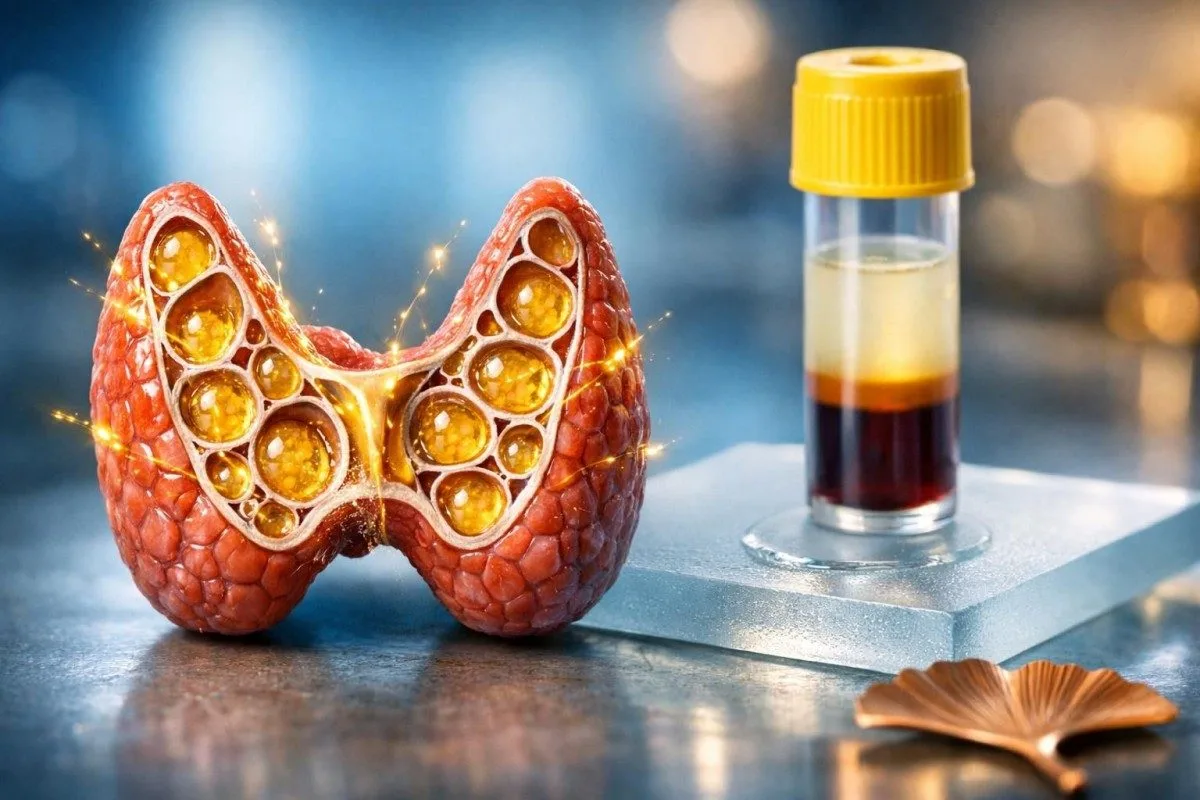
Most people are told only whether free T4 is in range. The useful read is how that number behaves beside TSH, symptoms, medications, and timing.


- Adult range Free T4 is usually 0.8-1.8 ng/dL or 10-23 pmol/L, but some labs use 0.7-1.7 or 0.93-1.70.
- TSH pairing A free T4 of 1.1 ng/dL can be reassuring with TSH 2.0 mIU/L and concerning with TSH 7.5 mIU/L.
- Overt hypothyroidism TSH above 10 mIU/L plus low free T4 usually indicates primary hypothyroidism.
- Overt hyperthyroidism TSH below 0.1 mIU/L plus high free T4 supports hyperthyroidism or thyroid hormone over-replacement.
- Central hypothyroidism Low free T4 with low or normal TSH is abnormal and warrants pituitary review.
- Biotin effect Biotin 5-10 mg/day can falsely lower TSH and raise free T4; stop it for 48-72 hours before repeat testing.
- Dose timing Taking levothyroxine 2-4 hours before the test can transiently raise free T4 without reflecting the usual daily level.
- Pregnancy caveat Free T4 immunoassays are less reliable in pregnancy; trimester-specific ranges or total T4 may be better.
How to read free T4 levels by looking at TSH first
Free T4 levels are usually normal at about 0.8-1.8 ng/dL (10-23 pmol/L), but the number only becomes useful when paired with TSH levels. The same free T4 of 1.1 ng/dL can be normal with a TSH of 2.0 mIU/L, suggest early thyroid failure with a TSH of 7.5, or point toward pituitary disease if TSH is 0.2 and the clinical story fits. When I, Thomas Klein, MD, review a routine thyroid panel on Kantesti AI, I read TSH first, free T4 second, and timing, symptoms, and medicines third.
Free T4 measures the tiny unbound fraction of thyroxine that can enter tissues right away; it is only about 0.02-0.04% of circulating T4. TSH is the pituitary signal telling the thyroid how hard to work, so it often provides the context that the free T4 number by itself cannot.
A thyroid blood test becomes more accurate when you treat it as a feedback loop, not a single snapshot. That is why we teach patients to learn the common lab language first, and our blood test abbreviations guide helps when a report lists FT4, TSH, FT3, TPOAb, and reference intervals in different formats.
I see this pattern every week: one patient has free T4 1.0 ng/dL and TSH 6.9 mIU/L six months after pregnancy, another has free T4 1.0 ng/dL and TSH 0.2 mIU/L after a recent steroid burst. Same free T4, very different physiology.
Why clinicians do not trust one thyroid number
TSH and free T4 reflect different time scales. Free T4 can shift within days, while TSH often lags for 6-8 weeks after starting, stopping, or changing levothyroxine.
What is the normal range for free T4 in adults?
The normal range for free T4 levels in most nonpregnant adults is about 0.8-1.8 ng/dL, which is roughly 10-23 pmol/L. As of April 8, 2026, many large laboratories still use slightly different intervals because assay method matters more here than patients realize. If your report says 0.93-1.70 or 0.7-1.7, that does not mean one lab is wrong; it means the chemistry is not identical.
Most labs measure free T4 with an immunoassay, not the reference method of equilibrium dialysis. Immunoassays are fast and practical, but they are more vulnerable to protein-binding changes, severe illness, biotin use, and pregnancy-related shifts than many standard patient handouts admit.
The practical takeaway is simple: use the lab's own interval first, then decide whether the value fits the TSH level and the clinical story. Our biomarker reference library is built around lab-specific intervals for exactly this reason, because a free T4 of 1.7 ng/dL may be high-normal in one report and clearly high in another.
Free T4 does not usually require fasting, but clean test conditions still help. If you want the least noisy comparison, morning sampling, a steady medication schedule, and checking our fasting instructions before the draw can reduce avoidable confusion.
Why some European labs look stricter
Some European laboratories use a slightly lower upper limit, often around 1.7 ng/dL. In my experience, that becomes most relevant in older adults, where a high-normal free T4 paired with a suppressed TSH may matter more than a younger patient expects.
Why the same free T4 level can mean opposite things
The same free T4 level can mean opposite things because TSH levels represent the pituitary response to that hormone, and each person has a fairly tight individual set-point. A free T4 of 1.1 ng/dL with TSH 2.1 mIU/L usually reads as balanced feedback; the same 1.1 ng/dL with TSH 8.0 often means the thyroid is struggling to maintain that number.
TSH reacts to small free T4 shifts in a log-linear way, so modest hormone changes can produce large TSH swings. That is why our AI-powered blood test interpretation treats TSH as the context signal rather than a side note.
A TSH above 10 mIU/L plus low free T4 strongly supports overt primary hypothyroidism, while TSH 4.5-10 mIU/L with normal free T4 is more consistent with subclinical hypothyroidism. Patients who want the fuller hypothyroid side of this pattern can review our high TSH guide, but the crucial point here is that the exact same free T4 may sit on either side of that line.
There is another angle here: TSH often lags. In the first 10-14 days after starting or increasing levothyroxine, free T4 may move into range before TSH catches up, so a panel can look mismatched even when treatment is heading in the right direction.
Rare discordant patterns do exist. Thyroid hormone resistance, macro-TSH, and TSH-secreting pituitary adenoma are uncommon, but they are the right thoughts when free T4 is high and TSH is not suppressed, especially if repeat testing shows the same thing.
Why your personal baseline matters
Most people live in a narrower thyroid window than the lab range suggests. A drop from 1.5 to 0.9 ng/dL may still be called normal on paper, yet if TSH climbs from 1.2 to 5.6 mIU/L, many patients tell me they already feel slower, colder, or more constipated.
Low free T4 levels: when high TSH is simple and when it is not
Low free T4 levels with high TSH levels usually indicate primary hypothyroidism. Low free T4 with low or normal TSH is a different problem and should raise concern for central hypothyroidism, severe non-thyroidal illness, or medication effects rather than be dismissed as normal.
TSH above 10 mIU/L with free T4 below range is the classic overt hypothyroid pattern, and Hashimoto's disease is the commonest cause in outpatient practice. When the TSH is high, the pituitary is shouting and the thyroid is not keeping up.
A low free T4 with TSH that is low, normal, or only mildly high is never reassuring. Our low TSH explainer covers one side of this problem, but in clinic I also look hard for pituitary clues: new headaches, reduced libido, visual change, postpartum events, prior brain surgery, or multiple hormonal abnormalities.
If central hypothyroidism is on the table, check other pituitary axes before treating casually. A paired look at morning cortisol and sometimes prolactin matters, and our prolactin results guide is useful because central thyroid disease rarely travels alone.
One mistake I try hard to avoid
Starting levothyroxine before thinking about adrenal status can backfire in a patient with unrecognized adrenal insufficiency. That is not common, but it is one of those endocrine traps worth remembering because the consequences can be serious.
High free T4 levels and the TSH clues clinicians use
High free T4 levels with TSH below 0.1 mIU/L most often mean hyperthyroidism or thyroid hormone over-replacement. High free T4 with normal or high TSH is less common and much more likely to reflect assay interference, recent dosing, or rare pituitary disorders than ordinary Graves disease.
A suppressed TSH plus high free T4 is the biochemical picture of overt hyperthyroidism, but free T3 can matter too. I still see patients with T3-predominant thyrotoxicosis whose free T4 is normal while TSH is nearly undetectable, so a normal free T4 does not always rule out symptomatic hyperthyroidism.
A 29-year-old with palpitations, weight loss, tremor, free T4 1.9 ng/dL, and TSH 0.02 mIU/L almost never has a mysterious lab artifact as the first explanation. Patients with panic-like symptoms often benefit from reviewing our piece on thyroid-related anxiety labs, because the overlap between anxiety and hyperthyroidism is real and clinically messy.
Still, not every high free T4 is thyroid disease. Hair and nail supplements containing biotin 5-10 mg, morning levothyroxine taken before the blood draw, recent heparin exposure, and amiodarone 200 mg/day or more can all distort or complicate the picture, which is why I tell patients not to overreact to one borderline panel from an at-home blood test accuracy setting without confirmation.
If free T4 is high and TSH is not suppressed on repeat testing, think beyond the usual script. TSH-secreting adenomas account for well under 1% of pituitary adenomas, while thyroid hormone resistance often presents with high free T4, high-normal or high T3, and a TSH that stubbornly refuses to fall.
Borderline free T4 results that labs often under-explain
Borderline free T4 levels matter most when they are drifting, not when they are viewed as a single isolated number. A free T4 of 0.9 ng/dL may be entirely fine with a stable TSH of 1.4 mIU/L, but the same 0.9 becomes more suspicious when TSH has climbed from 1.3 to 5.8 over the past year.
Trend beats snapshot more often than patients are told. In my practice, subtle thyroid drift is a common hidden contributor to hair shedding, dry skin, and cycle changes, which is why our hair loss blood tests article spends so much time on thyroid and ferritin together.
The lab range is population-based, not you-based. A patient whose long-term free T4 sits around 1.5 ng/dL may feel noticeably different at 1.0 even though the report still prints the word normal, and that is one reason a basic standard blood work panel can miss endocrine nuance.
When results are borderline, repeat the panel under cleaner conditions rather than chasing random day-to-day noise. Same lab, same time of day, no biotin for 48-72 hours, and no levothyroxine before the draw gives me a far more useful comparison than repeating tests under different conditions every week.
Why symptoms can outrun the paper range
Symptoms do not begin at a universal magic number. Older adults often feel the effects of upper-normal free T4 sooner when TSH is suppressed, while younger adults sometimes tolerate wider swings before they notice much at all.
Supplements, medicines, and timing that distort a thyroid panel
Biotin, levothyroxine timing, severe illness, heparin, amiodarone, glucocorticoids, dopamine, and estrogen can all distort a thyroid panel or at least change how we read it. When free T4 and TSH disagree, the commonest explanation is not a rare endocrine tumor; it is often timing or assay behavior.
Biotin is the lab spoiler I ask about most. In streptavidin-based assays, doses of 5 mg or 10 mg daily can falsely lower TSH and falsely raise free T4, so our clinical validation standards explicitly treat supplement review as part of safe interpretation.
Timing matters just as much. Taking levothyroxine 2-4 hours before the blood draw can temporarily push free T4 upward, and if you upload a report through our PDF upload workflow, we often flag that post-dose pattern when the numbers and history line up.
Heparin can cause a false free T4 increase through in-vitro lipolysis during sample handling, even when the thyroid is stable. Glucocorticoids and dopamine can suppress TSH, estrogen can shift binding proteins, and iodine contrast can disturb thyroid physiology for 2-8 weeks in susceptible patients.
If the paper copy is all you have, a phone image is still usable when the lab values are readable, and our photo scan guide explains the limits. My rule of thumb is simple: do not change long-term treatment on the basis of one discordant panel unless symptoms, pregnancy, or severe numbers make the risk of waiting higher.
How long should biotin be stopped?
For most patients I suggest 48 hours off biotin before repeat thyroid testing, and 72 hours if the dose is high or the prior result looked very discordant. A few labs advise even longer, so I usually follow the laboratory's own protocol when it is available.
Pregnancy, children, and older adults need different interpretation
Pregnancy, childhood, and older age change thyroid interpretation enough that adult cutoffs can mislead. Free T4 levels often stay inside a lab range while the meaning of the TSH level changes because binding proteins, physiology, and risk tolerance are different.
Pregnancy is the classic trap. The 2017 American Thyroid Association pregnancy guideline pushed many of us away from rigid one-size-fits-all cutoffs, and when no trimester-specific free T4 interval exists, total T4 can be more reliable; after about 16 weeks, a common workaround is multiplying the nonpregnant total T4 upper range by 1.5. Our Women's Health Guide goes deeper on symptom overlap here.
Children are not small adults on a lab report. TSH levels are physiologically higher in newborns and younger children, so adult thresholds can overcall disease or miss it, and parents should use age-specific references like those in our pediatric TSH ranges guide.
Older adults add a different twist. A mildly higher TSH may be watched rather than treated in some asymptomatic older patients, yet suppressed TSH with upper-normal free T4 worries me more in a 78-year-old because the links with atrial fibrillation and bone loss are stronger than they are in a 28-year-old.
Postpartum thyroiditis deserves its own mention because it often swings. I have seen patients move from low TSH and high free T4 at 8 weeks postpartum to high TSH and low-normal free T4 by month 5, which is one reason a single postpartum thyroid panel can tell only half the story.
What to do after a routine thyroid blood test result
After a routine thyroid blood test, first confirm the units and reference range, then read TSH levels beside free T4, then check symptoms, supplements, and medication timing. That three-step order prevents a lot of overdiagnosis and just as much missed disease.
Urgency depends on the pattern and the patient in front of you. TSH below 0.01 mIU/L with markedly high free T4 plus fever, agitation, chest symptoms, or resting heart rate above 120 beats per minute deserves same-day assessment, and low free T4 in pregnancy or with pituitary symptoms should not wait on a casual repeat; if you want a quick second read, start with our free thyroid result check.
Extra tests are chosen by the pattern, not by habit. Free T3 helps when TSH is low and symptoms are hyperthyroid, TPO antibodies help when TSH is high and Hashimoto's is suspected, and cortisol, prolactin, ferritin, or B12 are sometimes more informative than another blind thyroid repeat; our how to read blood test results guide walks through that logic.
If medication was changed, wait 6-8 weeks before judging the new TSH unless symptoms are pushing you faster. If the dose did not change and the result seems implausible, I often repeat the panel in 1-2 weeks under cleaner conditions rather than making a permanent diagnosis from a single odd draw.
Most patients find the report much less frightening once the pattern is explained plainly. As Thomas Klein, MD, I would rather spend 5 extra minutes reviewing timing, supplements, and symptoms than label someone with lifelong thyroid disease on thin evidence.
How Kantesti AI interprets free T4 levels with TSH trends
Kantesti AI interprets free T4 levels by matching the lab-specific range, unit system, TSH pattern, prior results, medications, age, and symptom context rather than reading one number in isolation. That is how thyroid panels are actually reviewed in clinic, and it is the reason isolated free T4 values are among the most misread results we see.
In our analysis of more than 2 million uploaded reports from 127+ countries, discordant thyroid panels are common and usually explainable. Our our AI blood test platform converts ng/dL and pmol/L, checks lab-specific intervals, and flags situations where the same free T4 is being pulled in opposite diagnostic directions by the TSH.
We built that logic with physician oversight because endocrine interpretation is full of near-misses. The clinicians on our Medical Advisory Board review the reasoning rules, and I use the same teaching point with residents that I use inside Kantesti's neural network: never call a thyroid state from free T4 alone unless the rest of the panel is unavailable.
Method matters, so our medical team also keeps assay behavior in view. The company background on About Us covers our scale, while the technical side in our technology guide explains how we normalize units, trend repeated results, and handle uncertainty instead of pretending perfect certainty where none exists.
If you have a PDF, a phone photo, or several years of lab history, Kantesti can compare them in about 60 seconds and place thyroid markers beside CBC, CMP, ferritin, lipids, and symptoms. In my experience, that wider context is exactly what turns a scary free T4 number into something clinically usable.
Research publications and supporting reading
Thyroid panels deserve context, and we publish adjacent lab-reading work because clinicians rarely interpret free T4 in isolation. If you want broader diagnostic reading after this article, browse our blog or run your own report through the Kantesti AI blood test analyzer.
Kantesti's medical content is written to be used the way real reports arrive: mixed panels, imperfect timing, and several possible explanations at once. That is why we publish research-adjacent pieces across infectious disease, hematology, and lab interpretation even when the immediate question is thyroid.
Kantesti LTD. (2026). Nipah Virus Blood Test: Early Detection & Diagnosis Guide 2026. Zenodo. https://doi.org/10.5281/zenodo.18487418 | ResearchGate | Academia.edu.
Kantesti LTD. (2026). B Negative Blood Type, LDH Blood Test & Reticulocyte Count Guide. Figshare. https://doi.org/10.6084/m9.figshare.31333819 | ResearchGate | Academia.edu.
Frequently Asked Questions
What is a normal free T4 level on a thyroid blood test?
A normal free T4 level in most nonpregnant adults is about 0.8-1.8 ng/dL, which equals roughly 10-23 pmol/L. Some laboratories use slightly different intervals such as 0.7-1.7 or 0.93-1.70 because free T4 assays are not standardized perfectly across platforms. The lab-specific range on your own report matters more than a generic internet range. Free T4 should always be interpreted beside TSH because a value inside range can still be clinically abnormal when TSH is clearly high or low.
Can free T4 be normal if TSH is abnormal?
Yes, free T4 can be normal while TSH is abnormal, and that pattern is common. A TSH of 4.5-10 mIU/L with normal free T4 often suggests subclinical hypothyroidism, while a TSH below 0.4 mIU/L with normal free T4 may suggest subclinical hyperthyroidism, recent illness, or thyroid hormone over-replacement. This is exactly why the same free T4 value can mean different things depending on the TSH pattern. Trend over time helps because TSH may move before free T4 leaves the reference range.
What does low free T4 with normal TSH mean?
Low free T4 with normal TSH is not a normal pattern. It raises concern for central hypothyroidism, severe non-thyroidal illness, or assay interference rather than simple primary hypothyroidism. In central hypothyroidism, the pituitary signal may look normal on paper but be biologically inadequate, so a TSH of 1.8 or 2.5 mIU/L does not rule it out. When this pattern appears, clinicians often review pituitary symptoms and may add cortisol, prolactin, or imaging depending on the history.
Does biotin affect free T4 and TSH results?
Yes, biotin can affect thyroid results, especially in streptavidin-based immunoassays. Doses of 5 mg or 10 mg per day, common in hair and nail supplements, may falsely lower TSH and falsely raise free T4. Many clinicians advise stopping biotin for at least 48 hours before repeat testing, and some laboratories prefer 72 hours or longer for high-dose use. If the pattern looks strange and biotin is involved, repeating the test after a washout is often the safest next step.
Should I take levothyroxine before a thyroid panel?
For most routine monitoring, patients are usually advised to have the blood draw before taking the daily levothyroxine dose. Taking levothyroxine 2-4 hours before the test can transiently raise free T4 and make the panel look more hyperthyroid than your usual daily state. TSH changes more slowly, so post-dose testing can create a misleading mismatch between TSH and free T4. If your clinician wants a consistent comparison, the best approach is to repeat the test the same way each time.
Is TSH or free T4 more important?
Neither marker is sufficient alone; the most useful answer comes from reading TSH and free T4 together. TSH is often the more sensitive early signal because small hormone shifts can change TSH markedly, but free T4 tells you whether circulating hormone is actually low, normal, or high at that moment. A TSH above 10 mIU/L with low free T4 is very different from a TSH above 10 mIU/L with free T4 still in range. In pituitary disease, free T4 may be the more revealing result because TSH can be misleadingly normal.
When should a high free T4 result be checked urgently?
A high free T4 result needs urgent review when it is paired with a very low TSH and significant symptoms such as fever, confusion, chest pain, severe shortness of breath, or a resting heart rate above 120 beats per minute. Pregnancy also lowers the threshold for rapid follow-up because both uncontrolled hyperthyroidism and hypothyroidism can affect maternal and fetal outcomes. A free T4 above the lab range without symptoms is not automatically an emergency, but it should still be confirmed if the pattern does not make sense. Same-day care is wise when the lab result fits the picture of severe thyrotoxicosis.
Get AI-Powered Blood Test Analysis Today
Join over 2 million users worldwide who trust Kantesti for instant, accurate lab test analysis. Upload your blood test results and receive comprehensive interpretation of 15,000+ biomarkers in seconds.
📚 Referenced Research Publications
Klein, T., Mitchell, S., & Weber, H. (2026). Nipah Virus Blood Test: Early Detection & Diagnosis Guide 2026. Kantesti AI Medical Research.
Klein, T., Mitchell, S., & Weber, H. (2026). B Negative Blood Type, LDH Blood Test & Reticulocyte Count Guide. Kantesti AI Medical Research.
⚕️ Medical Disclaimer
This article is for educational purposes only and does not constitute medical advice. Always consult a qualified healthcare provider for diagnosis and treatment decisions.
E-E-A-T Trust Signals
Experience
Physician-led clinical review of lab interpretation workflows.
Expertise
Laboratory medicine focus on how biomarkers behave in clinical context.
Authoritativeness
Written by Dr. Thomas Klein with review by Dr. Sarah Mitchell and Prof. Dr. Hans Weber.
Trustworthiness
Evidence-based interpretation with clear follow-up pathways to reduce alarm.