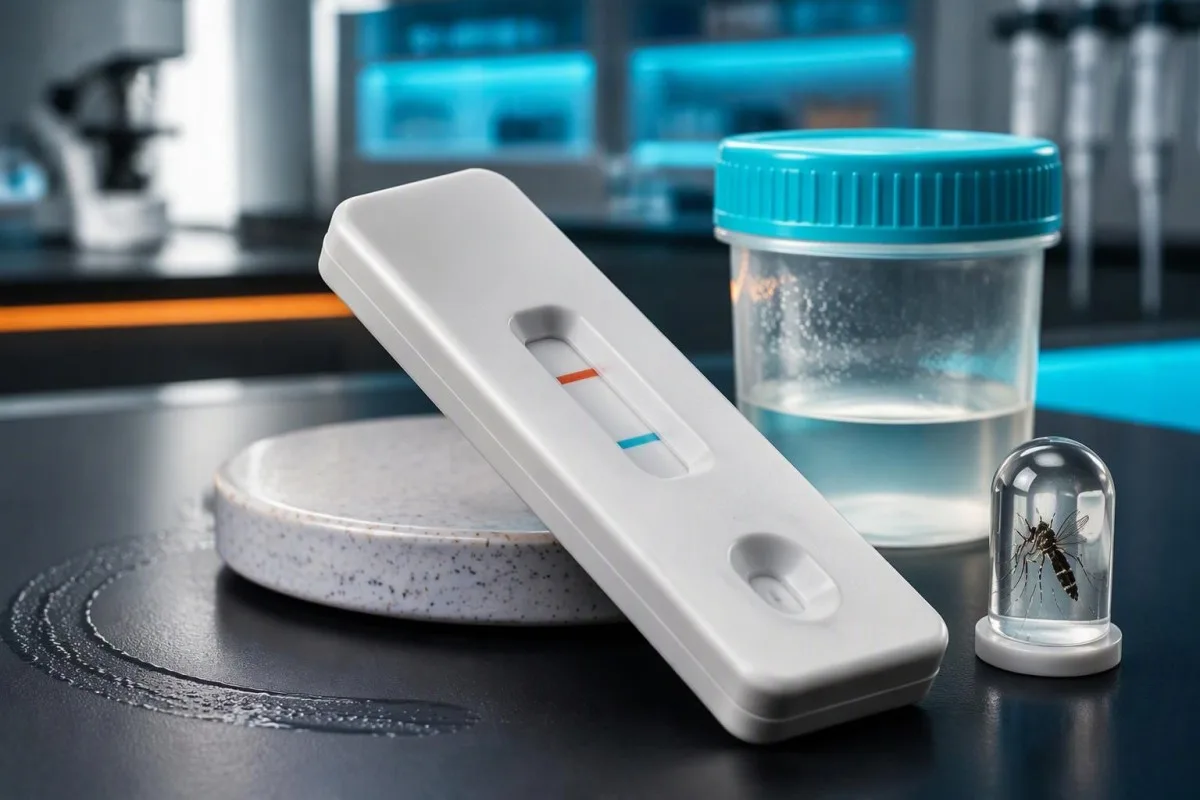
አዎንታዊ የNS1 ውጤት አብዛኛውን ጊዜ የዴንጊ በሽታን ያረጋግጣል፣ ነገር ግን የችግሩን ክብደት አይለካም። አሉታዊ ውጤት የዴንጊ በሽታን አያገለልም፤ የሕመም ምልክቶች የሚታዩበት ጊዜ ለተጨማሪ ምርመራ ይጠቅማል፣ እና ምንም እንኳን ትኩሳት ቢሻሻልም የማስጠንቀቂያ ምልክቶች አስቸኳይ እንክብካቤ ያስፈልጋቸዋል።.


- አዎንታዊ NS1 በተረጋገጠ ምርመራ በተገቢው ክሊኒካዊ ሁኔታ ውስጥ አጣዳፊ የዴንጊ በሽታን ያረጋግጣል፤ የከባድ የዴንጊ በሽታን አይተነብይም።.
- የሙከራ መስኮት በአጠቃላይ የሕመም ምልክቶች ከጀመሩ የመጀመሪያዎቹ 7 ቀናት ነው፤ ግልጽ ባልሆነ ቀን ቁጥር ከመተማመን ይልቅ የጀመረበትን ቀን ይመዝግቡ።.
- አሉታዊ NS1 የዴንጊ በሽታን አያገለልም፣ በተለይም ከሳምንት በኋላ ወይም በሁለተኛ የዴንጊ ኢንፌክሽን ወቅት።.
- ቀደምት ምርመራ በአጠቃላይ PCR/NAAT ከ IgM ጋር ወይም NS1 አንቲጅን ከ IgM ጋር በመጀመሪያዎቹ 7 ቀናት ውስጥ ያጣምራል።.
- ዘግይቶ መሞከር ከ 7 ቀናት በኋላ በዋነኝነት በ IgM ላይ ይመሰረታል፤ የዴንጊ IgM ለግምት 3 ወራት ሊታወቅ ይችላል።.
- እባብ ትኩሳት የኢፌክሽኑን ወሳኝ ምዕራፍ መጀመሪያ ሊያመለክት ይችላል፣ ይህም ብዙውን ጊዜ በበሽታ ቀናት 3–7 አካባቢ የሚጀምር እና ለ24–48 ሰአታት የሚቆይ ነው።.
- አስቸኳይ የማስጠንቀቂያ ምልክቶች ከባድ የሆድ ህመም፣ የማያቋርጥ ትውከት፣ ደም መፍሰስ፣ ያልተለመደ እንቅልፍ ማጣት፣ የመተንፈስ ችግር ወይም የሽንት መጠን በእጅጉ መቀነስን ያጠቃልላል።.
- የመድኃኒት ደህንነት አስፕሪን፣ ibuprofen እና naproxen ከመውሰድ መቆጠብን ያጠቃልላል፤ ብቁ የሆኑ አዋቂዎች በሐኪም የጸደቀ የዶዝ ገደብ ውስጥ paracetamol መጠቀም ይችላሉ።.
አዎንታዊ የዴንጊ NS1 አንቲጅን ውጤት ምን ማለት ነው?
የዴንጊ ኤንኤስ1 አንቲጂን አወንታዊ የዴንጊ ቫይረስ ያልሆነ የፕሮቲን 1 መገኘቱን ያሳያል፣ ይህም ብዙውን ጊዜ አጣዳፊ ኢንፌክሽንን ያሳያል። አወንታዊ የተረጋገጠ የ NS1 ምርመራ የላብራቶሪ ማረጋገጫን ይደግፋል፣ በተለይም በመጀመሪያዎቹ 7 ቀናት ውስጥ፤ ዴንጊ ቀላል እንደሚሆን ወይም ከባድ እንደሚሆን አይነግርዎትም።.
NS1 አንቲጂን እንጂ ፀረ እንግዳ አካል አይደለም, ፣ ስለዚህ አወንታዊ ውጤት ከድሮ ኢንፌክሽን የመከላከል አቅምን የሚያሳይ አይደለም። የሲዲሲው የዴንጊ ክሊኒካዊ ምርመራ መመሪያ አወንታዊ የ NS1 አንቲጂን ወይም የኑክሊክ አሲድ ምርመራን እንደ አጣዳፊ የዴንጊ ማረጋገጫ ይለያል፤ ተግባራዊ የሆነው ቀጣይ እርምጃ ክሊኒካዊ ግምገማ እንጂ ከመጀመርዎ በፊት ለሁለተኛ አወንታዊ ምርመራ መጠበቅ አይደለም (ሲዲሲ፣ n.d.)።.
ትኩሳት ለ 2 ቀናት ያለበት እና አወንታዊ የ NS1 ውጤት ያለው ታካሚ ትኩሳቱ በ 5ኛው ቀን የቆመ ሰው ከሚደረግለት ውይይት የተለየ ውይይት ይፈልጋል። የመጀመሪያው ታካሚ ግምገማ እና የክትትል እቅድ ይፈልጋል፤ ሁለተኛው ደግሞ የፕላዝማ መፍሰስ እና የማስጠንቀቂያ ምልክቶችን በጥንቃቄ መመርመር ይፈልጋል፣ ምክንያቱም የፈተናው ውጤት ራሱ እነዚህን ክሊኒካዊ ደረጃዎች መለየት አይችልም።.
እኔ ቶማስ ክላይን ነኝ፣ በKantesti AI የዋና ህክምና ኦፊሰር፣ እና የእኔ የትርጓሜ አቀራረብ የሚጀምረው የበሽታ ምልክቶች ጊዜ አሁን ካለው ሁኔታ ጋር, ፣ ብቻውን ባለው አዎንታዊ ባንዲራ ሳይሆን። Kantesti የ NS1 ከሲቢሲ ጋር በማብራራት የሚረዳ AI የደም ምርመራ ተንታኝ ነው፤ የእኛ የድርጅት ዳራ እና ለ kwalitatitive የፈተና ውጤቶች መመሪያ አወንታዊ ውጤት የቁጥር የከፋ ደረጃ ውጤት አለመሆኑን ያብራራሉ።.
መቼ የዴንጊ NS1 ምርመራ ማድረግ አለብዎት?
የዴንጊ NS1 ምርመራ በጣም ጠቃሚ የሚሆነው ከበሽታው በኋላ በመጀመሪያዎቹ 7 ቀናት ውስጥ ነው።, ፣ ከነፍሳት ንክሻ በኋላ ከማንኛውም የጊዜ ክፍተት ይልቅ። የላቦራቶሪዎች እና ክሊኒኮች ሁልጊዜ ተመሳሳይ የቀን-ቁጥር ወግ ስለማይጠቀሙ፣ የመጀመሪያው ትኩሳት ወይም ሌላ ግልጽ የሆነ የበሽታ ምልክት ያጋጠመበትን የቀን መቁጠሪያ ቀን እና ግምታዊ ሰዓት ይመዝገቡ።.
ቀን 0 እና ቀን 1 በተለያዩ ክሊኒካዊ ሥርዓቶች ውስጥ አንድ አይነት የመነሻ ቀን ሊገልጹ ይችላሉ። ትኩሳት ሰኞ ምሽት ከጀመረ እና ናሙናው ሐሙስ ጠዋት ከተሰበሰበ፣ በቀላሉ ቀን 4 ከመንገር ይልቅ ለሐኪሙ ሁለቱንም ቀናት ይንገሩ፤ ይህም የ NS1፣ PCR ወይም የፀረ-እንግዳ አካል ምርመራን በምርመራ መስኮት ጠርዝ ላይ በሚመርጡበት ጊዜ ሊወገድ የሚችል ግልጽነትን ያስወግዳል።.
የዴንጊ ምልክቶች ብዙውን ጊዜ ይከሰታሉ ተላላፊ የነፍሳት ንክሻ ከ4–10 ቀናት በኋላ, but many people never notice the relevant bite. Testing an otherwise well person immediately after a bite is therefore not the same as testing a symptomatic patient, and a negative NS1 result before symptoms cannot provide reassurance about what will happen several days later.
There is no biological switch at midnight on day 7: antigen and viral RNA decline gradually, and detection varies with the assay and individual immune response. Our የደም ምርመራ የጊዜ መመሪያ explains the broader principle, but acute dengue decisions should follow the treating clinician's testing algorithm rather than a rigid calendar rule.
የዴንጊ ምልክቶች ቢኖሩም የዴንጊ NS1 አሉታዊ ሊሆን ይችላል?
A negative dengue NS1 result cannot exclude dengue, even during the first week. Missed detection can reflect the sampling day, assay sensitivity, lower circulating antigen, or a previous dengue infection; persistent symptoms and exposure history should guide additional testing and clinical monitoring rather than reassurance from 1 negative result.
NS1 sensitivity is generally lower in secondary dengue infections, partly because pre-existing antibodies can bind circulating antigen and affect detection. That creates an awkward clinical combination: a person with prior dengue may have a less reassuring negative antigen result while also needing careful assessment, although previous infection does not mean the current episode will necessarily become severe.
A negative result on illness day 2 and another on day 9 answer different questions. The early result may justify PCR/NAAT plus IgM testing if suspicion remains high; the late result may simply reflect a fading antigen window, making antibody testing more useful than repeatedly ordering the same antigen assay without a clear diagnostic purpose.
No single sensitivity percentage applies to every rapid cassette, laboratory ELISA, serotype, and population. This resembles the timing problem discussed in our early false-negative test guide, but dengue requires its own follow-up pathway: seek urgent assessment for warning signs regardless of whether 1 or several NS1 tests were negative.
መቼ ነው የዴንጊ PCR ወይም NAAT ጠቃሚ መረጃ የሚጨምረው?
Dengue PCR, a type of nucleic acid amplification test, is most useful during the first 7 days of illness and detects viral RNA rather than NS1 protein. A positive result confirms acute dengue; a negative result does not exclude it, particularly when the sample is collected after circulating RNA has declined.
The CDC recommends NAAT plus IgM, or NS1 plus IgM, for patients tested within the first 7 days of symptoms. This pairing covers different biological targets: direct detection is strongest early, while antibodies become more informative as the immune response develops; ordering all available tests automatically is not always necessary (CDC, n.d.).
An early negative NS1 result does not make PCR pointless, because antigen assays and RNA assays have different detection limits. Conversely, a reliable positive NS1 result usually means clinical management can proceed without waiting for PCR; additional molecular testing may be requested for diagnostic uncertainty, serotyping, public health investigation, or local laboratory requirements rather than bedside severity assessment.
PCR cycle-threshold values are not validated standalone scores for dengue severity, and values from 2 laboratories should not be compared as though they share one scale. The same distinction between detecting a pathogen and measuring clinical risk appears in our PCR and antibody timing guide; the specific dengue algorithm still depends on illness day and assay availability.
ከ 7 ቀናት በኋላ የዴንጊ IgM እና IgG ውጤቶች እንዴት ይለወጣሉ?
Dengue IgM becomes the main diagnostic test after the first 7 days, although it can become detectable around days 4–5. A single positive IgG result cannot establish acute dengue, because IgG may reflect an older infection or another flavivirus-related immune response rather than the cause of today's fever.
Dengue IgM can remain detectable for approximately 3 months, so a positive result does not precisely date the infection. A single positive IgM result is generally interpreted as presumptive recent infection, whereas positive NS1 or PCR provides direct evidence of acute dengue; this difference matters when symptoms, travel dates, and laboratory findings do not line up.
An early negative IgM result can be expected rather than contradictory, especially during the first 3 days. If initial testing is negative but clinical suspicion persists, a clinician may arrange a convalescent specimen after day 7; conversion from negative to positive provides more useful evidence than treating the first negative antibody result as final.
Prior dengue, Zika exposure, and some flavivirus vaccinations can complicate antibody interpretation through cross-reactivity. Our አዎንታዊ የፀረ-ተሕዋስያን ውጤት መመሪያ explains why antibody classes are not interchangeable; in selected cases, reference-laboratory neutralization testing helps, although even that may not clearly separate viruses after multiple flavivirus exposures.
የተጣረሱ የዴንጊ ምርመራ ውጤቶችን እንዴት መተርጎም አለብዎት?
Conflicting dengue results should be interpreted by illness day, assay type, and clinical probability, not by counting positive and negative boxes. Positive NS1 with negative IgM can fit early acute dengue; negative NS1 with positive IgM can fit later infection, but also requires consideration of persistent or cross-reactive antibodies.
Consider 2 illustrative patterns: NS1 positive with IgM negative on day 2 is biologically plausible, while NS1 negative with IgM positive on day 10 is also plausible. Neither pattern independently establishes severity, and repeating NS1 solely to make the report look consistent can waste time when the clinically useful question is whether monitoring or urgent assessment is needed.
An invalid rapid test is not a negative test: an absent control signal means the result cannot be interpreted. Likewise, a faint test signal must be read according to that kit's instructions and specified reading interval; a line appearing outside the permitted interval should not be treated as confirmation, and line darkness is not a validated measure of viral burden.
An unexpected positive result in someone with no compatible illness or exposure deserves clinician–laboratory discussion, because even highly specific assays can produce false positives. Sample quality can also affect accompanying chemistry results; our sample interference guide explains why a discordant potassium or AST value may require verification rather than being automatically attributed to dengue.
ትኩሳት በሚቀንስበት ጊዜ የትኞቹ የዴንጊ የማስጠንቀቂያ ምልክቶች አስቸኳይ እንክብካቤ ያስፈልጋቸዋል?
Severe abdominal pain, persistent vomiting, bleeding, marked drowsiness or restlessness, breathing difficulty, and reduced urine need urgent medical assessment, even when fever is improving. Dengue's critical phase often begins around illness days 3–7 near defervescence and may last approximately 24–48 hours; a normal temperature does not guarantee recovery.
Plasma leakage can develop when fever subsides, reducing effective circulating volume even without obvious external bleeding. The WHO's 2009 dengue guideline and Simmons and colleagues' clinical review describe this phase-dependent risk; the reason abdominal pain, vomiting, and altered alertness matter together is that they may signal physiological deterioration rather than ordinary lingering discomfort (WHO, 2009; Simmons et al., 2012).
Seek emergency care for vomiting blood, black tarry stool, collapse, confusion, cold clammy extremities, or difficult breathing; do not wait for another CBC or NS1 result. Our stool bleeding warning guide provides context, but in suspected dengue these symptoms need prompt assessment rather than home observation for another 24 hours.
Repeated vomiting that prevents drinking is concerning even before an exact episode count is reached. For children, a caregiver's report that the child is unusually sleepy, refusing fluids, or producing markedly fewer wet nappies can be more useful than a temperature reading; new warning signs on day 5 deserve action even if the previous day's platelet count seemed acceptable.
ከአዎንታዊ NS1 ምርመራ በኋላ የትኞቹ የ CBC ለውጦች በጣም አስፈላጊ ናቸው?
Platelet count and hematocrit trends are more useful than either value alone, because falling platelets with rising hematocrit can support concern for plasma leakage. Many adult laboratories use a platelet reference interval near 150–450 × 10⁹/L, but a normal early count neither excludes dengue nor guarantees that deterioration will not occur.
A hypothetical hematocrit increase from 40% to 46% is a 15% relative rise, not merely a 6% change. Dehydration can also raise hematocrit, so the interpretation depends on baseline, fluid intake, urine output, circulation, and symptoms; our የሂማቶክሪት እና የሂሞግሎቢን ንፅፅር explains why concentration changes must be distinguished from changes in red-cell mass.
A falling hematocrit in an unstable patient can indicate bleeding, rather than recovery; intravenous fluids can also dilute the value. Kantesti is an AI blood test interpretation platform that can organize serial CBC results, but 2 numbers without their sampling times and fluid context cannot determine whether a patient has plasma leakage, dilution, or clinically significant blood loss.
ከ 100 × 10⁹/ល are common in dengue but are not a diagnosis or an automatic transfusion indication. Routine prophylactic platelet transfusion is generally not recommended solely for a low count without active bleeding; an unexpectedly abrupt isolated drop may also warrant checking for EDTA ፕሌትሌት መጨናነቅ (clumping) rather than assuming every low result is genuine.
ከአዎንታዊ ውጤት በኋላ በሚቀጥሉት 24 ሰዓታት ውስጥ ምን ማድረግ አለብዎት?
Contact a clinician promptly after a positive NS1 result to assess hydration, warning signs, risk factors, and follow-up needs; emergency symptoms require immediate care. Outpatient management is appropriate only when the patient is clinically stable, can drink, has no warning signs, and can access reassessment—often daily during the risk period.
Prepare a short timeline containing 4 practical details: symptom onset, sample collection time, the most recent fever pattern, and any new warning signs. Add medications, pregnancy status, previous dengue, and recent travel; a photograph of the actual report is preferable to a message saying only positive, because clinicians need to know whether the result was NS1, IgM, IgG, or PCR.
A baseline CBC is commonly useful, and kidney function, electrolytes, or liver tests may be added according to symptoms and medical history. Our electrolyte result safety guide explains those supporting tests, but a reassuring sodium value does not cancel abdominal pain, impaired drinking, or a changing circulation assessment during illness days 3–7.
Ask for a specific review plan, including when to return and where to go outside clinic hours. Daily clinical review and CBC monitoring may be appropriate for outpatients, especially near defervescence, but frequency should be individualized; if transport or overnight support is unreliable, the threshold for supervised care may be lower even before a laboratory number becomes alarming.
በጥርጣሬ በዴንጊ በሽታ ውስጥ የትኞቹ ፈሳሾች እና የትኩሳት መድኃኒቶች ደህንነታቸው የተጠበቀ ነው?
Use oral fluids when tolerated and avoid aspirin, ibuprofen, and naproxen, because these medicines can increase bleeding risk in dengue. Paracetamol is usually preferred for fever or discomfort, but its dose must account for age, weight, liver disease, alcohol use, and other products containing the same ingredient.
For an otherwise eligible adult weighing at least 50 kg, a conservative example is paracetamol 500–1,000 mg every 8 hours as needed, with no more than 3,000 mg in 24 hours unless a clinician advises otherwise. Combination cold remedies can contain paracetamol too; liver disease, low body weight, or significant liver-test abnormalities may require a lower limit or different advice.
For children, paracetamol is commonly dosed at 10–15 mg/kg per dose every 6 hours, with a maximum of 60 mg/kg in 24 hours, subject to local guidance and clinician advice. Check the bottle concentration carefully, because millilitres are not interchangeable between formulations; an infant with fever, especially under 3 months, needs prompt medical assessment rather than dose calculation alone.
Small, frequent sips of correctly mixed oral rehydration solution may be easier to tolerate than large drinks, but there is no safe universal target of 3 or 4 litres for everyone. Heart or kidney disease changes fluid planning, as our kidney function interpretation guide explains; intravenous fluids require clinical supervision because excess fluid can become harmful as leaked fluid is reabsorbed.
የክትትል የዴንጊ እንክብካቤ ለማግኘት ማነውስ ዝቅተኛ ገደብ የሚያስፈልገው?
Pregnant patients, infants, older adults, and people with important comorbidities need individualized assessment and often a lower threshold for supervised care. Previous dengue also deserves attention, although it does not make severe disease inevitable; risk cannot be calculated from the NS1 result, a platelet count, or 1 historical detail alone.
Pregnancy changes the interpretation of platelets and liver enzymes, because dengue is not the only urgent explanation for those abnormalities. Especially after 20 weeks, low platelets with elevated transaminases, hypertension, or upper abdominal pain may require assessment for pregnancy-specific conditions; our HELLP emergency laboratory guide explains why a positive dengue result must not close the diagnostic process.
Patients taking aspirin, anticoagulants, or other antiplatelet medicines should contact the prescribing clinician promptly rather than stopping essential treatment without advice. The decision balances bleeding and thrombosis risks and may change over 24 hours; likewise, diabetes, chronic kidney disease, and heart failure can make drinking targets, medication adjustments, and admission decisions more complicated than standard home-care advice suggests.
Dengue has 4 recognized serotypes, and infection with one does not provide durable protection against all the others. A later infection with a different serotype can increase severe-dengue risk through complex immune mechanisms, but the relationship is probabilistic, not a prediction; the practical response is careful monitoring rather than assuming a second infection must be dangerous.
የዴንጊ በሽታ ሲጠረጠር የትኞቹ ሌሎች ህመሞች መመርመር አለባቸው?
Malaria, leptospirosis, chikungunya, Zika, and bacterial infections can resemble dengue, and more than 1 infection can occasionally occur together. A positive NS1 result therefore does not automatically explain every symptom, while a negative result should prompt a broader assessment based on travel, local outbreaks, exposure, and clinical findings.
Fever after travel to a malaria-risk area needs urgent malaria assessment, even with a positive dengue test, because delayed malaria treatment can be dangerous. One negative smear may not exclude malaria; our traveler fever testing guide explains why repeat smears, often at 12–24-hour intervals when suspicion remains high, may be necessary under medical supervision.
Freshwater, floodwater, or animal-urine exposure raises a different question: could leptospirosis be responsible for fever, kidney abnormalities, or jaundice? The diagnostic window matters for that condition too, as our water-exposure testing guide explains; the management distinction is substantial because leptospirosis may require antibiotics, whereas uncomplicated dengue does not routinely benefit from them.
AST or ALT at or above 1,000 IU/L is a criterion for severe organ involvement in the WHO dengue classification, but other causes of major liver injury still need consideration. Chikungunya may produce prominent joint pain, and Zika raises additional pregnancy-related questions; none of these distinctions can be settled by symptom lists alone when the patient is clinically deteriorating.
የ AI ሪፖርት ግምገማ እንክብካቤን ሳያዘገይ ለክትትል እንዴት ሊረዳ ይችላል?
AI report review can organize dengue-related laboratory trends, but it cannot assess circulation, diagnose shock, or decide that staying home is safe. Kantesti is an AI-powered blood test analysis tool that can explain uploaded results in about 60 seconds; urgent symptoms should trigger medical care before any upload or automated interpretation.
Verify the result type, collection date, and units before comparing 2 reports: 80 × 10⁹/L and 80,000/µL describe the same platelet count. Our PDF extraction checklist addresses transcription errors; a cropped photograph that omits the date or a misread decimal point can create an apparent trend that never actually occurred.
የእኛ interpretation technology guide explains how report context is handled, while our ክሊኒካዊ ማረጋገጫ ክፈፍ (clinical validation framework) describes evaluation standards and limitations. Those standards do not establish that an AI output can safely triage dengue independently, and a 60-second explanation should never replace examination, clinician-directed monitoring, or emergency assessment.
Recovery does not require NS1 to become negative, and fatigue can persist for 1–2 weeks or longer after the acute illness. My practical rule as Thomas Klein is to distinguish improving laboratory trends from a clinically recovered person: return to strenuous activity should depend on overall recovery and clinician advice, while avoiding mosquito bites during the first week helps reduce onward transmission.
የምርምር ህትመቶች፣ የመነሻ ድንበሮች እና የክሊኒካዊ ደረጃዎች
Dengue testing and warning-sign advice in this article are supported by dengue-specific CDC guidance, WHO classification, and a peer-reviewed clinical review, not by our 2 related repository publications. As of October 5, 2026, the practical framework remains timing-based testing plus clinical monitoring; the publication date alone does not establish a new guideline.
Nipah Virus Blood Test: Early Detection & Diagnosis Guide 2026. (n.d.). Zenodo. This title-first APA citation corresponds to the first DOI record below; the related diagnostic publication concerns a different virus and is not evidence for dengue assay accuracy, dengue transmission, or the 7-day testing window.
B Negative Blood Type, LDH Blood Test & Reticulocyte Count Guide. (n.d.). Figshare. This title-first APA citation corresponds to the second DOI record below; the related hematology publication provides background on other laboratory topics, not a dengue severity model or a basis for interpreting 1 positive NS1 result.
Repository DOIs do not establish peer review or clinical validation, and ResearchGate and Academia.edu search links below are discovery links rather than verified copies of these publications. Kantesti's የሕክምና አማካሪ ቦርድ describes our medical governance; individual decisions during the 24–48-hour dengue critical phase still belong with the treating clinical team, not an educational article.
በተደጋጋሚ የሚጠየቁ ጥያቄዎች
የዴንጊ NS1 አንቲጅን ፖዘቲቭ ማለት በእርግጠኝነት ዴንጊ እንዳለብኝ ነው?
በጸደቀ ምርመራ ላይ አዎንታዊ የNS1 ውጤት፣ በተለይም በበሽታው የመጀመሪያዎቹ 7 ቀናት ውስጥ፣ በተገቢው የክሊኒክ ሁኔታ ውስጥ አጣዳፊ የዴንጊ በሽታን ያረጋግጣል። ምርመራው ከቀድሞው ኢንፌክሽን የተገኘን የበሽታ መቋቋም አቅምን ከመለየት ይልቅ የቫይረስ ፕሮቲን ይለያል። በሽታው ከባድ እንደሚሆን አይተነብይም። ከየሚስማማ ምልክቶች ወይም ከተጋላጭነት ጋር የማይጣጣም ያልተጠበቀ ውጤት ከሀኪሙ እና ከላቦራቶሪ ጋር መወያየት አለበት።.
የ NS1 ምርመራዬ አሉታዊ ከሆነ የዴንጊ ወባ ሊያገለኝ ይችላል?
አዎ፣ አሉታዊ የዴንጊ NS1 ምርመራ ዴንጊን ማግለል አይችልም። ምርመራው በሚሰበሰብበት ቀን፣ በሙከራው አይነት እና በሰውነት በሽታ የመከላከል ምላሽ ላይ የተመሰረተ ሲሆን፣ በሁለተኛ ደረጃ ኢንፌክሽኖች ወቅት ስሜታዊነቱ በአጠቃላይ ዝቅተኛ ነው። በመጀመሪያዎቹ 7 ቀናት ውስጥ፣ ሐኪሙ PCR/NAAT እና IgM ወይም NS1-plus-IgM pathwayን ሊጠቀም ይችላል፤ ከ7 ቀናት በኋላ፣ IgM ይበልጥ ጠቃሚ ይሆናል። ምንም እንኳን ውጤቱ አሉታዊ ቢሆንም የአደጋ ምልክቶች በአስቸኳይ መገምገም አለባቸው።.
የዴንጊ ኤንኤስ1 ምርመራ ለማድረግ በጣም አመቺው ጊዜ መቼ ነው?
የዴንጊ NS1 ምርመራ ምልክቱ ከጀመረበት ከመጀመሪያዎቹ 7 ቀናት በኋላ አብዛኛውን ጊዜ በጣም ጠቃሚ ነው። ከትኩሳት ወይም ከመጀመሪያው ግልጽ ምልክት ጀምሮ ይቆጠራል እንጂ ከታሰበው የወባ ትንኝ ንክሻ አይደለም። ሐኪሙን ትክክለኛውን የመነሻ እና የመሰብሰቢያ ቀኖች ይስጡት ምክንያቱም አንዳንድ አገልግሎቶች የመነሻውን ቀን ቀን 0 ሲሉ ሌሎች ደግሞ ቀን 1 ብለው ይጠሩታል። ከመጀመሪያው ሳምንት ማብቂያ አጠገብ የሙከራ ውሳኔዎች የፀረ-ሰው ምርመራንም ሊያካትቱ ይችላሉ።.
ለምን የወባ ትኩሳት ሲቀንስ አደገኛ ይሆናል?
የዴንጊ ትኩሳት ወሳኝ ደረጃ ትኩሳቱ ሲቀንስ፣ ብዙውን ጊዜ በበሽታ ቀናት 3–7 ዙሪያ ሊጀምር ይችላል፣ እናም ለ24–48 ሰዓታት ሊቆይ ይችላል። በዚህ ወቅት የፕላዝማ መፍሰስ ከግልጽ የውጭ ደም መፍሰስ ባይኖርም የደም ዝውውርን ሊያደናቅፍ ይችላል። ከባድ የሆድ ህመም፣ የማያቋርጥ ማስታወክ፣ ደም መፍሰስ፣ መደበኛ ያልሆነ እንቅልፍ፣ የመተንፈስ ችግር፣ ወይም በከፍተኛ ሁኔታ የተቀነሰ ሽንት አስቸኳይ የህክምና ግምገማ ያስፈልጋቸዋል። መደበኛ የሙቀት መጠን ወይም ቀደምት የሚያረጋጋ የፕሌትሌት ብዛት መበላሸትን አያግድም።.
መደበኛ የፕሌትሌት ብዛት ማለት የዴንጊ ወባ ቀላል ነው ማለት ነው?
መደበኛ የፕሌትሌት ብዛት በበሽታው መጀመሪያ ላይ መለስተኛ የዴንጊ ትኩሳትን አያረጋግጥም ። ብዙ የአዋቂዎች ላቦራቶሪዎች ከ 150–450 × 10⁹/L የሆነ የሪፈረንስ ክፍተት ይጠቀማሉ ፣ ግን ብዛቱ በሚቀጥሉት ቀናት ሊቀንስ ይችላል ። ሐኪሞች የፕሌትሌት እና የሂማቶክሪት አዝማሚያዎችን ከውሃ አቅርቦት ፣ የደም ዝውውር እና የ ማስጠንቀቂያ ምልክቶች ጋር ያሰላሉ ። ዝቅተኛ ብዛት ብቻውን የፕሌትሌት ንቅለ ተከላ እንደሚያስፈልግ በራስ-ሰር ማለት አይደለም ።.
የነፍሳት ንክሻ (dengue) ከተገኘብኝ በኋላ ibuprofen ወይም paracetamol መውሰድ እችላለሁ?
ibrprofen, aspirin, እና naproxen ን ዴንጊ ከታየ ወይም ከተረጋገጠ ያስወግዱ ምክንያቱም የደም መፍሰስ አደጋን ሊጨምሩ ይችላሉ። ፓራሲታሞል አብዛኛውን ጊዜ ይመረጣል፣ ነገር ግን መጠኑ ክብደት፣ ዕድሜ፣ የጉበት ጤና እና ሌሎች መድሃኒቶችን ግምት ውስጥ ማስገባት አለበት። ለብቁ አዋቂ ከ50 ኪሎ ግራም በላይ ለሚመዝን፣ እንደ ምሳሌ 500–1,000 ሚ.ግ. በየ8 ሰዓቱ እስከ 3,000 ሚ.ግ. በ24 ሰአት ውስጥ ሐኪም ካልመከረ በስተቀር። ጉልህ የጉበት በሽታ ወይም የጉበት ምርመራ መዛባት ግለሰባዊ ምክር ይፈልጋል።.
ዛሬ የAI-የኃይል የደም ምርመራ ትንተና ያግኙ
በፍጥነት እና ትክክለኛ የላቦራቶሪ ምርመራ ትንተና ለማግኘት Kantestiን የሚያምኑ ከ2 ሚሊዮን በላይ ተጠቃሚዎችን ይቀላቀሉ። የደም ምርመራ ውጤትዎን ይስቀሉ እና በ15,000+ ባዮማርከሮች ላይ የተሟላ ትርጓሜን በሰከንዶች ውስጥ ይቀበሉ።.
📚 የተጠቀሱ የምርምር ህትመቶች
📖 ውጫዊ የሕክምና ማጣቀሻዎች
Centers for Disease Control and Prevention (n.d.). Clinical Testing Guidance for Dengue. CDC Dengue Clinical Guidance.
World Health Organization (2009). Dengue: Guidelines for Diagnosis, Treatment, Prevention and Control: New Edition.። የዓለም ጤና ድርጅት።.
Simmons CP et al. (2012). ዼንጉ. የኒው ኢንግላንድ ጆርናል ኦፍ መድሀኒት (New England Journal of Medicine)።.
⚕️ የሕክምና ማስተባበያ
ይህ ጽሑፍ ለትምህርታዊ ዓላማ ብቻ ነው እና የሕክምና ምክር አይደለም። ለምርመራ እና ለሕክምና ውሳኔዎች ሁልጊዜ ብቁ የጤና ባለሙያን ያማክሩ።.
የE-E-A-T እምነት ምልክቶች
ልምድ
በሐኪም መሪነት የላቦራቶሪ ትርጓሜ የስራ ፍሰቶች ክሊኒካዊ ግምገማ።.
ባለሙያነት
በክሊኒካዊ አውድ ውስጥ ባዮማርከሮች እንዴት እንደሚሰሩ ላይ የላቦራቶሪ ሕክምና ትኩረት።.
ስልጣን ያለው
በዶክተር ቶማስ ክላይን የተፃፈ ከዶክተር ሳራ ሚቸል እና ፕሮፌሰር ዶክተር ሃንስ ዌበር ግምገማ ጋር።.
አስተማማኝነት
ለማስጠንቀቂያ ምላሽ መቀነስ ግልጽ የቀጣይ መንገዶች ያለው በማስረጃ የተደገፈ ትርጓሜ።.