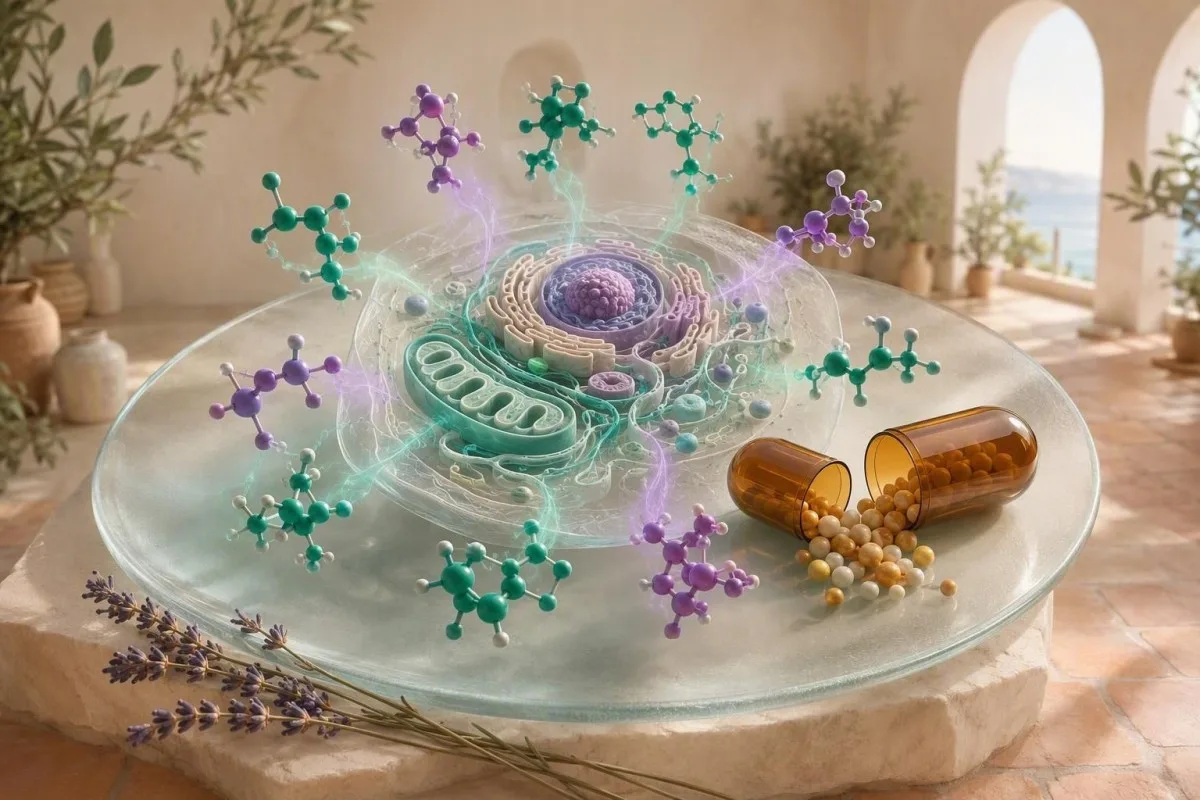
'n B-kompleks kan 'n gedokumenteerde dieettekort regstel, maar dit is selde die beste oplossing vir onverklaarbare moegheid. Formule sterkte maak saak: hoë-dosis B6, niasien en foliensuur skep risiko's wat 'n pasgemaakte enkelvitamienplan dikwels vermy.


- B-kompleks-aanvullings is die nuttigste vir 'n bewese tekort, beperkende dieet, wanabsorpsie risiko, of 'n medisyne wat B-vitamien status beïnvloed—nie as 'n universele energietratment nie.
- Vitamien B6 van aanvullings moet oor die algemeen op of onder 12 mg/dag vir volwassenes bly onder die 2023 EFSA verdraagsame boonste inname vlak.
- Foliensuur inname van verrykte voedsel en aanvullings moet nie 1 000 mcg/dag in volwassenes oorskry nie, tensy 'n klinikus dit voorgeskryf het.
- Niasien spoeling kan voorkom by 30 mg of meer nikotiensuur, terwyl stadige-vrystelling produkte ook die lewer kan beskadig.
- Vitamien B12 tekort kan bestaan met 'n lae-normale serum B12 resultaat; metielmaloniese suur en homosisteïen help om onsekere gevalle op te klaar.
- Swangerskap vereis foliensuur voor bevrugting, maar die meeste mense benodig nie 'n hoë-potensie B-kompleks formule nie.
- Biotien kan skildklier-, troponien- en sommige hormoon immuno-assays verwring; stop dit 48 tot 72 uur voor toetsing as jou klinikus aanbeveel.
- Geteikende behandeling is gewoonlik veiliger as 'n breë formule: B12 alleen vir metformien-geassosieerde B12-uitputting, foliensuur alleen vir voorswangerskap sorg, en tiamien alleen vir alkohol-verwante risiko.
Wat B-Kompleks Eintlik Bevat—en Wie Daarby Kan baat
B-kompleks-aanvullings bevat van die agt B-vitamiene: B1, B2, B3, B5, B6, B7, B9 en B12. Hulle is die mees gepas wanneer dieet, absorpsie, 'n mediese toestand, of 'n medikasie 'n tekort waarskynlik maak; die meeste goed gevoede volwassenes benodig nie elke dag 'n hoëdosis formulerings nie.
Die B-vitamiene werk in oorvleuelende metaboliese weë, maar hulle is nie uitruilbaar nie. Tiamien, folaat, B6 en B12 is veral belangrik vir senuweefunksie en rooibloedselproduksie, terwyl riboflavien en niasien energie metabolisme ondersteun; 'n normale dieet verskaf hulle gewoonlik sonder megadosisse.
Ek sien 'n redelike saak vir 'n beskeie B-kompleks by mense wat baie min eet as gevolg van siekte, mense met gedokumenteerde wanabsorpsie, streng vegane wat nie afsonderlik B12 vervang het nie, en pasiënte wat verskeie voedingsstof-uitputtende medisyne gebruik. 'n Moegheid-klag alleen is nie genoeg nie; ystertekort, skildklier siekte, slaapverlies, depressie, en diabetes is baie meer algemene verklarings.
Kantesti is 'n KI-bloedtoetsontleder wat help om 'n volledige bloedtelling, MCV, feritien, B12, folaat, glukose, en skildklier resultate in dieselfde kliniese prentjie te plaas. Ons biomerker verwysingsgids is nuttig wanneer “n aanvullingsetiket ”energie” beloof, maar die laboratoriumpatroon wys elders.
Watter Voordele Kan Jy Realisties Verwag?
B-kompleks voordele is die duidelikste wanneer 'n persoon 'n werklike tekort of 'n hoërisiko-toestand het. Die regstelling van 'n tekort kan bloedarmoede, mondseerheid, neuropatiese simptome, of lae energie verbeter, terwyl ekstra B-vitamiene bo 'n voldoende status geneem is, nie betroubaar energie of kognisie verbeter het nie.
Vitamien B12-tekort kan makrositose, bloedarmoede, gevoelloosheid, gangverandering, en kognitiewe simptome veroorsaak; neurologiese skade mag gedeeltelik onomkeerbaar word indien behandeling vertraag word. 'n Serum B12-konsentrasie onder 200 pg/mL, of 148 pmol/L, word algemeen as tekort beskou, hoewel laboratoriumgrense wissel.
In kliniese praktyk is die “Ek voel beter binne twee dae”-respons na 'n B-vitamien vir sommige pasiënte eg, maar dit bewys nie 'n tekort nie. Slaap, hidrasie, 'n nuwe roetine, en verwagtingseffekte kan almal energie vinnig verander; rooibloedselherstel van B12 of folaatbehandeling neem gewoonlik weke, nie dae nie.
Vir mense met B12-tekort, maak die keuse van die formulering meer saak as om 'n breë mengsel te koop. Ons vergelyking van B12-inspuitings en tablette verduidelik waarom hoëdosis mondelinge B12 kan werk selfs wanneer intrinsieke-faktor absorpsie belemmer word.
Waarom Individuele B-Vitamiene Dikwels Die Beter Keuse is
'n Enkele B-vitamien is verkieslik wanneer een tekort of een voorkomste-doel bekend is. Dit vermy om jou bloot te stel aan onnodige B6, niasien, en foliensuur bloot omdat 'n vervaardiger agt voedingstowwe in een kapsule gegroepeer het.
'n Persoon wat metformien met lae B12 neem, benodig gewoonlik B12, nie 'n 50 mg B6-mengsel nie. Iemand wat voorberei vir swangerskap benodig 400 mcg foliensuur daagliks voor bevrugting in die meeste riglyne, nie 'n onkritiese hoë-potensie formulerings wat 5000 mcg van verskeie vitamiene bevat nie.
Dr. Thomas Klein, ons Hoof Mediese Beampte, adviseer dikwels pasiënte om die agterste etiket te lees voor die vooretiket aansprake. Die mees gevolglike bestanddele is gewoonlik weggesteek in die “kompleks”: B6 mag 25 tot 100 mg wees, foliensuur 800 tot 1000 mcg, en niasien 50 mg of meer.
'n Verhoogde MCV beteken nie outomaties folaattekort nie. Alkoholgebruik, lewersiekte, hipotiroïdisme, retikulositose, en B12-tekort kan almal rooibloedselle vergroot, so hersien hoë MCV-patrone voordat selfbehandeling met foliensuur gedoen word.
B6-toksisiteit: Die Oorsiene Risiko in Hoë-Potensie Formules
B6-toksisiteit bied meestal stadig-progressiewe tinteling, brand, gevoelloosheid, wanbalans, of veranderde sensasie in beide voete en hande aan. Die 2023 Europese Voedselveiligheidsowerheid se boonste limiet vir volwassenes is 12 mg/dag vitamien B6, ver onder baie “stres” en “energie” formules.
Piridoksien-geassosieerde neuropatie is 'n dosis-en-duur probleem, maar daar is geen volmaakte veilige drempel vir elke individu nie. Saakverslae sluit neuropatie in by dosisse onder 50 mg/dag, veral wanneer mense onbewustelik 'n B-kompleks, multivitamine, pre-oefenpoeier, en magnesiumproduk met bygevoegde B6 kombineer.
'n Plasma-piridoksal-5-fosfaatresultaat kan oormatige inname ondersteun, maar die laboratoriumnommer alleen diagnoseer nie neuropatie nie. Indien tinteling begin het na 'n aanvullingsverandering, stop nie-essensiële B6-produkte en soek 'n ondersoek deur 'n klinikus; senuweeherstel kan maande neem en is soms onvolledig.
Kantesti is 'n AI bloedtoets interpretasie platform wat 'n hoë B6-resultaat saam met simptome en medikasiegeskiedenis aandui eerder as om 'n enkele vlak as 'n diagnose te behandel. Vir toetsvoorbereiding en interpretasie, sien ons vitamien B6-labgids.
EFSA het sy 12 mg/dag-limiet vasgestel na die oorsig van perifere neuropatie-getuienis, insluitend verslae van langtermyn aanvullende blootstelling (EFSA NDA Panel, 2023). Die ouer Amerikaanse boonste vlak van 100 mg/dag moet nie verwar word met 'n daaglikse teiken nie.
Niasien: Ken Die Verskil Tussen B3 Vorms
Niasien kan nikotiensuur of nikotinamied beteken, en hulle tree nie dieselfde op nie. Nikotiensuur kan spoeling veroorsaak by dosisse van 30 mg of meer, terwyl hoë-dosis produkte met verlengde afskeiding lewerensieme kan verhoog en nie terloops gebruik moet word nie.
Nikotinamied is die B3-vorm wat algemeen gebruik word om aan voedingsbehoeftes te voldoen en veroorsaak gewoonlik nie die klassieke warm gesigsspoeling nie. Nikotiensuur is eens gebruik teen gram-vlak dosisse om lipiede te verander, maar dit is medikasie-vlak behandeling, nie gewone voeding nie.
Ek het pasiënte nagegaan wat gedink het dat “n ”nie-spoel niacien" produk outomaties veiliger was. Nie-spoel produkte mag min lipiedeffek hê, en nikotiensuur met verlengde afskeiding is gekoppel aan hepatotoksisiteit; abdominale ongemak, donker urine, geelsug, of merkbare moegheid vereis dringende mediese assessering.
As 'n aanvulling oorweeg word vir 'n lipiedresultaat, begin met die werklike kardiovaskulêre patroon eerder as 'n vitale kortpad. Ons verduideliking van grenstriglyceriede dek vasende hermeting, alkohol, diabetes, en geërfde bydraers.
Foliensuur Kan B12-tekort Maskeer
Hoë foliensuur kan die anemie veroorsaak deur B12-tekort regstel terwyl neurologiese skade voortduur. Volwassenes moet oor die algemeen sintetiese foliensuur uit aanvullings en versterkte voedsel onder hou 1,000 mcg/dag tensy 'n klinikus anders aangeraai het.
Die maskeringsbekommernis is nie dat folaat skadelik is teen gewone voedselinname nie; dit is dat 'n normale hemoglobien na foliensuur nie B12-tekort uitsluit nie. Gevoelloosheid, verminderde vibrasiesin, geheueverandering, glossitis, en 'n MCV bo 100 fL verdien 'n B12-gefokusde evaluasie.
Metilfolate is nie outomaties veiliger as foliensuur nie, en MTHFR-variante regverdig selde baie groot dosisse. Die praktiese vraag is of 'n persoon swak inname, wanabsorpsie, swangerskapbehoeftes, of 'n medikasie-interaksie het - nie of die etiket 'n modieuse chemiese vorm gebruik nie.
'n Lae B12 met 'n verhoogde metilmaloniese suur is veel meer oortuigend as folaat alleen. Lees ons kliniese gids na B12 teenoor folaattekort voordat folaat gebruik word om onverklaarbare anemie te behandel.
Hoe Om 'n Sensitiewe B-Kompleks Formule Te Kies
'n Sensibele B-kompleks formule voorsien gewoonlik ongeveer 100% tot 300% van daaglikse waardes, nie duisende persent nie. Vermy produkte met B6 bo 10 tot 12 mg, nikotiensuur bo 30 mg tensy voorgeskryf, en foliensuur naby 1 000 mcg tensy daar 'n duidelike rede is.
Soek die presiese hoeveelheid en vorm van elke bestanddeel, en tel dan oorvleuelende produkte op. Gummies, multivitamiene, energiedrankies, haarprodukte en versterkte drankies kan 'n oënskynlik beskeie B-vitamien aanvulling in 'n hoë daaglikse blootstelling verander.
Biotien verdien spesiale aandag omdat dit met sommige streptavidiens-biotien immuno-assessering kan inmeng. Dosisse van 5 000 tot 10 000 mcg/dag is algemeen in haar aanvullings en kan vals hoë of vals lae skildklier-, hormoon-, en troponienresultate skep, afhangende van die assessering.
Kantesti is 'n KI-aangedrewe bloedtoets-analisehulpmiddel wat laboratoriumresultate in konteks met aanvullings, siekte, en toets-tydsberekening lees. Ons tegnologie en kliniese werkvloeigids verduidelik waarom ons gebruikers vra om produkte wat geneem is voor 'n bloedtrek in te teken.
Watter Bloedtoetse Help Voordat Jy Begin?
Die nuttigste toetse voordat “n B-vitamien aanvulling begin word, is ”n volledige bloedtelling, serum B12, folaat, ferriet, en geteikende toetse soos metilmaloniese suur wanneer B12 op die grens is. Daar is geen nuttige "hele B-kompleks vlak" wat bewys dat jy elke vitamien in 'n formule benodig nie.
Serum B12 tussen 200 en 350 pg/mL kan onbepaald wees, veral wanneer simptome of makrositose teenwoordig is. Verhoogde metielmalonzuur ondersteun sellulêre B12-tekort, maar nierfunksie kan dit ook verhoog, so eGFR verander die interpretasie.
Serumfolaat reageer vinnig op onlangse voedsel of aanvullings en kan gerusstellend lyk na slegs 'n paar dosisse. Rooibloedselfolaat kan langertermynreserwes in geselekteerde gevalle beter weerspieël, hoewel toetsbeskikbaarheid en ontledingsmetodes tussen laboratoriums verskil.
Moenie vir etlike weke 'n nuwe hoëdosis kompleks neem en dan aanvaar dat die verbeterde getal die oorspronklike probleem identifiseer nie. 'n Beplande basislyn- en opvolgbenadering word in ons uiteengesit voor-en-na aanvultoets-riglyn.
Plantgebaseerde Diëte: B12 Is Die Prioriteit, Nie 'n Kompleks Nie
Mense wat 'n veganistiese dieet eet, benodig 'n betroubare bron van vitamien B12 omdat onversterkte plantvoedsel nie voldoende aktiewe B12 verskaf nie. 'n Geteikende B12-aanvulling of konsekwent gebruikte versterkte voedsel is meer bewysgebaseerd as om intermitterend op 'n B-kompleks staat te maak.
Algemene voorkomende benaderings sluit in 50 tot 150 mcg daagliks of 1,000 tot 2,000 mcg weekliks van orale sianokobalamien, hoewel dosiskeuse ouderdom, absorpsie en laboratoriumgeskiedenis moet in ag neem. Sianokobalamien en metielkobalamien kan albei tekorte regstel; nakoming is belangriker as bemarking.
Veganiste met moegheid moet nie aanvaar dat B12 die enigste probleem is nie. Ysterreserwes, jodiuminname, vitamien D, proteïeninnames en kalorie-adequaatheid kan relevant wees, veral by menstrueerdes en uithou-atlete.
Ons gids tot bloedtoetse vir plantgebaseerde dieet verduidelik waarom ferritien, CBC-indekse, B12 en skildklier merkers verskillende herhaalintervalle mag benodig.
Swangerskap en Voorswangerskap Benodig Geteikende Dosisse
Die meeste mense wat swangerskap beplan, behoort te neem 400 mcg foliensuur daagliks van minstens een maand voor bevrugting tot die eerste 12 weke. 'n Hoëdosis B-kompleks is nie 'n plaasvervanger vir 'n prenatale aanvulling wat rondom folaatsuur, jodium, vitamien D en ysterbehoeftes ontwerp is nie.
'n Klinikus mag voorskryf 5 mg folaatsuur daagliks vir geselekteerde hoër-risiko situasies, soos 'n vorige neuralebuisdefek-swangerskap of spesifieke anti-epileptiese middels. Dit is 'n mediese dosis met 'n spesifieke indikasie, nie 'n roetine-welstandstrategie nie.
B12-tekort tydens swangerskap kan saamval met folaatgebruik, veral na bariatriese chirurgie, in veganistiese diëte, of met kwaadaardige anemie. Kontroleer B12 voordat makrositose met slegs folaat behandel word, omdat beide fetale ontwikkeling en moederlike neurologiese gesondheid belangrik is.
Vir swangerskap-spesifieke dosisse en herkontroles, raadpleeg ons laboratorium-begeleide prenatale aanvullingsgids.
Wanneer Moegheid Nie Verbeter Met B-Vitamiene Nie
Aanhoudende moegheid wat nie verbeter na 4 tot 8 weke van toepaslike tekortbehandeling nie, benodig 'n breër assessering. 'n B-kompleks sal nie slaapapnee, hipotiroïdisme, ystertekort as gevolg van bloedverlies, diabetes, medikasie-effekte of groot depressie regstel nie.
Na my ervaring is feritien dikwels 'n meer bruikbare leidraad as 'n skouspelagtig hoë B12-resultaat van aanvullings. Feritien onder 15 ng/mL ondersteun ystertekort sterk by andersins gesonde volwassenes, terwyl inflammasie feritien kan verhoog en uitgeputte ysterreserwes kan verdoesel.
'n 34-jarige atleet met moegheid, MCV 88 fL, feritien 9 ng/mL, en B12 620 pg/mL benodig nie meer B12 nie. Sy benodig 'n assessering vir ysterverlies, dieet-inname, oefenlading, en of gastroïntestinale of menstruasiebloeding bydra.
Ons gids vir moegheid aanvullings skei tekortbehandeling van aantreklike maar lae-opbrengs “energievakke”.
Niersiekte, Leersiekte en Medikasie Waarskuwings
Nier- en lewersiekte verander hoe klinici B-vitamien toetse interpreteer en die veiligheid van aanvullings. Verminderde eGFR kan metielmalonzuur verhoog, terwyl hoë dosisse nikotiensuur en sommige multi-bestanddeel produkte lewerbeoordeling kan bemoeilik.
Metformien kan B12-absorpsie verminder, en langtermyn-suuronderdrukkende terapie kan dieet B12 minder beskikbaar maak. Die American Diabetes Association het aanbeveel om periodieke B12-meting te oorweeg by metformien-behandelde persone, veral met anemie of perifere neuropatie simptome.
Persone met chroniese niersiekte moet vermy om verhoogde metielmalonzuur as bewys van B12-tekort te behandel sonder om eGFR in ag te neem. 'n Kombinasie van simptome, CBC, B12, homosisteïen, nierfunksie, en kliniese geskiedenis is meer betroubaar.
As nierfunksie verminder is, gebruik ons oorsig van aanvullings in chroniese niersiekte voordat 'n breë aanvullingsvak toegevoeg word.
Kos Eers, Herhaal Dan Toets Met 'n Duidelike Plan
Voedsel-eerstensorg is redelik vir ligte dieet-tekorte, terwyl bevestigde B12-tekort, swangerskapvoorkoming, en wanabsorpsie gewoonlik aanvullings benodig. Hervattingstyd hang af van die vitamien en die beginprobleem, maar 'n CBC begin dikwels binne 2 tot 4 weke na effektiewe behandeling beenmurgherrespons toon.
Nuttige dieetbronne sluit in peulplante, volgraan, eiers, suiwel, vis, pluimvee, blaargroente, en verrykte voedsel, afhangende van die dieetpatroon. Kos is minder geneig as aanvullings om B6- of foliensuur-oorskot te veroorsaak omdat die dosisse fisiologies is en saam met proteïen, vesel, en ander voedingstowwe aankom.
Vir 'n gevestigde tekort, moenie behandeling stop net omdat simptome eerste verbeter nie. Hemoglobien, MCV, B12, folaat, en soms metielmalonzuur kan teen verskillende snelhede beweeg; herhaalde toetsing moet 'n gedefinieerde vraag beantwoord eerder as maandelikse gerusstelling word.
Kantesti se kliniese geldigheidsraamwerk beklemtoon neigingsinterpretasie en bronkontroles. Vanaf 1 September 2026 kan ons KI resultate vinnig organiseer, maar dit vervang nie die klinikus wat besluit waarom 'n tekort ontwikkel het nie.
Wanneer Om Die Supplement Te Stop en Mediese Hersiening Te Soek
Stop “n nie-essensiële B-kompleks en reël mediese oorsig indien jy nuwe gevoelloosheid, brandende voete, balansprobleme, ernstige spoeling, geelsug, donker urine, of vinnig verslegtende swakheid ontwikkel. Hierdie simptome is nie verwagte tekens dat ”n aanvulling "werk" nie.”
Dringende evaluasie is toepaslik vir verwarring, probleme met loop, floute, borspyn, vinnig progressiewe swakheid, of geel oë met donker urine. “n Aanvulling mag toevallig wees, maar om assessering te vertraag terwyl ”n ander "natuurlike" produk probeer word, kan 'n neurologiese, metaboliese, of lewertoestand mis.
Ebbing en kollegas het verhoogde kankeruitkomste aangemeld in 'n Noorse proefverlenging wat foliensuur plus B12-behandeling behels het, hoewel dit nie vasstel dat normale dieetfolaat gevaarlik is nie (Ebbing et al., 2009). Die eerlike boodskap is moderering: gebruik 'n gedefinieerde dosis vir 'n gedefinieerde rede.
Ons Mediese Adviesraad oorsig die kliniese standaarde agter Kantesti inhoud. Dr. Thomas Klein se praktiese reël is eenvoudig: wanneer een vitamien aangedui word, neem daardie vitamien teen 'n bekende dosis en stel 'n datum om te herevalueer.
Gereelde vrae
Is dit veilig om elke dag 'n B-kompleks te neem?
'n Lae dosis B-kompleks is gewoonlik veilig vir baie gesonde volwassenes, maar daaglikse veiligheid hang af van die werklike etiket, nie die produknaam nie. Die vernaamste bekommernisse is vitamien B6 bo 12 mg/dag onder die 2023 EFSA-boongrens, foliensuur wat 1 000 mcg/dag nader, en nikotiensuur wat spoeling kan veroorsaak vanaf ongeveer 30 mg. Mense wat verskeie aanvullings gebruik, moet hul oorvleuelende bestanddele optel. Daaglikse gebruik is die mees verdedigbaar wanneer daar 'n gedokumenteerde behoefte en 'n beplande oorsig is.
Wat is die simptome van te veel vitamien B6?
Te veel vitamien B6 kan simptome veroorsaak soos 'n gevoel van tinteling, brand, gevoelloosheid, veranderde sensasie en onvastheid, wat gewoonlik in die voete of hande begin. Simptome ontwikkel dikwels geleidelik na weke tot maande van aanvullende blootstelling, en dit kan voorkom sonder duidelike abnormaliteite op 'n standaard CBC. Hou op met aanvullings wat B6 bevat en soek kliniese advies indien hierdie simptome begin na 'n verandering in aanvullings. Die EFSA volwasse boonste limiet is 12 mg/dag, hoewel vatbaarheid tussen individue verskil.
Kan B-kompleks aanvullings jou meer energie gee?
B-kompleks aanvullings kan energie verbeter wanneer dit 'n ware tekort regstel, veral 'n B12-, folaat-, tiamien- of B6-tekort. Dit verhoog nie betroubaar energie by mense wat reeds voldoende inname en normale vitamiene status het nie. Aanhoudende moegheid verdien evaluering vir ferritien onder 15 ng/mL, anemie, tiroïed disfunksie, glukose abnormaliteite, slaapversteurings, medikasie-effekte, en gemoedstoestande. 'n Supplementrespons alleen identifiseer nie die onderliggende oorsaak nie.
Moet ek B12 alleen of 'n B-kompleks neem?
Vitamine B12 alleen is gewoonlik die beter keuse wanneer B12-tekort, risiko op veganistiese dieet, metformiengebruik, suuronderdrukkende terapie, of pernisieuse anemie die rede vir behandeling is. Algemene voorkomende orale B12-skedules sluit 50 tot 150 mcg daagliks of 1,000 tot 2,000 mcg weekliks in, maar individuele behoeftes verskil. 'n B-kompleks voeg vitamiene by wat dalk nie nodig is nie en kan oormatige B6 of foliensuur byvoeg. Jou klinikus mag 'n breër formule aanbeveel wanneer verskeie tekorte waarskynlik is.
Kan foliensuur 'n B12-tekort verbloem?
Hoë foliensuur kan die anemie van vitamien B12-tekort verbeter, terwyl dit B12-verwante senuweeskade laat vorder. Dit is hoekom onverklaarde makrositose, gevoelloosheid, balanseringsveranderinge, of kognitiewe simptome B12-beoordeling moet aanmoedig voor slegs folaatbehandeling. Volwassenes moet oor die algemeen onder 1 000 mcg/dag van sintetiese foliensuur uit aanvullings en versterkte voedsel bly, tensy hulle 'n voorgeskrewe aanduiding het. Serum B12, metielmalonzuur, CBC-indekse, en nierfunksie kan dubbelsinnige gevalle verhelder.
Beïnvloed B-kompleks aanvullings bloedtoets resultate?
B-kompleks aanvullings kan bloedtoets interpretasie beïnvloed deur beide veranderinge in nutriëntkonsentrasies en deur biotin-toetsinterferensie. Biotin dosisse van 5 000 tot 10 000 mcg/dag kan sekere skildklier-, hormoon- en troponien-immunoassays verdraai, en klinici kan aanbeveel om dit 48 tot 72 uur voor toetsing te stop. Onlangse B12- of folaatdosisse kan serumwaardes adequaat laat lyk, selfs wanneer die oorspronklike oorsaak van tekort onopgelos bly. Lys altyd aanvullings en die laaste dosistyd wanneer laboratoriumtoetse gedoen word.
Kry vandag KI-aangedrewe bloedtoets-analise
Sluit aan by meer as 2 miljoen gebruikers wêreldwyd wat Kantesti vertrou vir onmiddellike, akkurate laboratoriumtoetsanalise. Laai jou bloedtoetsresultate op en ontvang omvattende interpretasie van 15,000+-biomerkers binne sekondes.
📚 Verwysde navorsingspublikasies
Klein, T., Mitchell, S., & Weber, H. (2026). Kantesti LTD. (2026). Kliniese Valideringsraamwerk v2.0 (Mediese Valideringsbladsy). Zenodo. https://doi.org/10.5281/zenodo.17993721. ResearchGate: https://www.researchgate.net/. Academia.edu: https://www.academia.edu/. Kantesti KI Mediese Navorsing.
Klein, T., Mitchell, S., & Weber, H. (2026). Kantesti LTD. (2026). AI Bloedtoets Analiseerder: 2.5M Toetse Geanaliseer | Globale Gesondheidsverslag 2026. Zenodo. https://doi.org/10.5281/zenodo.18175532. ResearchGate: https://www.researchgate.net/. Academia.edu: https://www.academia.edu/. Kantesti KI Mediese Navorsing.
📖 Eksterne mediese verwysings
EFSA Panel on Nutrition, Novel Foods and Food Allergens (2023). Wetenskaplike opinie oor die toelaatbare boonste innamevlak vir vitamien B6. EFSA Journal.
⚕️ Mediese Vrywaring
Hierdie artikel is slegs vir opvoedkundige doeleindes en vorm nie mediese advies nie. Raadpleeg altyd ’n gekwalifiseerde gesondheidsorgverskaffer vir besluite oor diagnose en behandeling.
E-E-A-T Vertrouenseine
Ervaring
Kliniese oorsig gelei deur ’n geneesheer van laboratorium-interpretasie-werksvloei.
Kundigheid
Laboratoriumgeneeskunde fokus op hoe biomerkers in ’n kliniese konteks optree.
Gesagsvermoë
Geskryf deur dr. Thomas Klein met hersiening deur dr. Sarah Mitchell en prof. dr. Hans Weber.
Betroubaarheid
Bewysgebaseerde interpretasie met duidelike opvolgpaaie om alarm te verminder.