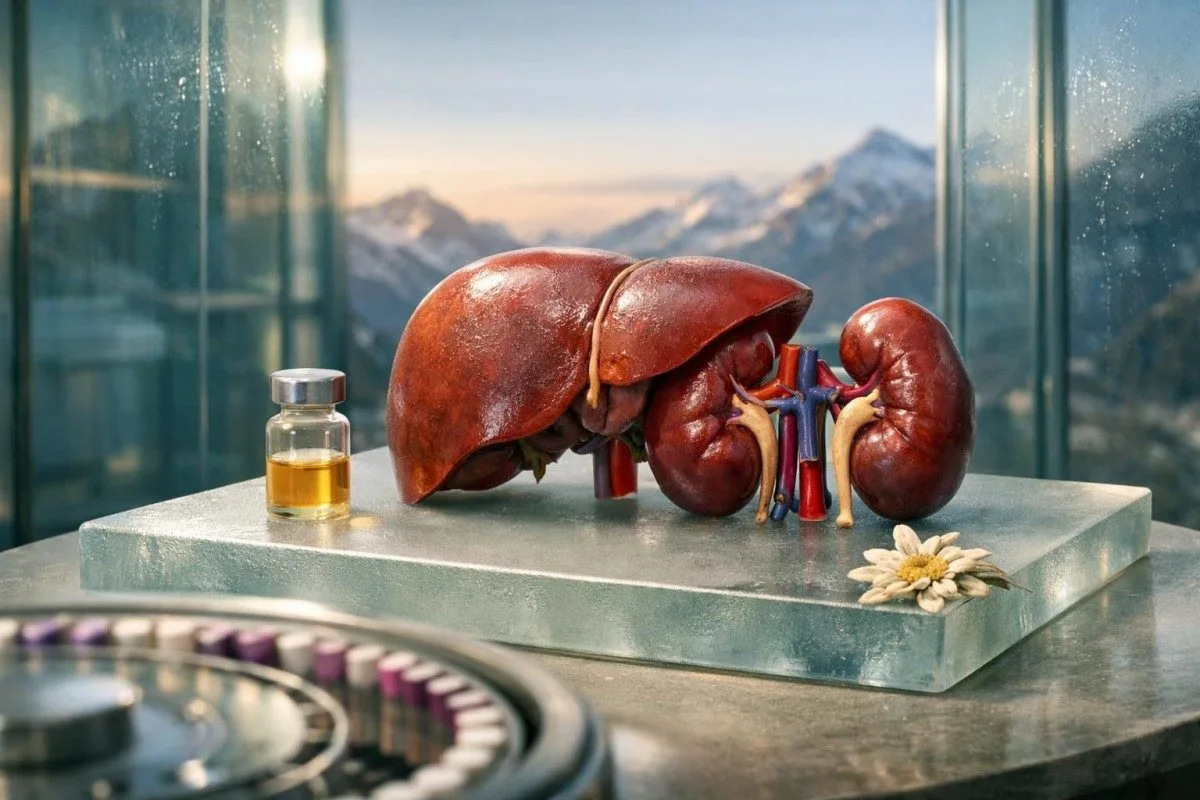
BMP answers the kidney-electrolyte question quickly. CMP asks the same question and adds liver plus protein clues that often change what I do next.


- Overlap BMP and CMP share 8 markers: sodium, potassium, chloride, CO2, glucose, calcium, BUN, and creatinine.
- CMP adds 6 extra markers: albumin, total protein, ALP, ALT, AST, and bilirubin.
- Açlık glukozu of 100-125 mg/dL suggests prediabetes; 126 mg/dL or higher needs confirmation for diabetes.
- Potassium urgency yaklaşık olarak başlar <3.0 or >6.0 mmol/L, especially with weakness, palpitations, or ECG changes.
- Creatinine change of +0.3 mg/dL within 48 hours meets KDIGO criteria for possible acute kidney injury.
- Gilbert sendromu often causes isolated bilirubin around 1.3-3.0 mg/dL with normal ALT, AST, and ALP.
- Fasting is not always required, but 8-12 hours improves interpretation when glucose is the main question.
- Panels miss a lot: magnesium, CBC, ferritin, thyroid markers, lipids, and HbA1c are not included on standard BMP or CMP.
CMP blood test vs BMP at a glance
CMP blood test Ve BMP blood test share 8 chemistry markers, but a kapsamlı metabolik panel adds 6 liver and protein tests—albumin, total protein, ALP, ALT, AST, and bilirubin. If I mainly need electrolytes, glucose, hydration, and kidney function, I usually start with BMP; if I also want liver context, I choose CMP, and our Kantesti AI kan testi analizörü can interpret either panel alongside our CMP and lab abbreviation guide.
BMP is not a lesser-quality test; it is a narrower test. In clinic, I order BMP after vomiting, diarrhea, new diuretics, dehydration, palpitations, or diabetes checks because sodium, potassium, bicarbonate, glucose, BUN, and creatinine usually answer the first question fast.
CMP is BMP plus liver-protein information. As of April 6, 2026, most adult US labs still report 14 analytes on CMP and 8 on BMP, although some automatically append eGFR Ve anion gap without changing the panel name. That lab-to-lab variation confuses patients more often than the actual numbers.
The thing is, the right panel depends on the clinical decision in front of us. A person with ankle swelling and dark urine gets more value from a CMP than a BMP, while a person with heat illness after a half-marathon often needs a BMP first because the immediate risk is electrolyte shift, not subtle liver disease.
Which biomarkers overlap, and what does CMP add?
The overlap is exact in most labs: sodium, potassium, chloride, bicarbonate or CO2, glucose, calcium, BUN, and creatinine. Those eight markers cover fluid balance, acid-base status, kidney filtration, and a single-time-point glucose reading; our 15,000+ biyomarker rehberimiz is useful if your report names the same analyte differently.
Sodium normal range is 135 to 145 mmol/L, potassium is 3.5 to 5.1 mmol/L, chloride is 98 to 107 mmol/L, and CO2 is 22 to 29 mmol/L in many adult labs. These numbers look simple, but together they tell me whether the body is retaining water, losing acid, compensating for lung disease, or reacting to medications like diuretics and ACE inhibitors.
CMP adds albumin, total protein, ALP, ALT, AST, and total bilirubin. Those six markers matter because they catch patterns a BMP simply cannot see—cholestasis, hepatocellular irritation, low protein states, and the very common isolated bilirubin bump of Gilbert sendromu, where total bilirubin is often 1.3 to 3.0 mg/dL with normal ALT and AST.
Here is a subtle point I wish more patients heard: CO2 on a metabolic panel is not the same thing as an arterial blood gas bicarbonate, even though it often tracks with it. And reference limits are not universal; some European labs use an ALT upper limit closer to 35 U/L, while older US reports may still label values in the 45 to 56 U/L range as normal, which is why Kantesti AI flags borderline results in context rather than by color alone.
Why some reports show eGFR or anion gap
eGFR and anion gap are often calculated extras, not ordered analytes. If your report shows them on a BMP or CMP, the lab derived them from creatinine and electrolytes; that is clinically helpful, but it does not mean the panel itself suddenly became a different test.
What the BMP blood test tells you in real practice
A BMP blood test is best for kidney function, electrolytes, acid-base clues, and glucose. It is the panel I reach for when I need to know whether the patient is dry, retaining potassium, losing bicarbonate, or drifting into hyperglycemia.
Sodium normal range is 135 to 145 mmol/L in most adults, and potassium normal range is 3.5 to 5.1 mmol/L. Sodium below 125 mmol/L or potassium above 6.0 mmol/L can turn into an urgent problem quickly, which is why even a supposedly routine BMP sometimes leads to a same-day phone call.
Creatinine normal range is roughly 0.6 to 1.3 mg/dL, but muscle mass changes the meaning. I often send patients to our creatinine interpretation guide Ve BUN guide because a creatinine of 1.3 mg/dL can be trivial in a muscular 25-year-old and more concerning in a frail 78-year-old. A rise in creatinine of 48 saat içinde 0,3 mg/dL ise meets KDIGO criteria for possible acute kidney injury.
BUN normal range is about 7 to 20 mg/dL, but BUN is a hydration marker as much as a kidney marker. High protein intake, gastrointestinal bleeding, steroid use, and dehydration can push BUN up without intrinsic kidney damage, while low BUN can show up in pregnancy, low protein intake, or advanced liver disease. Many labs now auto-report eGFR because creatinine alone misses a lot.
What the comprehensive metabolic panel adds beyond BMP
The comprehensive metabolic panel adds liver enzymes, bilirubin, albumin, and total protein. That makes CMP the better choice when symptoms point above the kidneys—right upper abdominal pain, jaundice, itching, medication monitoring, or unexplained swelling.
ALT and AST most often rise with liver cell stress, while ALP tends to rise with bile flow problems or bone activity. In practice, I look at pattern before magnitude; an ALT of 78 U/L with normal ALP suggests a different workup than an ALP of 220 U/L with normal ALT. Our liver enzyme pattern guide goes deeper into that split.
Total bilirubin normal range is usually 0.2 to 1.2 mg/dL, and values above 2 to 3 mg/dL are often visible in the eyes before the skin. A mildly high bilirubin with normal ALT, AST, and ALP is often benign Gilbert syndrome, especially after fasting, illness, or hard exercise; our bilirubin is where I send anxious patients first.
Albumin normal range is about 3.5 to 5.0 g/dL, and total protein normal range is 6.0 to 8.3 g/dL. Low albumin can reflect liver synthetic problems, kidney protein loss, chronic inflammation, or inadequate intake, and it can make total calcium look falsely low because roughly 40% of serum calcium rides on albumin. If albumin is 2.8 g/dL, a measured calcium of 8.1 mg/dL may not represent true ionized hypocalcemia; our serum proteinleri kılavuzunu explains that math, the A/G ratio, and why a globulin gap above about 4.0 g/dL gets my attention.
When clinicians order BMP vs CMP after symptoms or routine screening
Doctors usually order BMP for immediate electrolyte or kidney questions, and CMP when they also need liver or protein context. In the emergency department, BMP is common after dehydration, diarrhea, heat illness, palpitations, or suspected diabetic decompensation; CMP is more common when nausea comes with dark urine, abdominal pain, or medication concerns.
Symptoms matter more than panel size. A patient with muscle cramps after starting hydrochlorothiazide needs sodium, potassium, calcium, bicarbonate, BUN, and creatinine right away, while a patient with pale stools and itching needs bilirubin and ALP just as much as creatinine.
Pre-op and medication monitoring often decide the panel. Surgeons commonly start with a targeted chemistry panel before anesthesia, especially if the patient uses diuretics, ACE inhibitors, or has diabetes; our ameliyat öncesi kan testi rehberimiz shows how that decision is usually made. I also choose CMP more often for people taking valproate, methotrexate, terbinafine, or chronic acetaminophen overuse, because liver context actually changes what I do next.
Honestly, routine screening is one of those areas where practice varies. Some primary-care clinicians default to CMP during annual visits because it gives more context for only a small extra lab cost, while others prefer BMP unless there is a reason to look at liver proteins or bilirubin; both approaches can be reasonable if the symptoms and risk factors are clear.
Do you need to fast, and how are the labs run?
Fasting is not always required for a CMP blood test or BMP blood test, but it still matters for glucose interpretation. If the panel is being used to assess fasting glucose, I prefer 8 ila 12 saat of no calories, while plain water is fine and often helpful; our kan tahlili öncesi açlık rehberimizi pratik detayları kapsar.
A nonfasting glucose can still be useful, but it answers a different question. A glucose of 108 mg/dL after breakfast is not the same as 108 mg/dL after a 10-hour fast, which is why I often pair the interpretation with our fasting glucose range explainer. ADA cutoffs still define fasting glucose of açlık glukozunda bozulmayı gösterir ve pre-diyabet olarak tanımlar ve tekrarlı testte diyabeti destekler. as diabetes if confirmed.
Most labs run BMP and CMP on serum or plasma using automated chemistry analyzers and ion-selective electrodes. Delayed sample processing can lower glucose by roughly 5% to 7% per hour in an unseparated sample, and hemolysis can falsely raise potassium and AST. Kantesti AI also down-ranks isolated glucose outliers when the report documents sample delay or hemolysis because bad samples create bad stories.
Turnaround is usually fast. Inpatients can get results within 1 to 3 hours, many outpatient labs return them the same day, and almost all routine results are back within 24 hours; if you are unsure what a pending result timeline means, our real-world lab timing guide is the clearest explanation I know.
How to interpret common abnormal CMP and BMP patterns
The safest way to read a metabolic panel is to read the pattern, not the isolated flag. A mildly abnormal single value is common; a cluster of abnormalities—such as high BUN, high creatinine, low bicarbonate, and high potassium—is what changes urgency.
A BUN/creatinine ratio above about 20 often points to dehydration or reduced kidney perfusion, not necessarily intrinsic kidney injury. I see this after stomach flu, poor oral intake, fever, and sometimes gastrointestinal bleeding, but I have also seen it in healthy people who simply did a long sauna session before labs. Our BUN/kreatinin oranı kılavuzumuz explains why context matters more than the ratio by itself.
ALT or AST above 3 times the upper limit of normal usually deserves a medication, alcohol, and viral review. I would not overreact to a single ALT of 62 U/L after a viral illness, but I do pay attention to a rising trend or to AST that stays high after hard exercise; our ALT range guide is a useful next read. When ALP is high and the source is unclear, a GGT add-on test often tells me whether the signal is really hepatobiliary.
Low albumin changes the interpretation of calcium, and isolated bilirubin changes the differential. A measured calcium of 8.0 mg/dL with albumin 2.5 g/dL may be near normal after correction, while bilirubin of 1.8 mg/dL with normal ALT, AST, and ALP often points to Gilbert syndrome rather than liver failure. This is one of those areas where context beats red highlight boxes.
What CMP and BMP miss
CMP and BMP are useful, but they miss many common causes of fatigue, cramps, neuropathy, and chronic disease risk. Neither panel includes a complete blood count, magnesium, phosphorus, ferritin, vitamin B12, thyroid hormones, lipids, or HbA1c.
Anemia and infection are invisible on a metabolic panel. I still see patients reassured by a normal CMP even though their hemoglobin is 9.8 g/dL or their neutrophil count is markedly elevated, which is why a CBC diferansiyel kılavuzumuza is often the missing half of the story.
Magnesium is not included on BMP or CMP, and low magnesium can make low potassium hard to fix. If someone has palpitations, muscle twitching, or recurrent low potassium, I usually add magnesium because levels below about 1,7 mg/dL’nin altındaki bir değer can matter even when the metabolic panel looks only mildly off; our magnezyum aralığı rehberi bunun nedenini açıklıyor.
Glucose on BMP or CMP is a snapshot, while HbA1c reflects roughly 3 months of exposure. A single fasting glucose of 101 mg/dL and an HbA1c of 5.8% tell me more about true metabolic risk than either number alone. The evidence is honestly mixed on how much screening every healthy adult needs, but one random normal glucose never rules out insulin resistance.
Common reasons a normal person gets an abnormal panel
False alarms on metabolic panels are common, and the usual culprits are hemolysis, dehydration, hard exercise, IV fluids, supplements, and low muscle mass. I spend a surprising amount of clinic time explaining that abnormal does not always mean sick.
Hemolyzed samples can falsely raise potassium and AST. A potassium of 5.8 mmol/L with no symptoms and a lab note about hemolysis is a very different conversation from a clean sample showing 5.8 mmol/L with muscle weakness or ECG changes. Severe hypertriglyceridemia can also cause pseudohyponatremia in labs that use indirect ion-selective electrodes, which is a nuance many top search results skip.
Exercise can distort a CMP in ways that look scary on paper. As Thomas Klein, MD, I still remember a 52-year-old marathon runner whose AST came back at 89 U/L with normal bilirubin and only minimal ALT change the morning after a race; the repeat test 5 days later was nearly normal because the source was muscle, not liver. Creatine supplements and high muscle mass can also push creatinine upward, while frailty can hide kidney disease behind a supposedly normal creatinine.
Context-aware interpretation reduces overreaction. In our analysis of more than 2 million uploaded reports across 127 countries, Kantesti AI most often catches metabolic-panel misreads when calcium is interpreted without albumin or when borderline creatinine is read without age and body size context. You can review how we benchmark those methods in our tıbbi doğrulama standartlarımıza.
When to repeat the panel and when to seek urgent care
Seek urgent care for severe electrolyte abnormalities, rapidly rising creatinine, or symptoms that match the lab. In adults, potassium above 6.0 mmol/L, sodium below 125 mmol/L, bicarbonate below 18 mmol/L, glucose above 300 mg/dL with symptoms, or a creatinine jump of 0.3 mg/dL in 48 hours deserve same-day medical attention.
Repeat timing depends on the pattern. I usually repeat mild dehydration-related BMP abnormalities within 24 ila 72 saat, medication-related potassium changes within about 1 week, and mildly elevated liver enzymes on CMP within 2 ila 8 hafta after removing the likely trigger. If jaundice, confusion, persistent vomiting, chest symptoms, or reduced urine output are present, I do not wait on a routine repeat.
Trend data beats one isolated panel. Bizim tıbbi danışma kurulu helped train Kantesti to compare prior labs, medication context, and reference-range drift, which is often more useful than staring at a single red value. Most patients find that a graph answers the question their lab portal never really answers: is this new, stable, or getting worse?
If you have results in a PDF or a photo, upload them rather than retyping them. You can try the ücretsiz kan tahlili yorumlama demosu, use our secure PDF lab upload guide, or analyze the panel directly on platformumuza. As Thomas Klein, MD, I built my review style around trend interpretation because one number almost never tells the whole story.
Research publications and clinical reading
These research publications are the next stop when a CMP blood test raises protein-balance or immune-context questions that the basic panel cannot fully answer. They also reflect how bir kuruluş olarak Kantesti hakkında daha fazla bilgi edinebilirsiniz. approaches medical writing: start with the lab value, then explain the physiology that makes it meaningful.
Reference 1. Serum Proteinleri Rehberi: Globulinler, Albumin ve A/G Oranı Kan Testi. (n.d.). Zenodo. https://doi.org/10.5281/zenodo.18316300 | ResearchGate | Academia.edu. This paper is especially useful when CMP shows low albumin, a wide protein gap, or a confusing calcium result.
Reference 2. C3 C4 Tamamlayıcı Kan Testi ve ANA Titre Kılavuzu. (n.d.). Zenodo. https://doi.org/10.5281/zenodo.18353989 | ResearchGate | Academia.edu. I do not order complement levels because of a mildly abnormal CMP alone, but they matter when protein shifts sit beside rashes, joint symptoms, or unexplained kidney findings.
The practical takeaway is simple. BMP answers the urgent chemistry question quickly, CMP broadens the picture to liver and protein balance, and neither should be read without symptoms, medications, and trend data.
Sıkça Sorulan Sorular
CMP, BMP’den daha mı iyi?
Bir CMP, bir BMP’den otomatik olarak daha iyi değildir; daha kapsamlıdır. Bir BMP 8 belirteç ölçerken, bir CMP bu aynı 8 belirtece ek olarak 6 karaciğer ve protein belirteci daha ölçer. Klinik soru dehidratasyon, elektrolit dengesizliği veya böbrek takibi ise, BMP çoğu zaman yeterlidir. Soru karaciğer belirtilerini, ilaç takibini veya açıklanamayan şişliği de içeriyorsa, CMP genellikle daha faydalı bilgiler sağlar.
CMP, böbrek fonksiyonunu içerir mi?
Evet, bir CMP; bir BMP’nin içerdiği böbrekle ilgili aynı belirteçleri içerir: BUN, kreatinin ve böbrek durumunu yorumlamaya yardımcı olan elektrolit seti. Birçok laboratuvar ayrıca kreatininden, yaştan ve cinsiyetten eGFR’yi otomatik olarak hesaplar; ancak eGFR çoğu zaman ayrı bir analit olmaktan ziyade türetilmiş bir değerdir. 0,6 ila 1,3 mg/dL civarındaki kreatinin, kas kütlesine bağlı olarak yine de farklı anlamlar taşıyabilir. Bu nedenle tek bir izole “normal aralık” işaretinden daha çok trend ve bağlam önemlidir.
BMP karaciğer sorunlarını tespit edebilir mi?
Doğrudan değil. Bir BMP, ALT, AST, ALP, bilirubin, albümin veya total proteini içermez; bu nedenle CMP’nin yapabildiği şekilde karaciğeri tarayamaz. Bir kişi tamamen normal bir BMP’ye sahip olabilir ve yine de yağlı karaciğer hastalığı, hepatit, kolestaz veya düşük albüminle ilgili bir sorun yaşayabilir. Belirtiler sarılık, koyu renkli idrar, sağ üst karın bölgesinde ağrı veya ilaçlara bağlı bir karaciğer endişesini içeriyorsa, CMP genellikle daha iyi bir başlangıç panelidir.
CMP veya BMP yaptırmadan önce aç kalmam gerekir mi?
CMP veya BMP için her zaman açlık şart değildir; ancak açlık kan şekeri sorusu varsa açlık, glukozun yorumlanmasını iyileştirir. Genellikle kalori almadan 8 ila 12 saat öneririm; sade su uygundur ve çoğu zaman faydalıdır. 100 ila 125 mg/dL açlık glukozu, prediyabeti düşündürür; 126 mg/dL ve üzeri ise genellikle diyabet için tekrarlı doğrulama gerektirir. Birçok böbrek veya elektrolit kontrolünde, panelin geri kalanı açlık olmadan da klinik açıdan faydalı olabilir.
Doktorum neden bir CMP veya BMP’yi tekrar etsin?
Doktorlar, beklenmedik sonuçları doğrulamak, tedaviyi izlemek veya bir anormalliğin yeni mi yoksa düzeliyor mu olduğunu kontrol etmek için bu panelleri tekrar eder. Hafif dehidrasyona bağlı değişiklikler çoğu zaman 24 ila 72 saat içinde, ilaçlara bağlı potasyum değişiklikleri yaklaşık 1 hafta içinde ve hafif karaciğer enzim yüksekliği ise 2 ila 8 hafta içinde tekrar kontrol edilir. Hemoliz, örneklerin gecikmiş işlenmesi, egzersiz ve intravenöz (IV) sıvılar tümü tek bir sonucu bozabilir. Benim deneyimime göre, daha iyi bağlamla yapılan bir tekrar paneli, gereksiz endişenin büyük kısmını önler.
Hangi CMP veya BMP sonuçları en acildir?
En acil metabolik panel sonuçları; potasyumun 3,0 mmol/L’nin altında veya 6,0 mmol/L’nin üstünde olması, sodyumun 125’in altında veya 155 mmol/L’nin üstünde olması, bikarbonatın 18 mmol/L’nin altında olması ve semptomlarla birlikte glukozun 300 mg/dL’nin üzerinde ya da 54 mg/dL’nin altında olmasıdır. 48 saat içinde kreatininin 0,3 mg/dL artması veya başlangıç değerinin 50% üzerinde olması da akut böbrek hasarı açısından endişe uyandırır. Toplam bilirubinin 3,0 mg/dL’nin üzerinde olması tek başına her zaman acil bir durum değildir; ancak sarılık, ağrı, ateş veya koyu renkli idrarla birlikte olduğunda hızlı değerlendirmeyi hak eder. Semptomlar her zaman aciliyet düzeyini artırır.
Hiçbir sorun yokken bir CMP’de kalsiyum neden düşük görünebilir?
CMP’deki toplam kalsiyumun bir kısmı albümin tarafından taşınır; bu nedenle albümin düşük olduğunda, iyonize kalsiyum normal olsa bile kalsiyum düşük görünür. Albüminin normal aralığı genellikle 3,5 ila 5,0 g/dL’dir ve bu değerlerin altına inildiğinde toplam kalsiyumu olduğu gibi yorumlamak daha zor hale gelir. Sık kullanılan yatak başı düzeltmesi, ölçülen kalsiyum + 0,8 × (4 − albümin) şeklindedir; ancak bu formül kritik hastalık durumlarında daha az güvenilirdir. Kalsiyum konusu gerçekten önemli olduğunda, tahmin yürütmek yerine iyonize kalsiyum ölçümünü tercih ederim.
Bugün Yapay Zekâ Destekli Kan Tahlili Analizini Alın
Anlık ve doğru laboratuvar testi analizi için Kantesti’ye güvenen dünya genelindeki 2 milyondan fazla kullanıcıya katılın. Kan testi sonuçlarınızı yükleyin ve saniyeler içinde 15,000+ biyobelirteçlerinin kapsamlı yorumunu alın.
📚 Kaynak Gösterilen Araştırma Yayınları
Klein, T., Mitchell, S., & Weber, H. (2026). Serum Proteinleri Rehberi: Globulinler, Albumin ve A/G Oranı Kan Testi. Kantesti Yapay Zeka Tıbbi Araştırma.
Klein, T., Mitchell, S., & Weber, H. (2026). C3 C4 Kompleman Kan Testi ve ANA Titrasyon Rehberi. Kantesti Yapay Zeka Tıbbi Araştırma.
⚕️ Tıbbi Uyarı
Bu makale yalnızca eğitim amaçlıdır ve tıbbi tavsiye niteliği taşımaz. Tanı ve tedavi kararları için her zaman yetkin bir sağlık hizmeti sağlayıcısına danışın.
E-E-A-T Güven Sinyalleri
Deneyim
Hekim liderliğinde laboratuvar yorumlama iş akışlarının klinik incelemesi.
Uzmanlık
Klinik bağlamda biyobelirteçlerin nasıl davrandığına odaklanan laboratuvar tıbbı.
Otorite
Dr. Thomas Klein tarafından yazılmış; Dr. Sarah Mitchell ve Prof. Dr. Hans Weber tarafından gözden geçirilmiştir.
Güvenilirlik
Alarmı azaltmaya yönelik net takip yollarıyla kanıta dayalı yorumlama.