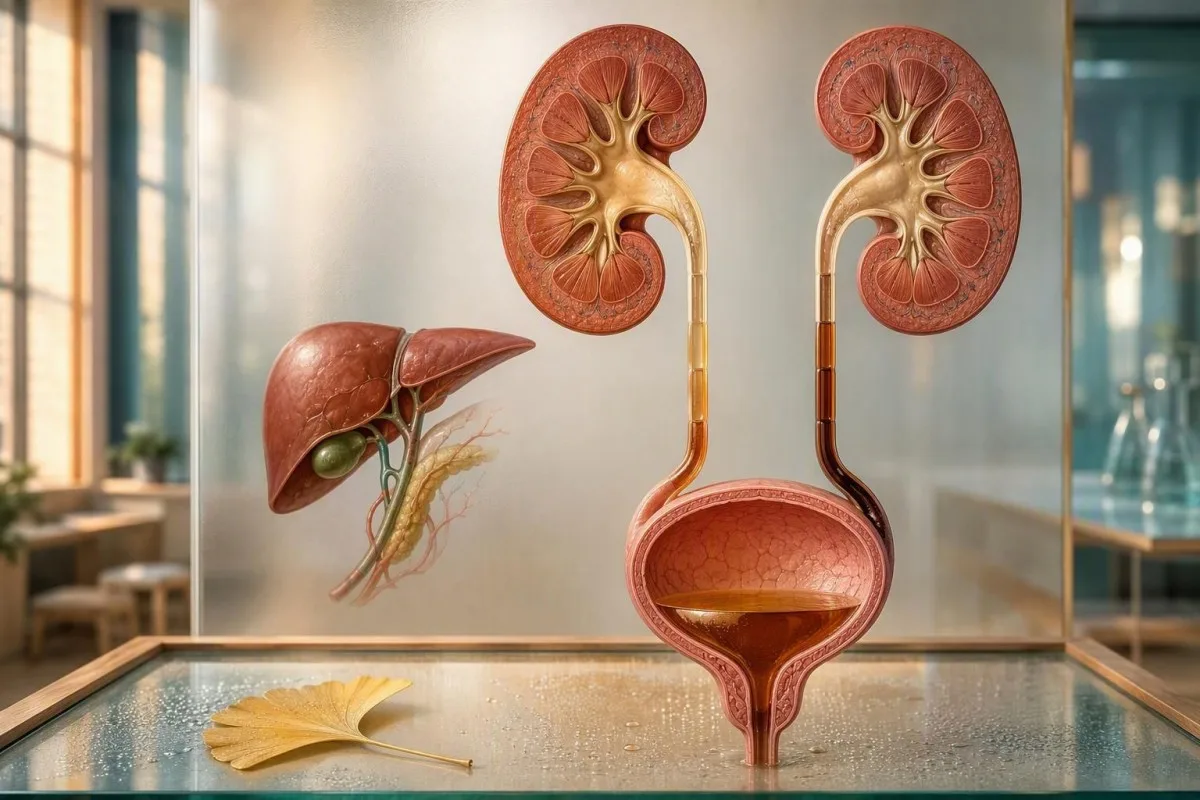
Większość ciemnożółtego moczu pochodzi z zagęszczonego moczu po śnie, upale, wysiłku, wymiotach albo z małym piciem. Mocz koloru herbaty, coli, czerwony albo stale brązowy może natomiast wskazywać na bilirubinę, krwawienie z dróg moczowych, rozpad mięśni albo chorobę nerek i zasługuje na szybką ocenę.


- Zagęszczony mocz zwykle robi się ciemnożółty, gdy ciężar właściwy moczu wzrośnie powyżej 1.020, często po całonocnym niejedzeniu, ekspozycji na upał albo przy słabym nawodnieniu.
- Widoczna krew nie da się bezpiecznie wytłumaczyć wysiłkiem, okresem ani przypuszczanym ZUM bez powtórnych badań; AUA definiuje krwiomocz mikroskopowy jako ponad 3 erytrocyty na pole widzenia dużej mocy.
- Mocz koloru herbaty plus żółte oczy sugeruje bilirubinę sprzężoną i wymaga porady medycznej tego samego dnia, zwłaszcza przy bladych stolcach, świądzie, gorączce lub bólu w górnej części brzucha.
- Mocz koloru coli po intensywnym wysiłku z bólami mięśni abo osłabieniem może być mioglobinuria; poziom kinazy kreatynowej powyżej 1.000 IU/L wspiera rozpoznanie rabdomiolizy.
- fenazopirydyna i ryfampicyna mogą zmienić mocz na pomarańczowy abo czerwono-pomarańczowy; nowa zmiana barwy nadal wymaga oceny, jeżeli występuje ból, gorączka, żółtaczka abo zmniejszone oddawanie moczu.
- test paskowy dodatni na krew nie potrafi odróżnić czerwonych krwinek od mioglobiny abo wolnej hemoglobiny, dlatego mikroskopia moczu i badanie kinazy kreatynowej we krwi często rozstrzygają sprawę.
- brak moczu przez 8 do 12 godzin z wymiotami, omdleniem, obrzękiem abo silnym bólem to pilny wzorzec, a nie objaw do „poczekania”.
- Stan na 17 sierpnia 2026 r. utrzymujący się brunatny mocz trwający dłużej niż 24 godziny mimo normalnego picia nalezy ocenić, a nie leczyć powtórnym „zalewaniem” wodą.
Zacznij od koloru, czasu i objawów
Ciemny mocz najczęściej oznacza mocz bardziej skoncentrowany, ale czerwony, koloru herbaty abo brunatny mocz nalezy rozdzielić według towarzyszących objawów, a nie samej barwy. Jeżeli w ciągu kilku godzin robi się jasny przy normalnym piciu i ogólnie czujesz się dobrze, to prawdopodobnie chodzi o odwodnienie; jeżeli to trwa, wygląda jak „cola” abo towarzyszy temu ból, żółtaczka, gorączka, osłabienie abo mała ilość moczu, szukaj porady klinicznej tego samego dnia.
Przydatne pierwsze pytanie brzmi, czy zmiana nastąpiła po pierwszym porannym oddaniu moczu, po długim locie, przy gorączce, po ciężkim treningu, przy biegunce, abo po prostu dlatego, że zapomniało się pić. Ciemnożółty mocz, który rozjaśnia się po dwóch do czterech zwykłych szklankach płynu wypitych w ciągu kilku godzin, zwykle oznacza koncentrację, a nie chorobę. Nie zmuszaj do szybkiego, nadmiernego picia wody, jeżeli masz niewydolność serca, zaawansowaną chorobę nerek abo powiedziano ci, żeby ograniczyć płyny; bezpieczniejszym celem jest stopniowy powrót do twojego zwykłego spożycia. Nasze porównanie barw moczu wyjaśnia najczęstsze odcienie w praktyczny sposób.
Liczy się odcień, ale jeszcze bardziej liczy się wzorzec. Pomarańczowy mocz może być barwnikiem z leków abo bilirubiną; czerwony abo różowy mocz może zawierać czerwone krwinki, barwnik z jedzenia abo z leków; prawdziwie brunatny mocz może zawierać bilirubinę, utleniony barwnik krwi abo mioglobinę z uszkodzenia mięśni. Kantesti to analizator badań krwi AI, który umieszcza skargę na kolor moczu obok wyników z nerek, wątroby, morfologii krwi i enzymów mięśniowych, zamiast traktować kolor jako rozpoznanie.
W mojej praktyce osoby, o których się martwię, niekoniecznie są te z najciemniejszym próbkowaniem. To jest osoba, której mocz nagle robi się koloru herbaty przy żółtych twardówkach, biegacz z silną tkliwością uda i skąpym moczem, albo starszy palacz, który widzi raz bezbolesny czerwony mocz i zakłada, że to przeszło. Dr Thomas Klein, MD, zaleca zrobić raz dobrze oświetlone zdjęcie moczu, zanotować czas i przyjęte leki, a potem szukać pomocy na podstawie poniższego wzorca „czerwonych flag”, a nie wielokrotnie sprawdzać toaletową miskę.
Kiedy ciemnożółty mocz najprawdopodobniej oznacza odwodnienie
Ciemnożółty mocz to zwykle odwodnienie, jak sie pojawi po małej ilości piciu abo po stracie płynów i robi sie jaśniejszy po stopniowym nawodnieniu. Skoncentrowany mocz zawiera wiyncyj urochromu na mililitr, przeto wyglonda na bursztynowy, choć same nerki mogą działać normalnie.
Gęstość właściwa moczu to szybka ocena koncentracji: wiele laboratoriów używa 1.005 do 1.030 jako szerokiego przedziału referencyjnego, a wartość powyżej 1.020 często pasuje do zmniejszonego piciu płynów u w miarę zdrowego dorosłego. Wysoki wynik nie je jednak dowodem odwodnienia, bo glukoza, białko i kontrast radiologiczny też mogą to podwyższać. Przydatnym uzupełniającym pomiarem je osmolalność moczu, badana w naszym przewodniku do osmolalności moczu.
Ciemny mocz związany z koncentracją często idzie z suchym pyskiem, pragnieniem, bólym głowy, zaparciami i mniejszym niż zwykle oddawaniem moczu, ale te objawy nie są zbyt swoiste. Dorosły ważący 70 kg, co traci 1% masy ciała we spocu, stracił mniej wiyncyj 700 ml płynu, ale kolor moczu może ściemnieć, zanim pragnienie zrobi sie wyraźne. Gorące miejsca pracy, dalekie podróże, gastroenteritis i diuretyki to częste bodźce w realnym życiu.
Jedno kliniczne pułapka to nazywać u ludzi z cukrzycą każde ciemne zabarwienie moczu odwodnieniem. Wysoka glukoza może „ściągnąć” wodę do moczu, co tworzy i częste oddawanie moczu, i odwodnienie; glikemia we krwi wynosząca 11.1 mmol/L abo 200 mg/dL z klasycznymi objawami spełnia próg diagnostyczny dla cukrzycy, jak je odpowiednio potwierdzić. Jak pragnienie i częste sikanie są nowe, przejrzyj nasz poradnik do badań na częste oddawanie moczu zamiast polegać jedynie na kolorze.
Normalna próba nawodnienia je umiarkowana: pij swoje zwykłe, odpowiednie płyny w przeca najbliższych 4 do 6 godzin, jedz normalnie i obserwuj kolejne jedne abo dwie mikcje. Ciemny mocz, co nie rozjaśni sie do nastymgo dnia, abo pogarsza sie mimo picia, nie je wiarygodnym testym na odwodnienie i powinien skłonić do badania ogólnego moczu.
Jedzenie, leki i witaminy, które zmieniają kolor moczu
Jedzenie i leki mogą powodować pomarańczowy, czerwony, brązowy, zielony abo intensywnie żółty mocz, bez uszkadzania nerek. Wskazówka to bliski czasowy związek z znanym produktem, stała objętość moczu i brak gorączki, bólu w boku, żółtaczki abo choroby ogólnoustrojowej.
Buraki, jeżyny, rabarbar i barwniki w jedzeniu mogą sprawić, że mocz będzie różowy do czerwonego, szczególnie gdy mocz je kwaśny. Beeturia występuje w rôchło 10% do 14% ludźi w starszych badaniach nad żywieniem, a jej widoczność może wzrosnąć przeca niedobór żelaza abo zmienione wchłanianie w jelitach; jednak nadal nie da się bezpiecznie wykluczyć krwawienia z dróg moczowych. Jeźli czerwony mocz wróci, a ty niy jadłeś tych potraw, zorganizuj badania.
Fenazopirydyna ôkôzno przeca robi mocz jaskrawo pomarańczowy abo czerwono-pomarańczowy i może zabarwić soczewki kontaktowe i tkaniny. Ryfampicyna może zabarwić mocz, łzy i pot na pomarańczowo-czerwony; metronidazol, nitrofurantoina, metokarbamol, senes i lewodopa u niektórych ludzi mogą przyciemnić mocz w kierunku brązowego. Nigdy nie przerywaj przepisanyj antybiotyku, leku przeciwkrzepliwego abo medycyny neurologicznej wyłócznie przez to, że mocz ma inny kolor, bez pogadania z preskrybentym.
Ryboflawina, znana też jako witamina B2, powoduje fluorescencyjnie żółty mocz, bo je rozpuszczalna w wodzie i nadmiar je szybko wydalany. Efekt często je najbarziej widoczny w cygu kilku godzin po multiwitamini; sam w sobie je nieszkodliwy. To je co innego niźli mocz w kolorze bursztynu abo herbaty. Nasz przegląd efektów witamin rozpuszczalnych w wodzie ôpisuje, czemu tak sie dzieje.
Produkty ziołowe i do budowania masy zasługują na barziej ostrożno historiję, niźli to ôczekuje wiele ludźi. Przyciemniający produkt może być niewinnym barwnikiem, ale suplementy też mogą być powiązane z uszkodzynym wątroby abo uszkodzynym mięśni, szczególnie jak kilka zacznie się naraz. Trzymaj pakiet abo zrob fotkę listy składnikōw dla klinicysty; to małe szczegół może przeca zapobiec niepotrzebnemu skanowi abo, czasym, odkryć prawdziwą przyczynę.
Czerwony albo brązowy mocz: kiedy podejrzewać krew
Widoczny czerwony, rdzawy abo brązowy mocz może być hematurijōm i wymaga oceny medycznej, nawet jeźli je bezbolesny abo pojawił sie tylo raz. Amerykańskie Towarzystwo Urologiczne definiuje mikroskopową hematuriję jako więcej niź 3 czerwone krwinki na pole widzenia w wysokiej powiększce w prawidłowo pobranem próbce moczu, a nie sam wynik z testpaska.
Krwawienie z dróg moczowych może pochodzić z infekcyji, kamieni, zapalenia nerek, powiększenia prostaty, urazu, leków, co wpływają na krzepnięcie, i rzadziej z nowotworu dróg moczowych. Krew widoczna ze skrzepami, niymożność oddania moczu, mocno silny jednostronny ból w plecach abo zawroty głowy wymagają pilnej oceny. Profil ryzyka różni sie ostro w zależności od wieku, historiji palynio i tego, czy to trzyma sie dalej, dlatego prosty testpasek z moczu niy je ostatecznym rozwiązanio.
Wytyczne AUA/SUFU zalecają mikroskopiję po pozytywnym wyniku testpaska, bo testpaski wykrywoją aktywność hemu, w tym mioglobinę i wolno hemoglobinę, a niy tylo całe czerwone krwinki (Barocas et al., 2020). Czysto-łapana próbka ze środkowego strumienia, pobrana z dala od menstruacyji, jeźli to możliwe, zmniejsza zanieczyszczenie; jeźli zanieczyszczenie je prawdopodobne, klinicyści mogą ją powtórzyć, a niy nadmiernie interpretować jeden wynik. Więcej w naszym ukierunkowanym przewodniku do badania krwi w moczu.
Ćwiczenia mogą powodować przejściową hematuriję, szczególnie po bieganiu na dłuższych dystansach, ale uspokajający wariant rozwiązuje sie w cygu 24 do 72 godziny po odpoczynku i nawodnieniu. Niy powinna być używana jako ogólne wytłumaczenie nawracającej widocznej krwi, skrzepów abo objawów u kogoś po 40. Roku. Miałem do czynienia z 52-letnim rekreacyjnym biegaczem, co przypisał trzy epizody treningowi; mikroskopijōm i obrazowaniem zamiast tego wykryli kamień, co wymagał leczenia.
Brązowy mocz czasym bywa opisywany jako stara krew, ale to sformułowanie je za luźne, cob prowadzić w opiece. Mikroskopia rozróżnia czerwone krwinki, wałeczki (casts) i kryształy; białko, kreatynina, ciśnienie krwi i funkcja nerek dopiero wtedy decydują, czy źródło może być kłębikowe (glomerularne), a niy związane z pęcherzem. Nasz przegląd białka w moczu ôpisuje, czemu białko zmienia pilność tego sprawdzania.
Mocz koloru herbaty może sygnalizować bilirubinę
Mocz w kolorze herbaty z żółtą skórą abo żółtymi oczami mocno sugeruje sprzężony bilirubina w moczu i wymaga porady klinicznej tego samego dnia. Niesprzężony bilirubina niy je rozpuszczalny w wodzie i normalnie niy wchodzi do moczu, natomiast sprzężony bilirubina może przyciemnić mocz, zanim żółtaczka stanie sie oczywista w dziennym świetle.
Kombinacyja ciemnego moczu, jasnych abo gliniano-szarych stolców, swędzenia, nudności i bólu w prawym górnym brzuchu wskazuje na zmniejszony przepływ żółci, co często nazywa sie cholestazą. Wynik bilirubiny powyżej 2,0 mg/dL lub 34 µmol/L może powodować widoczną żółtaczkę, chociaż oświetlenie i odcień skóry sprawiają, że jest to zmienne. Gorączka z żółtaczką i bólem brzucha to potencjalnie pilny wzorzec infekcji, zwłaszcza gdy kamień żółciowy blokuje przewód żółciowy.
Panel wątrobowy zwykle obejmuje alaninową aminotransferazę, asparaginianową aminotransferazę, fosfatazę alkaliczną, bilirubinę, albuminę, a czasem także gamma-glutamylotransferazę. W cholestazie fosfataza alkaliczna i GGT często rosną nieproporcjonalnie do ALT i AST; interpretacja zależy od górnego limitu w laboratorium i trendu, a nie od jednego uniwersalnego progu. Nasze wyjaśnienie wzorców krwi w cholestazie podaje praktyczne rozróżnienie.
Europejskie Towarzystwo Badań nad Wątrobą zaleca niezwłoczne obrazowanie i ocenę ukierunkowaną na przyczynę, gdy objawy i badania sugerują obturacyjną chorobę kamieni żółciowych, a nie zakładanie przyczyn dietetycznych (EASL, 2016). Ma to znaczenie, ponieważ brązowy mocz po weekendzie słabego jedzenia bywa czasem zbywany jako odwodnienie, podczas gdy blady stolec lub świąd wskazują w drugą stronę. Alkohol może przyczyniać się do uszkodzenia wątroby, ale nie tłumaczy każdego wzorca bilirubiny.
Kantesti AI to platforma do interpretacji badań krwi z użyciem AI, która odczytuje bilirubinę wraz z ALT, ALP, GGT, albuminą i wcześniejszymi wynikami, aby rozpoznać wzorzec hepatocytarny w porównaniu z cholestatycznym. Dodatni wynik badania bilirubiny w moczu jest najbardziej użyteczny, gdy zestawi się go z panelem krwi i objawami; nasz artykuł na dodatni bilirubina w moczu omawia kolejne kroki.
Mocz koloru coli po wysiłku: myśl o urazie mięśni
Mocz o barwie coli po nietypowo intensywnym wysiłku, ekspozycji na upał, zmiażdżeniu urazu lub długotrwałym unieruchomieniu może wskazywać na mioglobinurię w przebiegu rabdomiolizy. Pilna ocena jest właściwa, gdy dochodzi do tego wraz z bólem mięśni, obrzękiem, osłabieniem, zmniejszoną objętością moczu, wymiotami lub splątaniem.
Mioglobina to białko mięśniowe, które może ciemnić mocz, gdy duże ilości przedostają się do krążenia i są filtrowane przez nerki. Poziom kinazy kreatynowej powyżej 1 000 IU/L, lub ponad pięciokrotność górnego limitu w laboratorium, często wspiera rozpoznanie rabdomiolizy. CK rośnie w ciągu godzin i często osiąga szczyt 24 do 72 godzin po urazie, więc prawidłowy bardzo wczesny wynik może wymagać powtórzenia, jeśli historia jest przekonująca.
Splątanie przy łóżku pacjenta jest zrozumiałe: pasek do badania moczu może wykazać wynik dodatni na krew, podczas gdy mikroskopia pokazuje niewiele lub brak krwinek czerwonych, ponieważ reaguje na mioglobinę. Lekarze następnie sprawdzają CK, kreatyninę, potas, fosforany, wapń, wodorowęglany i diurezę. Potas powyżej 6,0 mmol/L, szybko narastająca kreatynina lub nieprawidłowe EKG zmieniają sytuację z monitorowania ambulatoryjnego na leczenie w trybie pilnym.
Dokument konsensusowy Amerykańskiego Towarzystwa Chirurgii Urazowej wskazuje wysiłek, upał, leki, unieruchomienie i uraz wśród głównych przyczyn oraz popiera seryjne monitorowanie CK i nerek, gdy podejrzewa się rabdomiolizę (McMahon i wsp., 2022). Nie ma idealnego progu CK, który przewiduje uszkodzenie nerek u każdej osoby; wartości powyżej 5.000 IU/L budzą obawy, ale odwodnienie, sepsa i istniejąca wcześniej choroba nerek w znacznym stopniu zmieniają ryzyko. Zobacz nasz szczegółowy przewodnik po niebezpiecznych objawach CK.
Często widzę to po nietypowym, wysokointensywnym treningu, a nie po sporcie wyczynowym. Osoba, która regularnie ćwiczy, ale nagle robi setki powtórzeń, trenuje w upale albo łączy wysiłek z suplementem pobudzającym, jest bardziej narażona niż osoba, która po prostu czuje się normalnie obolała. Nasz przewodnik po rabdomiolizie CrossFit wyjaśnia różnicę między opóźnioną bolesnością a niepokojącym skupiskiem objawów.
Przyczyny: zakażenie dróg moczowych, kamienie i nerki
ZUM lub kamień nerkowy mogą sprawić, że mocz będzie wyglądał na ciemny przez krew, komórki ropne, zagęszczenie lub odwodnienie, ale sam kolor nie może zdiagnozować żadnego z tych stanów. Pieczenie, naglące parcie, gorączka, ból w okolicy lędźwiowej, nudności i widoczna krew kierują do kolejnego badania bardziej wiarygodnie niż sam odcień.
Infekcja dolnych dróg moczowych typowo powoduje pieczenie, parcie na mocz, częste oddawanie małych ilości moczu i czasym mętny abo śmierdzący mocz. Gorączka 38,0°C abo wyższa z bólem w boku, dreszczami, wymiotami abo ciążą budzi podejrzenie zajęcia górnych dróg moczowych i wymaga oceny tego samego dnia. Azotyny i esteraza leukocytarna pomagają, ale posiew moczu często je potrzebny, gdy objawy są mocne, nawracające abo nietypowe.
Kamienie mogą powodować fale silnego bólu z boku do pachwiny z nudnościami i krwiomoczem mikroskopowym abo widocznym. Kamień nie zawsze powoduje widoczną krew, a bezbolesny ciemny mocz nie je typowym obrazem kamieni; decyzje co do USG abo TK zależą od nasilenia, stanu w ciąży, funkcji nerek i ryzyka infekcji. Co do niuansów badań, patrz nasz poradnik do wyników esterazy leukocytarnej.
Choroba kłębuszków nerkowych staje się bardziej prawdopodobna, gdy ciemny mocz towarzyszy nowemu obrzękowi, podwyższonemu ciśnieniu krwi, białku w moczu abo wałeczkom z czerwonych krwinek. Wskaźnik albumina–kreatynina 30 mg/g abo 3 mg/mmol lub więcej je nieprawidłowy, gdy utrzymuje się, chociaż ostra gorączka, wzmożony wysiłek i infekcja dróg moczowych mogą przejściowo go podwyższyć. To je jedna z przyczyn, dla których klinicyści powtarzają próbkę, jak już ustanie ostry czynnik wyzwalający.
Ludzie czasym pytają, czy epizod ciemnego moczu dowodzi przewlekłej choroby nerek. Nie. Przewlekła choroba nerek wymaga 60 ml/min/1,73 m² przez co najmniej 3 miesiace abo utrzymujących się markerów uszkodzenia nerek, a nie jednego zagęszczonego próbka. Nasz przewodnik po stadiach PChN przedstawia definicje, nie zamieniając jednego koloru moczu w stałą etykietę.
Co może, a czego nie może powiedzieć badanie ogólne moczu
Badanie ogólne moczu rozdziela mocz zagęszczony od krwi, bilirubiny, ketonów, glukozy, białka i wskazówek infekcji, ale samo w sobie nie diagnozuje źródła. Dodatni wynik testu paskowego trzeba interpretować z mikroskopią moczu, ciężarem właściwym, objawami i często badaniami krwi.
Standardowy pasek mierzy pH, ciężar właściwy, krew, białko, glukozę, ketony, bilirubinę, urobilinogen, azotyny i esterazę leukocytarną. Krew w teście paskowym wykrywa barwnik hemowy w niskich stężeniach, ale nie potrafi odróżnić nienaruszonych czerwonych krwinek od hemoglobiny abo mioglobiny. Mikroskopia je badanie, które zlicza czerwone krwinki i może pokazać wałeczki, kryształy abo zanieczyszczające komórki nabłonka płaskiego.
Bilirubina w moczu powinna ordynaryjnie być ujemna, natomiast urobilinogen je często obecny w małych ilościach; laboratoria różnią się w swoich półilościowych skalach. Dodatni wynik bilirubiny przy ciemnym moczu powinien skłonić do oznaczenia bilirubiny w surowicy i panelu wątrobowego, natomiast ujemny pasek na bilirubinę nie wyklucza każdej choroby wątroby. Szczegóły analityczne są opisane w naszym kōmpletny przewodnik ô analizie moczu.
Keton(y) mogą pogłębić kolor moczu pośrednio, zagęszczając go podczas głodzenia, wymiotów abo niekontrolowanej cukrzycy, ale same ketony nie tłumaczą moczu o barwie herbaty. Umiarkowane abo duże ketony w moczu przy glukozie powyżej 250 mg/dL, nudnościach, bólu brzucha, szybkim oddychaniu abo splątaniu wymagają pilnej oceny pod kątem kwasicy ketonowej cukrzycowej. Nasz przewodnik po ketonach w moczu wyjaśnia, czemu ta kombinacja ma znaczenie.
Kantesti AI interpretuje wyniki krwi powiązane z badaniem ogólnym moczu, porównując kreatyninę, eGFR, frakcje bilirubiny, CK, elektrolity i dane z CBC z zakresami referencyjnymi laboratorium. Taki schemat podejścia pomaga wychwycić potrzebę rozmowy kontrolnej, ale nie może zastąpić badania, powtórnej próbki, obrazowania ani pilnej opieki na miejscu, gdy są obecne czerwone flagi.
Ciemny mocz w ciąży, u dzieci i u starszych osób
Ciąża, dzieciństwo i starszy wiek obniżają próg sprawdzania uporczywie ciemnego moczu, bo odwodnienie i infekcja dróg moczowych mogą w tych grupach szybko się pogarszać. Nowy ciemny mocz w ciąży w połączeniu z bólom głowy, obrzękiem, bólem w górnej części brzucha abo zmniejszonym ruchami płodu wymaga pilnej oceny na oddziale położniczym.
Ciąża normalnie zwiększa filtrację nerek, więc kreatynina w surowicy zwykle je niższa niż u dorosłych niebędących w ciąży; wartość, co wyglōnda na normalno w ogólnym wyniku labolatoryjnym, w ciąży może niespodziewanie być wysoka. Kreatynina powyżej 0,9 mg/dL abo 80 µmol/L w ciąży wymaga kontekstu klinicznego i często ponownej oceny., zwłaszcza z ciemnym moczem, wymiotami, nadciśnieniem abo białkomoczem. Nasz przewodnik GFR w ciąży wyjaśnia, czemu etykiety eGFR dla osób niebędących w ciąży mogą wprowadzać w błąd.
Dla dzieci ciemnożółty mocz po gorączce, zabawie abo gastroenteritis je częsty, ale dziecko, co je nienormalnie senne, ma suche wargi, nie sikało przez 8 godzin abo nie potrafi utrzymać płynów, potrzebuje porady medycznej tego samego dnia. Niemowlęta mogą się pogarszać, zanim kolor moczu stanie się oczywistym sygnałem., dlatego liczy się bardziej liczba mokrych pieluch, czujność i karmienie, niźli pojedynczy próbka. Nie podawaj dzieciom leków na ból dróg moczowych dla dorosłych, chyba że klinicysta je przepisał.
U starszych osób zmniejszone pragnienie, diuretyki, leki przeczyszczające, upośledzenie nerek i wiele leków sprawiają, że i odwodnienie, i zmiany pigmentu są bardziej prawdopodobne. Bezbolesny widoczny krwiomocz zasługuje na szczególną troskę, bo ryzyko nowotworu dróg moczowych rośnie z wiekiem i ekspozycją na tytoń. To je sytuacyjo, w ktorej lista leków i badanie mikroskopowe moczu mają dużo większą wartość niż zgadywanie po kolorze.
Praktyczna zasada rodzinna: traktuj uporczywie ciemny mocz jako pilny wcześniej, jeżeli osoba je w ciąży, je poddana immunosupresji, je krucha, ma jedną nerkę, ma znaną chorobę nerek abo nie potrafi jasno opisać objawów. Nasz przewodnik po badaniach krwi u osób starszych daje dodatkowe wskazówki, co mogą towarzyszyć odwodnieniu abo zmniejszonemu „zapasowi” nerek.
Objawy alarmowe oznaczające stan nagły albo opiekę tego samego dnia
Szukaj pomocy w trybie pilnym (SOR) dla ciemnego moczu, jeżeli nie potrafi sikać, je zamieszanie, omdlenie, silna słabość, objawy ze strony klatki piersiowej, silny ból mięśni, skrzepy krwi abo szybko narastający obrzęk. Szukaj porady medycznej tego samego dnia dla moczu koloru herbaty z żółtaczką, gorączką i bólem w boku, uporczywie widoczną krwią w moczu abo brązowym moczem po chorobie cieplnej abo wysiłku.
Zmniejszona ilość moczu staje się niepokojąca, gdy dorosły wytwarza prawie wcale moczu przez 8 do 12 godzinach mimo picia, szczególnie jeżeli są wymioty abo biegunka. Klinicyści definiują oligurię bardziej formalnie jako mniej niż 0,5 mL/kg/godzinę przez co najmniej 6 godzin, ale pacjenci nie muszą to liczyć, zanim zwrócą się o pomoc. Anuria, co znaczy praktycznie brak moczu, wymaga pilnej oceny pod kątem przeszkody abo ciężkiej dysfunkcji nerek.
Ciemny mocz plus gorączka nie musi automatycznie oznaczać nagłego stanu związanego z nerkami, ale gorączka powyżej 38.0°C, dreszcze z drżeniem, niskie ciśnienie krwi, zamieszanie abo ból w boku mogą wskazywać na skomplikowaną infekcję dróg moczowych abo sepsę. Sepsa je rozpoznanie kliniczne, a nie rozpoznanie po kolorze moczu; zespoły pilne często sprawdzają laktat, CBC, kreatyninę, posiewy i elektrolity. Nasz przewodnik do markerami sepsy we krwi wyjaśnia, czemu te badania zlecane są razem.
Żółtaczka z ciemnym moczem potrzebuje innego „screeningu” pilności: silny ból brzucha, gorączka, zamieszanie, łatwe siniaczenie, czarne stolce abo jasne stolce podnoszą podejrzenie. Szybko rosnący bilirubina całkowita, INR powyżej 1,5 bez użycia antykoagulantów albo nowe splątanie z dysfunkcją wątroby wymagają pilnej oceny w szpitalu. To nie są liczby do samodzielnego monitorowania w domu.
Dlaczego kombinacje mają znaczenie: jedna łagodna przyczyna rzadko tłumaczy wszystko. Ciemny mocz po gorącym dniu sam w sobie często oznacza zagęszczenie; ciemny mocz plus osłabienie i zaburzenia potasu sugerują uszkodzenie mięśni; ciemny mocz plus świąd i blady stolec sugerują niedrożność dróg żółciowych. Tyn rozróżniyn jest przydatnym umiejętności triage.
Jakie badania klinicyści zwykle zlecają jako następne
Pierwsze badania przy niewyjaśnionym ciemnym moczu to zwykle badanie ogólne moczu z mikroskopią, posiew moczu, jeżeli możliwa jest infekcja, kreatynina i elektrolity oraz ukierunkowane badania wątroby abo mięśni. Lista badań rozszerza się dopiero wtedy, gdy wzór koloru i objawy sugerują krew, bilirubinę, niedrożność abo chorobę ogólnoustrojową.
Przy podejrzeniu krwi klinicyści często zlecają powtórne badanie ogólne moczu, mikroskopię, stosunek białka w moczu do albuminy, CBC, kreatyninę oraz obrazowanie w zależności od ryzyka. Wiyncyj niż 3 erytrocyty na pole widzenia w dużym powiększeniu w mikroskopii to przyjęty próg mikroskopowej hematurii, ale po miesiączce, leczeniu ZUM abo po intensywnym wysiłku może być potrzebny powtórny próbka. Utrzymujące się wyniki kierują do skierowania do urologii abo nefrologii.
Przy podejrzeniu bilirubiny przydatne badania krwi obejmują bilirubinę całkowitą i bezpośrednią, ALT, AST, fosfatazę alkaliczną, GGT, albuminę oraz INR. ALT abo AST powyżej 1,000 IU/L to wyraźnie nieprawidłowy wzorzec uszkodzenia hepatocytów, co wymaga pilnej oceny medycznej, nawet jeźli kolor moczu jest pierwszym objawem. Nasz przegląd co obejmuje panel wątrobowy może pomóc ci przeczytać nazwy przed wizytą.
Przy podejrzeniu rabdomiolizy kluczowe są CK, kreatynina, potas, wapń, fosforany, wodorowęglany oraz powtórne badanie moczu. CK może być wysoka po zwykłym, intensywnym ćwiczeniu, więc bardziej informatywna jest kombinacja objawów, diurezy, markerów nerek i przebiegu w czasie niż pojedyncza dramatyczna liczba. Pacjent z CK 2.000 IU/L po maratonie i prawidłową kreatyniną to co innego niż osoba z CK 2.000 IU/L, wymiotami i rosnącym potasem.
Dr Thomas Klein, MD, radzi przynieść dokładny czas: kiedy zmienił się mocz, ostatnie prawidłowe oddanie moczu, czas trwania wysiłku, ekspozycja na ciepło, barwniki w jedzeniu, nowe leki, suplementy i wszelka niedawna infekcja. Tyn oś czasu często jest bardziej diagnostycznie użyteczny niż ogólne stwierdzenie, że mocz przez kilka dni wyglądał ciemniej.
Co możesz bezpiecznie zrobić przed wizytą
Przy izolowanym ciemnożółtym moczu bez objawów alarmowych pij normalne płyny stopniowo, unikaj intensywnego wysiłku przez 24 godziny i obserwuj kolejne jedno albo dwa oddania moczu. Nie używaj produktów detoksykacyjnych, diuretyków ani nadmiarowej ilości wody, żeby spróbować zmienić kolor, zanim klinicysta go oceni.
Sensowny zapis obejmuje zdjęcie w świetle dziennym, datę i godzinę, straty płynów, ostatnio zjedzone produkty, leki, suplementy, objętość moczu oraz towarzyszący ból abo gorączka. Jedno wyraźne zdjęcie i lista leków są bardziej użyteczne niż wielokrotne testowanie pasków w domu, na co mogą wpływać witamina C, przeterminowane próbki i interpretacja przy słabym oświetleniu. Jeźli używasz paska domowego, weź wynik i opakowanie na wizytę zamiast traktować go jako rozstrzygający.
Unikaj intensywnego wysiłku, dopóki nie ustąpi cola abo brązowy mocz i dopóki nie wykluczono uszkodzenia mięśni. Unikaj niesteroidowych leków przeciwzapalnych, takich jak ibuprofen, jeźli jesteś odwodniony, wymiotujesz abo masz podejrzenie uszkodzenia nerek, chyba że klinicysta konkretnie je zalecił; mogą one zmniejszać przepływ krwi przez nerki w sytuacjach predysponujących. Nasz poradnik do podstawowego panelu metabolicznego pokazuje wartości nerek i elektrolitów, które klinicyści najczęściej śledzą.
Nie przerywaj nagle przepisanych leków, które mogą barwić mocz. Zamiast tego zadzwoń do farmaceuty abo klinicysty, który je przepisał, i zapytaj, czy oczekiwana zmiana barwnika pasuje do twojego czasu; wymień każdy produkt bez recepty, w tym proszki przedtreningowe i mieszanki ziołowe. U osoby przyjmującej antykoagulanty widoczna krew w moczu nadal wymaga oceny, a nie zakładania, że to jedynie działanie leku.
Jeźli masz ograniczenie płynów zalecone przez klinicystę, trzymaj się tego planu, a nie ogólnych porad o nawodnieniu. Ludzie z niewydolnością serca, marskością wątroby, dializą abo zaawansowaną przewlekłą chorobą nerek mogą się poczuć gorzej zarówno od przelewania, jak i od niedolewania. Celem jest prawidłowa fizjologia, a nie mocz bezbarwny za wszelką cenę.
Jak czytać ciemny mocz razem z wynikami badań krwi
Wyniki badań krwi mogą zawęzić przyczyny ciemnego moczu, jeźli czyta się je jako wzorce: rosnąca kreatynina sugeruje zmniejszoną filtrację, wysoka CK sugeruje uszkodzenie mięśni, a bilirubina bezpośrednia przy wysokim ALP sugeruje cholestazę. Pojedynczy wynik poza zakresem nie dowodzi przyczyny bez wyników z moczu i wywiadu klinicznego.
Odwodnienie może czasowo podwyższać kreatyninę, mocznik lub BUN, hematokryt, albuminę i białko całkowite na skutek hemokoncentracji. Stosunek BUN do kreatyniny powyżej 20:1 może wspierać rozpoznanie zmniejszonego przepływu przez nerki w jednostkach US, ale krwawienie z przewodu pokarmowego, sterydy i wysokie spożycie białka również mogą go podwyższać. Kierunek zmian po nawodnieniu i wynik wyjściowy są często bardziej użyteczne niż jeden wskaźnik.
Hemoliza, czyli rozpad krwinek czerwonych w krążeniu, może powodować ciemny mocz przez hemoglobinurię, ale jest znacznie rzadsza niż odwodnienie lub krwawienie z dróg moczowych. Wspierające objawy mogą obejmować anemię, podwyższoną LDH, niską haptoglobinę i zwiększony bilirubin pośrednią; liczba retikulocytów pomaga ocenić, czy szpik reaguje. Nasze wynik haptoglobinu wyjaśnia wzorzec, nie myląc go z próbką, która uległa hemolizie w laboratorium.
Kantesti to narzędzie do analizy badań krwi oparte na AI, które porównuje aktualne wyniki z wcześniejszymi wartościami nerek, wątroby, elektrolitów i CK, aby wykryć istotną zmianę, a nie tylko oznaczać strzałki poza zakresem. Jeśli korzystasz z automatycznej interpretacji, potwierdź, że przesłany raport jest czytelny i że jednostki są poprawne; kreatynina 1,2 mg/dL i kreatynina 106 µmol/L to podobne wartości wyrażone inaczej.
Nasz checklista dokładności wyników badań laboratoryjnych jest przeznaczona do ostatecznej kontroli jakości. Interpretacja może pomóc przygotować pytania, ale utrzymujący się ciemny mocz, widoczna krew, żółtaczka lub zmniejszona diureza nigdy nie powinny czekać na cyfrowe wyjaśnienie.
Częste błędne przekonania o przyczynach brązowego moczu
Brązowy mocz nie jest automatycznie oznaką niewydolności wątroby, a klarowny mocz nie jest dowodem idealnego nawodnienia. Kluczowe pytanie klinicznie brzmi, czy nowa zmiana koloru pasuje do nieszkodliwej ekspozycji i szybko ustępuje, czy utrzymuje się wraz z objawami i nieprawidłowymi wynikami badań.
Błędne przekonanie pierwsze: picie litrów wody bezpiecznie udowodni przyczynę. Nie udowodni. Przepijanie może obniżać sód, szczególnie u sportowców wytrzymałościowych i u osób stosujących diuretyki tiazydowe; sód poniżej 125 mmol/L może powodować ból głowy, splątanie, drgawki lub wymioty. Stopniowe, rutynowe nawodnienie ma sens, ale utrzymujący się ciemny mocz wymaga badań, a nie próby „na wodę”.
Błędne przekonanie drugie: brak bólu oznacza brak obaw. Widoczna, bezbolesna krwiomocz może nadal wymagać oceny urologicznej, a istotna niedrożność dróg żółciowych może zaczynać się od świądu i koloru moczu, a nie od bólu. Brak bólu zmienia prawdopodobieństwo; nie usuwa go.
Błędne przekonanie trzecie: prawidłowe ALT wyklucza ciemny mocz związany z bilirubiną. Niedrożność dróg żółciowych może dawać bardziej cholestatyczny wzorzec, z fosfatazą alkaliczną i GGT stosunkowo wyższymi niż ALT, a czas może sprawić, że wczesne wyniki będą niedoskonałe. Nasz artykuł na bilirubina bezpośrednia vs pośrednia wyjaśnia, dlaczego frakcja ma znaczenie.
Jeszcze jedna subtelna uwaga: oświetlenie może wprowadzać w błąd. Żarówki w łazience sprawiają, że bursztynowy mocz wygląda na brązowy, a skoncentrowana próbka z pierwszego poranka może wydawać się niepokojąca w porównaniu z próbką popołudniową. Porównuj tylko ze świeżą próbką w podobnym świetle, a potem skup się na objawach i utrzymywaniu się.
Rozsądny plan dalszego postępowania i nadzór kliniczny
Jeśli ciemny mocz utrzymuje się dłużej niż 24 godziny mimo prawidłowego spożycia, zleć badanie ogólne moczu i ukierunkowane badania krwi w ciągu 24 do 48 godzin; w razie każdego „czerwonego alarmu” szukaj pilnej pomocy wcześniej. Celem nie jest samodzielne diagnozowanie na podstawie koloru, ale upewnienie się, że nie przeoczono krwawienia, bilirubiny, dysfunkcji nerek, infekcji i urazu mięśni.
Jeśli masz, przynieś wcześniejsze wyniki dotyczące nerek i wątroby. Zmiana kreatyniny z 0,7 do 1,1 mg/dL może nadal mieścić się w ogólnym przedziale laboratoryjnym, ale może mieć znaczenie kliniczne u mniejszej osoby lub w czasie ciąży; z drugiej strony stabilnie lekko podwyższony wynik może utrzymywać się od dawna. Interpretacja trendu jest powodem, dla którego ponowne badanie powinno odpowiadać podejrzewanej przyczynie, a nie dowolnej dacie z kalendarza.
Kantesti to platforma do interpretacji biomarkerów AI, używana do organizowania zweryfikowanych raportów, śledzenia zmian i wyświetlania pytań dla klinicysty, a nie do zastępowania pilnej oceny. Nasze metody kliniczne oraz standardy przeglądu przez klinicystów są opisane w przeglōnd medycznej walidacyji, a nasi lekarze są wymienieni w Rada Doradczo Medyczno.
Według stanu na 17 sierpnia 2026 r. dowody są jednoznaczne: triage działa najlepiej, gdy wzorzec objawów i potwierdzenie laboratoryjne idą ze sobą. Poniżej wymienione zapisy badań Kantesti opisują walidację inżynieryjną oraz wdrożenie triage w wielu językach; nie stanowią one substytutu dla prospektywnej walidacji diagnostycznej każdego obrazu ciemnego moczu. Ta różnica ma znaczenie i tak właśnie powinno się omawiać odpowiedzialne wsparcie decyzyjne w praktyce klinicznej.
Sedno sprawy: ciemnożółty mocz po długim dniu zwykle da się skorygować zwykłymi płynami, natomiast mocz w kolorze herbaty, coli, czerwonym lub utrzymujący się brązowy wymaga przemyślanego sprawdzenia. Jeśli nie masz pewności, po której stronie tej granicy jesteś, skontaktuj się dziś z klinicystą, punktem pilnej opieki lub farmaceutą, zamiast czekać, aż kolor „sam się wyjaśni”.
Czynsto zadawane pytania
Czy odwodnienie może powodować brązowy mocz?
Odwodnienie zwykle powoduje ciemnożółty abo bursztynowy mocz, a nie uporczywie prawdziwy brązowy albo w kolorze coli. Skoncentrowany mocz często ma ciężar właściwy powyżej 1.020 i powinien stać się jaśniejszy w następnym 4 do 6 godzinach przy normalnym piciu u dobrze funkcjonującego dorosłego. Brązowy mocz, który utrzymuje się dłużej niż 24 godziny, abo występuje z żółtymi oczami, bólem, gorączką, osłabieniem albo małą ilością oddawanego moczu, powinien być oceniony pod kątem bilirubiny, barwnika z krwi, uszkodzenia mięśni albo choroby nerek. Ludzie z niewydolnością serca, marskością wątroby, na dializie abo z ograniczeniem płynów nie powinni zwiększać ilości płynów bez trzymania się planu swojego lekarza.
Jakie leki powodują ciemny mocz?
Fenazopirydyna często powoduje jaskrawo pomarańczowy abo czerwono-pomarańczowy mocz, a ryfampicyna może powodować mocz w kolorze pomarańczowo-czerwonym i łzy. Nitrofurantoina, metronidazol, metokarbamol, senes, lewodopa i niektóre leki przeciwmalaryjne potrafią u niektórych osób robić mocz brązowy abo ciemniejszy. Ryboflawina w multiwitaminach często daje nieszkodliwy fluorescencyjny żółty mocz w cygu kilku godzin. Nowy ciemny mocz z żółtaczką, gorączką, bólami brzucha, widocznymi skrzepami abo zmniejszonym wydzielaniem moczu nadal wymaga oceny, nawet jeźli bierzesz lek, co zmienia kolor moczu.
Czy mocz o barwie herbaty zawsze jest problemem z wątrobą?
Herbata-barwiony mocz nie zawsze jest problemem wątroby, ale sprzężona bilirubina z choroby wątroby lub dróg żółciowych jest ważną przyczyną. Barwa herbaty lub coli może też wynikać z mioglobiny po urazie mięśni, wolnej hemoglobiny w przebiegu hemolizy lub skondensowanej krwi w moczu. Herbata-barwiony mocz z żółtymi oczami, jasnymi stolcami, świądem lub bólem w prawym górnym kwadrancie brzucha powinien skłonić do pilnej porady lekarskiej tego samego dnia oraz do wykonania badań wątrobowych obejmujących bilirubinę całkowitą i bezpośrednią, ALT, ALP i GGT. Pasek do badania moczu i mikroskopia pomagają odróżnić szlaki bilirubinowe i związane z barwnikami krwi.
Czy ćwiczenia mogą powodować ciemny mocz?
Intensywne ćwiczenia wytrzymałościowe mogą tymczasowo spowodować skoncentrowany mocz albo krótkotrwałą mikroskopową hematurię, co często ustępuje w ciągu 24 do 72 godzin po odpoczynku i prawidłowym nawodnieniu. Mocz koloru coli z silnym bólem mięśni, obrzękiem, osłabieniem, zmniejszonym oddawaniem moczu lub nudnościami może wskazywać na rabdomiolizę i wymaga pilnej oceny. Wartość kinazy kreatynowej powyżej 1 000 IU/L albo ponad pięciokrotność górnej granicy normy w laboratorium wspiera rozpoznanie rabdomiolizy, gdy obraz kliniczny pasuje. Dodatni wynik testu paskowego na krew przy niewielkiej liczbie erytrocytów w mikroskopii zwiększa podejrzenie mioglobiny, a nie krwawienia z dróg moczowych.
Jak długo powinien utrzymywać się ciemnożółty mocz po wypiciu wody?
W niepowikłanym zmniejszonym przyjmowaniu płynów ciemnożółty mocz często staje się jaśniejszy w ciągu jednej lub dwóch mikcji po stopniowym przywróceniu prawidłowego nawodnienia, zwykle w ciągu 4 do 6 godzin. Pierwsza poranna mikcja może pozostać ciemna, ponieważ mocz w nocy ulega zagęszczeniu, nawet u osób w inny sposób zdrowych. Jeśli mocz pozostaje ciemny przez następny dzień mimo prawidłowego picia lub jeśli masz gorączkę, ból, żółtaczkę, widoczną krew, osłabienie albo zmniejszoną ilość wydalanego moczu, zorganizuj ocenę lekarską. Przez cały dzień mieć całkiem jasny mocz nie jest koniecznym celem i w niektórych sytuacjach może odzwierciedlać nadmierne picie.
Kiedy ciemny mocz je nagły przypadek?
Ciemny mocz je nagły stan zagrożenia, jeźli występuje z niemożnością oddania moczu, widocznymi skrzepami, silnym bólem w boku abo w brzuchu, omdleniem, zamroczeniem, objawami ze strony klatki piersiowej, silnym bólem mięśni, głębokim osłabieniem abo szybko narastającym obrzękiem. Doraźna ocena je też wskazana po urazie cieplnym abo po bardzo intensywnym wysiłku, jak mocz robi się koloru coli i spada ilość oddawanego moczu. Gorączka 38,0°C abo wycyżej z bólem w boku, dreszczami, wymiotami abo w czasie ciąży wymaga oceny tego samego dnia, bo może chodzić o powikłaną infekcję dróg moczowych. Mocz koloru herbaty z żółtaczką, jasnym stolcem, gorączką abo zamroczeniem może sygnalizować pilną chorobę wątroby abo dróg żółciowych.
Zdobōdź analizō krwi z AI dzisiaj
Dołącz do wiyncyj niż 2 milionōw użytkownikōw na całym świecie, co ufajōm Kantesti za natychmiastowō i dokładnō analizō badań labolatoryjnych. Wgraj swoje wyniki badańo krwi i dostōń kompleksowō interpretacyjo biomarkerōw 15,000+ w sekundach.
📖 Zewnętrzne medyczne referencyje
⚕️ Uchylynie ôd ôdpowiedzialności medycznyj
Ten artykuł je wyłōncznie do celōw edukacyjnych i nie stanowi porady medyczno. Zawsze skonsultuj się z wykwalifikowanym pracownikiem ochrony zdrowio w sprawie decyzji o diagnozie i leczeniu.
Sygnały zaufanio E-E-A-T
Doświadczynie
Kliniczny przeglōnd prowadzōny przez lekarza w ramach procydur interpretacyje wynikōw laboratorijnych.
Ekspertyza
Skupiyńce na medycynie laboratorijnej: jak biomarkery zachowujōm sie w klinicznym kontekście.
Autorytetność
Napisane przez dr. Thomasa Kleina z przeglōndym przez dr. Sarah Mitchell i prof. dr. Hansa Webera.
Godność
Interpretacyja na bazie dowodōw z jasnymi ścieżkami dalszego postępowania, coby zredukujōć alarm.