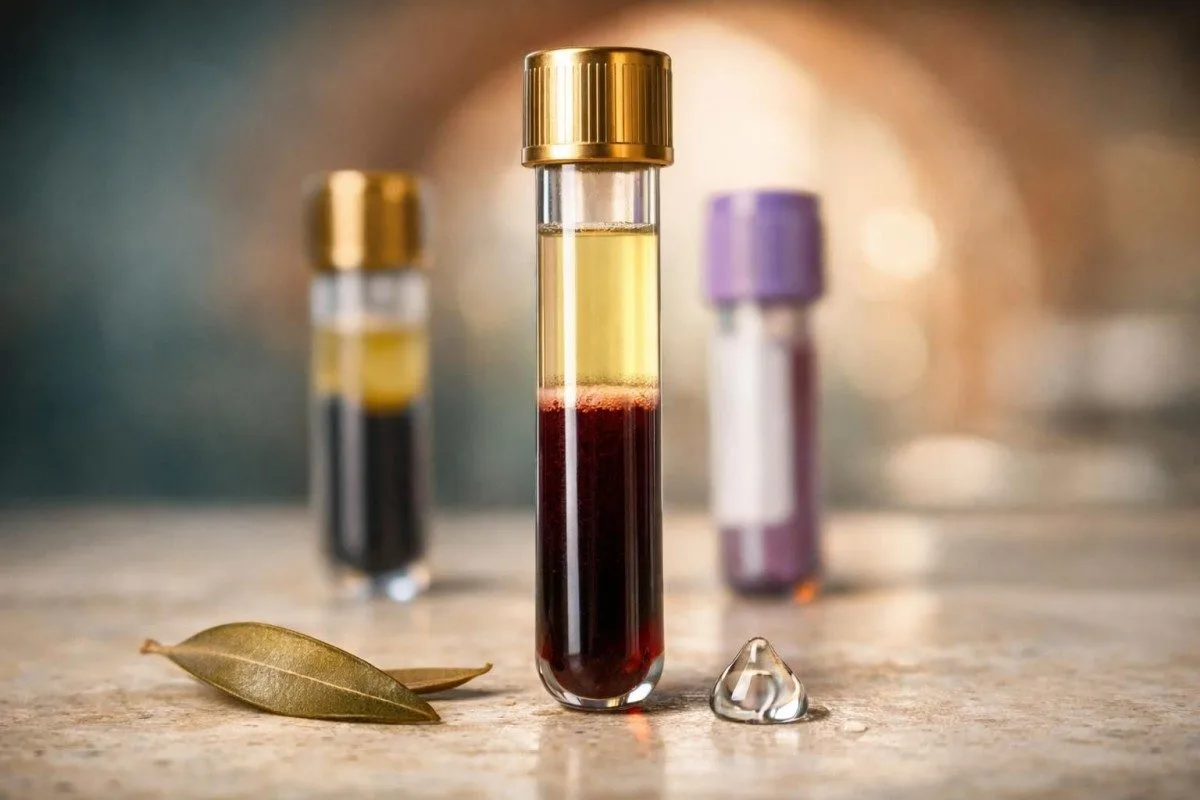
CRP and ESR get most of the attention, but the useful answer is usually a pattern. Acute-phase proteins, blood counts, ferritin, albumin, and metabolic markers each tell a different part of the story.


- CRP under 3 mg/L is low in many labs; values above 10 mg/L usually reflect active inflammation or infection rather than normal variation.
- ESR above the age-adjusted upper limit often points to chronic or autoimmune inflammation; values above 100 mm/h need prompt evaluation.
- WBC count normal adult range is roughly 4.0-11.0 x10^9/L; neutrophils above 7.5 x10^9/L make bacterial infection more likely.
- тромбоцитууд above 450 x10^9/L can be a reactive clue to ongoing inflammation, infection, or iron deficiency.
- Ферритин can rise above 300 ng/mL from inflammation even when iron stores are not truly excessive.
- Альбумин below 3.5 g/dL is a chronic inflammatory signal, especially if CRP or ESR is also elevated.
- Procalcitonin below 0.1 ng/mL argues against major bacterial sepsis; values above 0.25-0.5 ng/mL raise suspicion for bacterial infection.
- hs-CRP between 2 and 10 mg/L often tracks metabolic inflammation tied to visceral fat, fatty liver, and insulin resistance.
Which blood tests actually show inflammation?
The main blood tests that show inflammation нь С-реактив уураг (C-reactive protein) гэсэн үгийн товчлол, эритроцитын тунадасжих хурд, мөн CBC with differential; depending on the pattern, doctors often add ферритин, тромбоцитууд, альбумин, fibrinogen, заримдаа procalcitonin or autoimmune markers. CRP usually rises within 6 to 8 hours and is best for acute inflammation. ESR changes more slowly and often reflects chronic or autoimmune activity. A high neutrophil count points more toward infection, while a mildly high hs-CRP with metabolic abnormalities more often suggests low-grade metabolic inflammation. On Кантести AI, we interpret these results as a pattern, not one isolated number.
No single inflammation blood test diagnoses the cause by itself. A routine panel can miss the real story, which is why I often pair symptom history with a стандарт цусны шинжилгээ review before deciding whether an elevated marker looks infectious, autoimmune, metabolic, or frankly incidental.
As of April 12, 2026, many general labs still flag CRP as normal below 5 mg/L, while cardiology-oriented hs-CRP reporting uses lower cutoffs such as under 1 mg/L, 1-3 мг/л, ба over 3 mg/L. Reference ranges vary by country and analyzer, so our team cross-checks the lab's interval against a broader биомаркерын гарын авлага instead of assuming every report uses the same standard.
I see this confusion every week. A 34-year-old with CRP 14 mg/L after a dental procedure usually needs timing and symptom context, not panic; a 62-year-old with ESR 58 mm/h, normal CRP, shoulder stiffness, and morning pain pushes me toward polymyalgia or another chronic inflammatory condition.
Thomas Klein, MD, has spent a lot of clinic time explaining that an abnormal inflammation marker is a clue, not a verdict. In our review of more than 2 million uploaded lab reports across 127+ countries, the most common misleading pattern is a single mild abnormality with no trend data, no symptom history, and no follow-up test.
CRP is the fastest routine inflammation blood test
CRP is usually the best routine test for acute inflammation because it rises quickly and falls quickly. In many adult labs, CRP below 3 mg/L is low, 3 to 10 mg/L нь хөнгөн, 10 to 40 mg/L suggests active inflammation, and above 100 mg/L makes severe bacterial infection, major tissue injury, or a major inflammatory flare much more likely.
A CRP 10 мг/л-ээс дээш usually means more than background noise. When I review a report on our CRP range guide, дээр 12 мг/л in a patient recovering from bronchitis feels very different from 12 мг/л that persists for 3 months with fatigue and anemia.
Pepys and Hirschfield described CRP in the New England Journal of Medicine as a classic acute-phase protein with a biologic half-life of about 19 hours once the inflammatory trigger settles. That is why a falling CRP over 24–72 цаг often reassures me that treatment is working, whereas ESR can stay elevated long after the patient feels better.
Энд бас өөр өнцөг бий: hs-CRP is not the same clinical question as a standard CRP ordered for fever. The older CDC/AHA categories still used in 2026 place hs-CRP 1 мг/л-ээс доогуур in a lower cardiovascular-risk bucket, 1-3 мг/л in an intermediate bucket, and over 3 mg/L in a higher-risk bucket; if the result is over 10 mg/L, most clinicians repeat it after the illness, workout, or dental issue has passed.
In my experience, obesity, smoking, poor sleep, periodontal disease, and estrogen therapy can keep CRP mildly elevated in the 2 to 8 mg/L range without an occult autoimmune disease hiding underneath. Kantesti AI handles that better when we look at CRP beside waist-related metabolic markers, and the logic behind that pattern is laid out in our эмнэлзүйн баталгаажуулалтын стандартууд.
When CRP stays normal despite real disease
CRP can be normal even when inflammation is real. I see this in some patients with lupus, limited autoimmune disease, or localized problems such as a small abscess, where symptoms and disease-specific tests matter more than the CRP number alone.
ESR often helps more with chronic or autoimmune inflammation
ESR is slower and less specific than CRP, but it often gives more signal in chronic inflammatory disease. An ESR above 20 to 30 mm/h is nonspecific, above 50 mm/h pushes autoimmune disease, chronic infection, anemia, kidney disease, or cancer higher on the list, and above 100 mm/h deserves prompt evaluation.
The CRP vs ESR blood test debate is not really about which is better in all situations; it is about what time scale you are trying to capture. A normal or near-normal CRP with a high ESR is common enough that I usually send patients to our ESR normal range guide before I make any broad claims.
Age matters a lot. A rough upper-limit rule many rheumatologists still use is age divided by 2 for men болон (age + 10) divided by 2 for women, because a flat cutoff overcalls disease in older adults and undercalls it in younger ones.
Here is why ESR can mislead: anemia, pregnancy, kidney disease, and higher immunoglobulin levels all make cellular elements settle faster, so the number rises even when there is no dramatic new inflammatory illness. The underlying mechanism is mostly rouleaux formation, where plasma proteins reduce repulsion between red cells and they stack more readily.
Хэрэв CRP is high today and ESR is still low, the process may be very new. If CRP has settled but ESR remains 45 to 60 mm/h weeks later, I care more about trend direction than a one-off value, which is exactly why serial review on our lab trend comparison guide is often more helpful than repeating internet searches.
One pattern I do not ignore
ESR above 100 mm/h is never a shrug result. In my own practice, that level has more often reflected giant cell arteritis, severe infection, advanced inflammatory disease, or malignancy than anything trivial, especially when symptoms include headache, jaw pain, weight loss, fever, or night sweats.
CBC, neutrophils, and platelets add crucial cell-based clues
A CBC with differential does not measure inflammation directly, but it often shows the body's reaction to it. A WBC above 11.0 x10^9/L, neutrophils above 7.5 x10^9/L, эсвэл platelets above 450 x10^9/L can support active inflammation, and low hemoglobin plus a high platelet count often points to more chronic disease.
A differential count is often where the story becomes more specific. When patients review a CBC-ийн ялгаварт томьёо beside CRP or ESR, the pattern can shift the likely explanation from viral illness to bacterial infection, allergy, medication effect, or autoimmune disease in a way a single marker cannot.
A neutrophil count above 7.5 x10^9/L makes bacterial infection more likely, but it is not exclusive to infection. Steroids, acute stress, smoking, trauma, and even a panic-level physiologic stress response can produce the same pattern, which is why we often cross-check against our өндөр нейтрофилуудын before treating the number as proof of pneumonia or sepsis.
Other cell lines matter too. Monocytes above 1.0 x10^9/L can show up in chronic infection or inflammatory bowel disease, eosinophils above 0.5 x10^9/L push allergy, asthma, drug reaction, or parasites higher on the list, and lymphocytosis above 4.0 x10^9/L often fits better with viral illness than bacterial disease.
Chronic inflammation often produces a softer pattern: hemoglobin below normal, MCV normal or slightly low, platelets high-normal or elevated, and iron studies that look confusing at first glance. That is classic anemia of inflammation territory, where iron is present in the body but temporarily locked away from the marrow.
Ferritin, albumin, fibrinogen, and globulins can reveal chronic inflammation
Several tests reflect inflammation indirectly rather than diagnose it outright. Ferritin above 300 ng/mL, albumin below 3.5 g/dL, fibrinogen above 400 mg/dL, or a higher globulin fraction can all be inflammation clues, especially when CRP or ESR is also abnormal.
Ферритин is one of the most misunderstood markers in medicine. A patient may read a ферритин -ийн 280 ng/mL and assume iron overload, but in real life that value is often driven by obesity, fatty liver, alcohol use, infection, autoimmune disease, or a recent inflammatory event rather than excess iron storage.
The practical trick is to read ferritin beside трансферрины ханалт. A ferritin of 250 ng/mL -тай трансферрины ханалт 12% often means inflammation with restricted iron delivery to the marrow, not true iron excess, which is why our төмрийн судалгааны гарын авлага matters so much when CRP or ESR is up.
Very high ferritin deserves more respect. жинхэнэ төмрийн хэт ачаалал харьцангуй бага тохиолддог. raises concern for severe inflammatory disease, major liver injury, adult-onset Still disease, iron overload syndromes, or less common conditions such as hemophagocytic syndromes; context changes everything, but I do not wave away a four-digit ferritin.
Albumin below 3.5 g/dL and a higher globulin fraction are slower chronic signals, partly because inflammatory cytokines push the liver away from making albumin and toward acute-phase proteins. Our ийлдэсний уургийн гарын авлага explains that pattern in detail, and our AI цусны шинжилгээний платформ is particularly useful when albumin, ferritin, liver enzymes, and CBC changes all drift together over months.
When the pattern points more toward infection than autoimmune disease
The pattern most suggestive of bacterial infection is өндөр CRP, neutrophilia, заримдаа procalcitonin above 0.25 to 0.5 ng/mL. Viral illnesses more often cause a normal or mildly elevated CRP, normal neutrophils, or relative lymphocytosis, although there are exceptions.
Procalcitonin is not a routine screening test for every fever, but it can be very helpful when the question is bacterial versus nonbacterial inflammation. Most labs consider below 0.1 ng/mL low, 0.1 to 0.25 ng/mL borderline, and above 0.25 to 0.5 ng/mL more supportive of bacterial infection, though kidney impairment, major surgery, and severe trauma can push it up too.
A WBC above 11.0 x10^9/L -тай neutrophils above 7.5 x10^9/L болон CRP above 50 mg/L makes me think infection first, especially if symptoms are focal. If you are unsure what degree of white-cell elevation is meaningful, our WBC normal range guide helps separate a mild reactive bump from something more urgent.
Chronic infection behaves differently. Endocarditis, osteomyelitis, tuberculosis, and some occult dental or abdominal infections can produce ESR 60 to 100 mm/h with a CRP that waxes and wanes, which is one reason a normal exam and one normal scan do not always finish the job.
I still remember a patient whose only clue to a hidden abscess was a CRP that dropped from 118 to 64 mg/L on antibiotics, then stuck around 28 mg/L instead of normalizing. That plateau mattered; in practice, the failure of CRP to keep falling can be as informative as the first high number.
When inflammation patterns suggest autoimmune or inflammatory disease
Patterns suggesting autoimmune disease often include high ESR, CRP that may be mild or moderate, архаг өвчний цус багадалт, тромбоцитоз, and disease-specific antibodies. In lupus, a very high ESR with only a modest CRP is classic; a sharply high CRP in lupus often makes us think about infection or serositis.
Ревматоид артрит, полимиалгиа ревматика, vasculitis, and inflammatory bowel disease often push ESR and CRP up together, but not always to the same degree. Platelets can climb above 450 x10^9/L, hemoglobin can drift down, and albumin can soften long before a patient realizes the blood work is sketching a chronic inflammatory picture.
Lupus is the famous exception. Our лупусын цусны шинжилгээний гарын авлага explains why active lupus may show ESR 40 to 80 mm/h, low complement, and only modest CRP, a pattern that regularly surprises patients who assume a normal CRP means the autoimmune process is quiet.
Low C3 or C4 adds weight to immune-complex disease, especially when paired with positive dsDNA, abnormal urine findings, or falling kidney function. For those patterns, our complement guide is often more useful than generic inflammation articles because it shows how complement and inflammation markers can move in opposite directions.
A ferritin clue deserves mention here: in adult-onset Still disease, ferritin can exceed 1000 нг/мл-ээс хэтэрвэл and sometimes runs far higher. At Kantesti, our physicians and Эмнэлгийн зөвлөх зөвлөл pay close attention to those edge cases because a very high ferritin with spiking fevers, rash, sore throat, and arthritis is a different clinical animal from a mildly high ferritin in metabolic syndrome.
Blood tests for chronic inflammation from obesity, fatty liver, and insulin resistance
Chronic low-grade metabolic inflammation usually shows up as hs-CRP 2 to 10 mg/L, mildly high ферритин, high триглицеридүүд, and sometimes borderline ALT эсвэл GGT. This is real inflammation, but it behaves differently from pneumonia, rheumatoid arthritis, or a postoperative infection.
Visceral fat makes inflammatory cytokines, particularly IL-6, and that pushes the liver to make more CRP. When I see hs-CRP 4.6 mg/L paired with central weight gain, fasting insulin resistance, and borderline triglycerides, I reach for our HOMA-IR гарын авлага зэрэг инсулины маркеруудтай хослуулдаг. before I start hunting for occult autoimmune disease.
The liver often joins the conversation. A pattern of ALT 35 to 60 U/L, mild GGT elevation, and ferritin in the 250 to 500 ng/mL range is common in fatty liver, which is why patients with chronic low-grade inflammation should also review our элэгний ферментүүдийн өндөр үзүүлэлтүүд.
This is one of those areas where context matters more than the number. A fit 28-year-old with CRP 7 mg/L and joint swelling worries me for inflammatory disease; a 52-year-old with obesity, sleep apnea, hs-CRP 4 mg/L, high triglycerides, and rising fasting glucose usually has a metabolic-inflammatory pattern until proven otherwise.
Most patients find this reassuring because it means the answer is often modifiable. Losing 5% to 10% of body weight, improving sleep, treating sleep apnea, exercising regularly, and reducing ultra-processed food intake can lower hs-CRP over months, even when no immunosuppressive treatment is needed.
What can raise inflammation labs without dangerous disease?
Several common situations can raise inflammation labs without dangerous disease. Hard endurance exercise, pregnancy, цус багадалт, таргалалт, smoking, and even шингэнгүйжилт can shift CRP, ESR, hemoglobin, and platelets enough to muddy the picture.
A hard workout can do more than people expect. I have seen CRP 10 to 20 mg/L болон AST 70 to 100 U/L the day after an endurance event, especially in runners who were mildly dehydrated, and that can look far more ominous than it really is.
Hydration changes the look of several labs at once. If hemoglobin, albumin, creatinine, and total protein all run a little high on the same draw, check for hemoconcentration first; our dehydration false-highs guide covers this pattern well.
Medication effects are easy to miss. Стероидууд often raise neutrophils by demargination, statins can lower CRP, NSAID эмүүд may blunt inflammatory symptoms more than the lab pattern, and ууж хэрэглэдэг эстроген tends to raise CRP more than transdermal estrogen does.
The practical move is usually simple: repeat the test when you are well, well hydrated, and at least 48–72 цагийн дараа removed from unusually hard exercise. For a mild hs-CRP bump, I often wait 2 долоо хоног; for a lingering ESR abnormality, I sometimes recheck in 4-8 долоо хоногийн because it falls more slowly.
How to interpret inflammation trends and when to follow up
Persistent inflammation on blood tests matters more than one blip. I usually advise follow-up when CRP stays above 10 mg/L, ESR stays above 30 to 40 mm/h, or any inflammation marker rises alongside weight loss, night sweats, anemia, kidney changes, or abnormal liver tests.
For a recent infection, repeating CRP in 1 to 2 weeks is often enough. For chronic symptoms such as joint pain, fatigue, bowel symptoms, or recurrent fevers, I usually repeat CRP, ESR, CBC, ferritin, and a metabolic panel together so the pattern has a fair chance to declare itself.
A few thresholds make me move faster. CRP 100 мг/л-ээс өндөр, ESR above 100 mm/h, rapidly dropping hemoglobin, a platelet count climbing beyond 500 x10^9/L, or inflammation markers paired with new neurologic symptoms, jaw pain, black stools, or unexplained weight loss should not wait for a casual retest.
If you want a structured second pass on the pattern, our team built Kantesti for exactly this problem. You can upload a PDF or photo of your lab report through the үнэ төлбөргүй цусны шинжилгээний тайлал, and our system reads trends, related markers, and reference-range differences in about 60 seconds; if you want to know who is behind it, our Бидний тухай page lays out the clinical and technical team.
My own rule, as Thomas Klein, MD: a single mild abnormality is a question; a persistent pattern is data. For that broader view, patients often use our Хиймэл оюун ухаанаар ажилладаг цусны шинжилгээний тайлбар after the repeat draw rather than reacting to one red flag on one page.
Research publications and related lab reading
The DOI resources below are adjunct references, not primary inflammation studies, but they help patients understand how surrounding tests change interpretation. That matters because inflammation markers rarely stand alone.
I included these because abnormal төмрийн судалгаа, альбумин, urine findings, and liver-related markers often reshape what a high ferritin or CRP actually means. We publish this kind of cross-marker education regularly on манай блогийг, because real lab interpretation lives in the overlap between tests.
In clinic, the missed diagnosis is often not from ignoring CRP or ESR; it comes from ignoring the neighboring biomarkers. A mildly high ferritin with low saturation, or a urinary clue alongside systemic symptoms, can completely reframe the inflammation workup.
DOI reference 1
Шээсэн дэх уробилиноген: Бүрэн шээсний шинжилгээний гарын авлага 2026. (2026). Zenodo. https://doi.org/10.5281/zenodo.18226379. Мөн ResearchGate болон Academia.edu. This is useful when liver handling, hemolysis, or urine abnormalities are complicating a systemic inflammation picture.
DOI reference 2
Iron Studies Guide: TIBC, Iron Saturation & Binding Capacity. (2026). Zenodo. https://doi.org/10.5281/zenodo.18248745. Мөн ResearchGate болон Academia.edu. This one matters whenever ferritin is high but iron delivery to the marrow may still be poor because inflammation is blocking normal iron use.
Байнга асуудаг асуултууд
Үрэвслийг илрүүлэх хамгийн сайн цусны шинжилгээ юу вэ?
CRP is usually the best routine blood test for inflammation when you want to detect a recent or active process quickly. CRP can rise within 6 to 8 hours, often peaks within 48 hours, and usually falls fairly fast as the trigger resolves. ESR is less responsive in the short term but can be more informative for chronic or autoimmune inflammation. In practice, many clinicians order both because a normal CRP with an ESR of 50 mm/h tells a different story from CRP 50 mg/L with a normal ESR.
CRP хэвийн байхад үрэвсэлтэй байж болох уу?
Yes, you can have real inflammation with a normal CRP. This happens in some patients with lupus, localized inflammatory problems, early disease, or conditions where ESR, complement levels, or disease-specific antibodies are more revealing. A patient may have ESR 60 mm/h, low C3, and significant symptoms even with a CRP near normal. That is why a normal CRP does not automatically rule out autoimmune or chronic inflammatory disease.
Архаг үрэвслийг ямар цусны шинжилгээнүүд харуулдаг вэ?
Blood tests for chronic inflammation usually include ESR, hs-CRP, CBC, ferritin, albumin, platelets, and sometimes fibrinogen or globulins. Persistent hs-CRP in the 2 to 10 mg/L range can reflect metabolic inflammation, while ESR above the age-adjusted upper limit may fit autoimmune or chronic inflammatory disease better. Ferritin above 300 ng/mL, albumin below 3.5 g/dL, and platelets above 450 x10^9/L can support the pattern. Doctors often interpret these beside liver enzymes, kidney function, and autoimmune markers rather than alone.
CRP ба ESR цусны шинжилгээ: аль нь илүү нарийвчлалтай вэ?
Neither CRP nor ESR is universally more accurate; they answer different clinical questions. CRP is better for acute inflammation because it rises and falls quickly, while ESR is often more helpful for slower, chronic, or autoimmune processes. CRP above 10 mg/L strongly supports active inflammation, but ESR above 50 mm/h may carry more weight in polymyalgia, vasculitis, or chronic immune disease. When the two disagree, that disagreement itself can be clinically useful.
Цусны ерөнхий шинжилгээ (CBC) үрэвслийг харуулж чадах уу?
A CBC can support inflammation, but it does not diagnose the cause by itself. White blood cells above 11.0 x10^9/L, neutrophils above 7.5 x10^9/L, or platelets above 450 x10^9/L often appear with infection or inflammatory disease. Chronic inflammation may also cause anemia, usually with a normal or slightly low MCV and a ferritin that looks normal or high. The CBC becomes much more informative when read beside CRP, ESR, and iron studies.
Өндөр үрэвслийн үзүүлэлтүүдийн шинжилгээг хэзээ дахин өгөх ёстой вэ?
Repeat timing depends on the pattern and the symptoms, but mild abnormalities are often rechecked within 1 to 2 weeks and slower markers within 4 to 8 weeks. CRP above 10 mg/L after a minor infection or procedure is often repeated after the patient feels well again. ESR falls more slowly, so rechecking too early can create confusion. Urgent follow-up is different: CRP above 100 mg/L, ESR above 100 mm/h, or abnormal markers with weight loss, severe pain, neurologic symptoms, or anemia should be evaluated promptly rather than simply rechecked later.
Өнөөдөр AI-аар дэмжигдсэн цусны шинжилгээний тайлал аваарай
Лабораторийн шинжилгээний агшин зуур, үнэн зөв тайлалд итгэдэг дэлхийн 2 сая гаруй хэрэглэгчтэй нэгдээрэй. Цусны шинжилгээний хариугаа байршуулж, 15,000+ биомаркеруудын цогц тайллыг хэдхэн секундын дотор аваарай.
📚 Иш татсан судалгааны нийтлэлүүд
Klein, T., Mitchell, S., & Weber, H. (2026). Шээсэнд уробилиноген илрүүлэх шинжилгээ: 2026 оны бүрэн шээсний шинжилгээний гарын авлага. Kantesti AI Medical Research.
Klein, T., Mitchell, S., & Weber, H. (2026). Төмрийн судалгааны гарын авлага: TIBC, Төмрийн ханалт ба холбох чадвар. Kantesti AI Medical Research.
⚕️ Эмнэлгийн мэдэгдэл
Энэ нийтлэл зөвхөн боловсролын зорилготой бөгөөд эмнэлгийн зөвлөгөө биш болно. Оношилгоо, эмчилгээний шийдвэр гаргахдаа мэргэшсэн эрүүл мэндийн үйлчилгээ үзүүлэгчтэй заавал зөвлөлдөнө.
E-E-A-T итгэлийн дохио
Туршлага
Эмчийн удирдлагатай лабораторийн тайлалын ажлын урсгалын клиник хяналт.
Мэргэшсэн байдал
Биомаркерууд клиникийн нөхцөлд хэрхэн ажиллаж/өөрчлөгдөж байгаад чиглэсэн лабораторийн анагаах ухаан.
Эрх мэдэл
Доктор Томас Клейн бичсэн, Доктор Сара Митчелл, Проф. Доктор Ханс Вебер нар хянан тохиолдуулсан.
Найдвартай байдал
Сэрэмжлүүлгийг бууруулахын тулд тодорхой дараагийн алхамтай, нотолгоонд суурилсан тайлал.