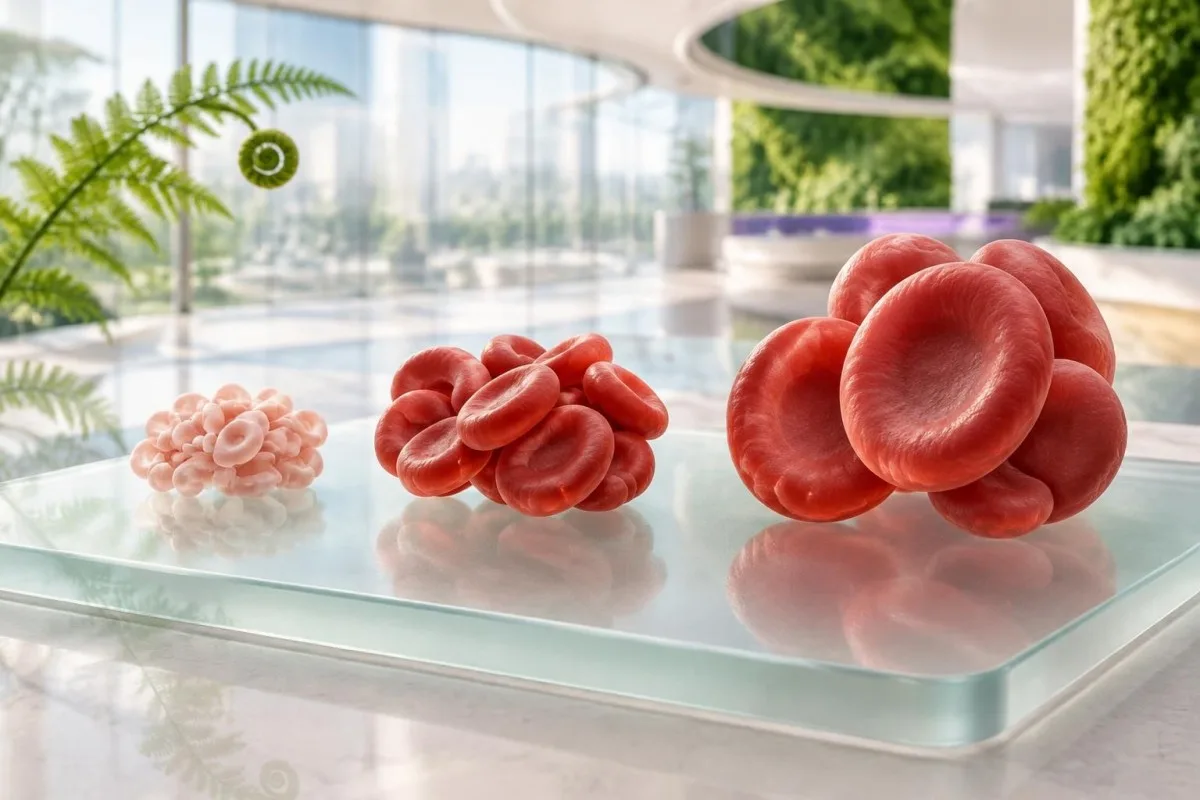
MCV tegesé volume korpuskular rata-rata, yaiku ukuran rata-rata sèl getih abang. Maca bebarengan karo MCH, yaiku jumlah hemoglobin rata-rata saben sèl getih abang, mbantu ngenali pola nanging ora bisa ndhidhikosis kahanan kanthi mandhiri.

Pokok-pokok penting
- tegesé MCV: MCV tegesé volume korpuskular rata-rata lan biasané dilaporaké nganggo femtoliter; interval rujukan wong diwasa sing lumrah kira-kira 80-100 fL.
- tegesé MCH: MCH tegesé hemoglobin korpuskular rata-rata lan biasané dilaporaké nganggo pikogram; akèh laboratorium kanggo wong diwasa nggunakake kira-kira 27-33 pg.
- Pola ngisor: MCV ing ngisor 80 fL bebarengan karo MCH ing ngisor 27 pg kerep nggambaraké sèl getih abang sing cilik lan relatif kurang hemoglobin, nanging pemeriksaan zat besi lan tes hemoglobin dibutuhaké.
- Pola dhuwur: MCV ing ndhuwur 100 fL kerep nuduhaké makrositosis; vitamin B12, folat, paparan alkohol, penyakit ati, penyakit tiroid, obat-obatan, lan retikulositosis bisa dadi panyebab.
- CBC sing Katon Normal: MCV lan MCH sing normal ora nyingkiraké anemia amarga ilangé getih, penyakit ginjel, inflamasi, lan kekurangan nutrisi tahap awal bisa kedadéan kanthi indeks sèl getih abang sing normal.
- Populasi Campuran: MCV rata-rata sing normal bisa ndhelikaké sèl getih abang sing cilik lan gedhé bebarengan, utamané nalika RDW dhuwur utawa transfusi anyar ngenalaké populasi sèl sing béda.
- Petunjuk Rumus: MCV bisa diitung minangka hematokrit dikali 10 banjur dibagi cacahé sèl getih abang, déné MCH bisa diitung minangka hemoglobin dikali 10 banjur dibagi cacah kasebut.
- Bab Keamanan: Aja miwiti ngonsumsi zat besi utawa B12 dosis dhuwur mung amarga MCV utawa MCH diwènèhi tandha; tindak lanjut sing bener gumantung marang bagéan liya saka CBC, gejala, riwayat, lan tes konfirmasi.
Apa Tegesé MCV ing itungan getih lengkap
MCV tegesé volume korpuskular rata-rata, yaiku rata-rata volume saben sel getih abang sing diitung utawa diukur. Ing CBC wong diwasa, MCV umumé dilaporaké ing femtoliter, kanthi akèh laboratorium nggunakake kira-kira 80-100 fL minangka interval referensi; angka iki njlèntrèhaké ukuran sel, dudu pangiriman oksigen utawa diagnosis.
Sing dijawab déning singkatan MCV ing CBC mung siji pitakonan khusus: apa sel getih abang sing sirkulasi, rata-rata, cilik, ukurane lumrah, utawa gedhé? MCV ing ngisor 80 fL umumé diarani mikrositosis, déné MCV ing ndhuwur 100 fL umumé diarani makrositosis ing wong diwasa; interval pediatrik bisa béda sacara signifikan.
MCH tegesé mean corpuscular hemoglobin lan ngira-ngira massa hemoglobin ing njero siji sel getih abang. Interval MCH wong diwasa sing umum yaiku kira-kira 27-33 pg, nanging MCH ora padha karo MCHC: MCH ngukur jumlah saben sel, déné MCHC ngukur konsentrasi hemoglobin ing njero sel.
Alesané klinisi maca MCV lan MCH bebarengan yaiku ukuran lan kandhutan hemoglobin asring owah ing arah sing padha. Sel getih abang sing cilik kerep ngemot hemoglobin luwih sithik, sing ngasilaké MCV cendhèk lan MCH cendhèk, nanging siji indeks waé ora bisa mbédakaké kekurangan zat besi saka trait talasemia, inflamasi kronis, utawa pola nutrisi campuran.
Petungan ing balik singkatan kasebut
Rumus MCV klasik yaiku hematokrit dikali 10 banjur dibagi cacah sel getih abang, kanthi hematokrit ditulis minangka persentase lan cacah RBC ditulis ing jutaan saben mikroliter. Contoné, hematokrit 42% lan cacah RBC 4.8 yuta/µL ngasilaké MCV 87.5 fL.
Rumus MCH klasik yaiku hemoglobin dikali 10 banjur dibagi cacah RBC. Hemoglobin 14 g/dL lan cacah RBC 4.8 yuta/µL ngasilaké MCH kira-kira 29.2 pg; iki njlèntrèhaké yèn owah-owahan cacah RBC bisa ngowahi MCH sanajan hemoglobin owah banget sithik.
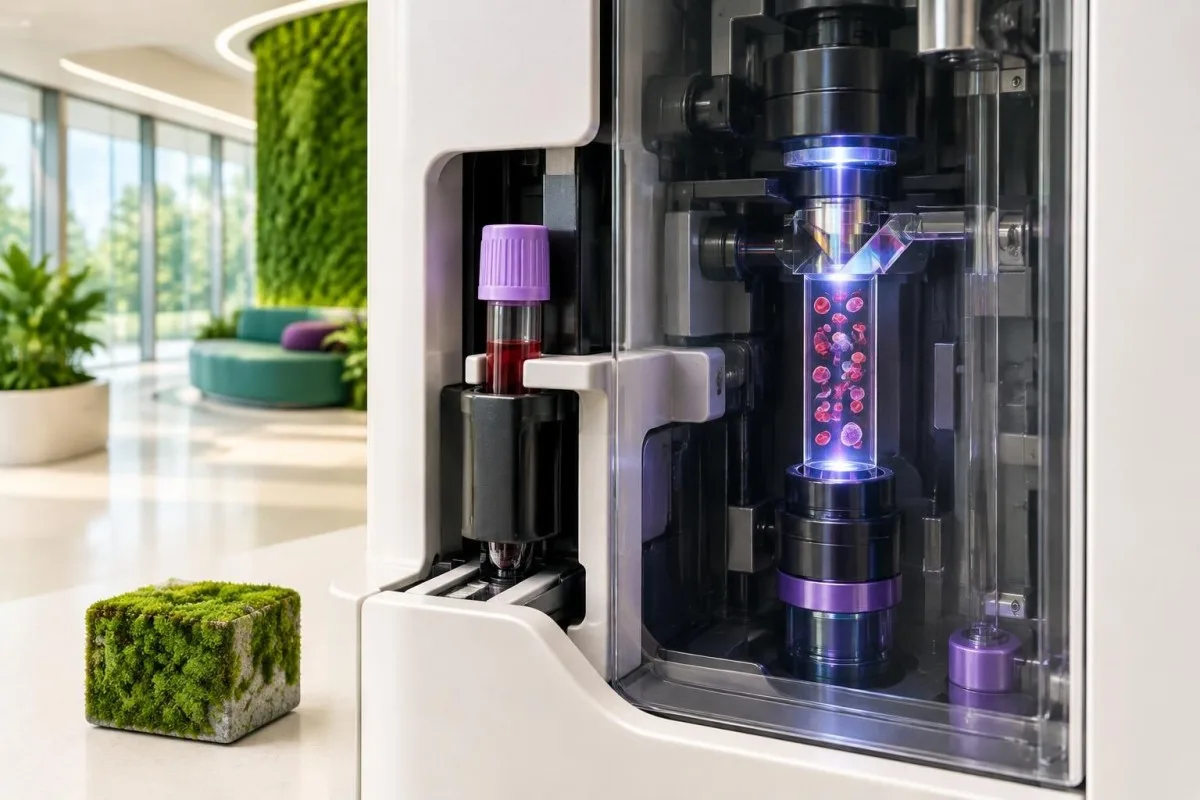
Analisis otomatis bisa ngukur distribusi volume sel langsung, lan nilai sing diwilang bisa kleru nalika sel-sel nggumpal utawa spesimen telat. The perbandingan hematocrit lan hemoglobin bisa mbantu nalika indeks katon ora konsisten sacara internal.
Rentang MCV lan MCH Lumrah Miturut Konteks
Rentang MCV wong diwasa sing umum kira-kira 80-100 fL, lan rentang MCH wong diwasa sing umum kira-kira 27-33 pg, nanging interval referensi sing dicithak laboratorium dadi prioritas. Umur, meteng, ketinggian, metode analisis, lan populasi lokal bisa ngganti nilai sing diarepake nganti sawetara unit.
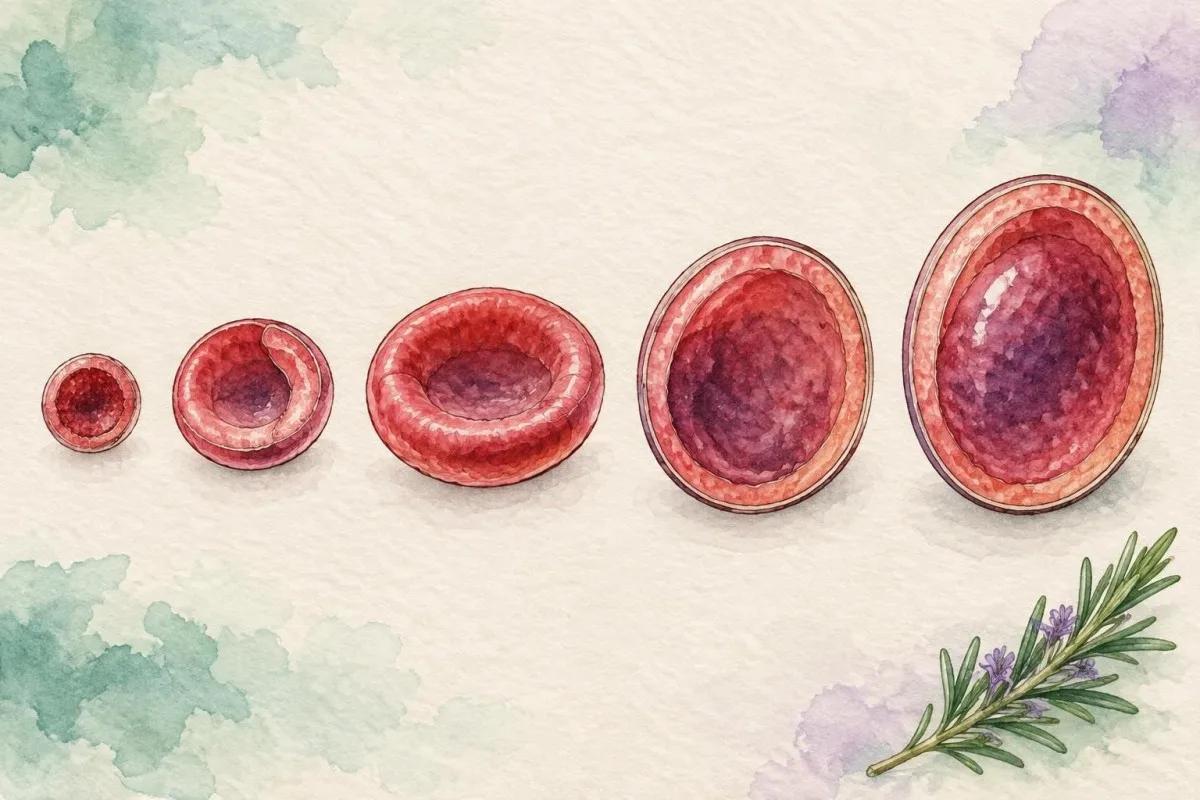
Rentang referensi iku interval statistik, dudu wates sampurna antarane sehat lan penyakit. Kira-kira 95% saka populasi referensi sing dipilih laboratorium bisa uga ana ing sajroning interval sing kasebut, tegese sawetara wong sehat bisa ana ing njaba interval kasebut lan sawetara penyakit bisa kedadeyan ing njero interval kasebut; asil 79 fL ora otomatis luwih mrihatinake tinimbang 80 fL.
MCV wong diwasa asring ana ing cedhak 80-100 fL, déné MCH asring ana ing cedhak 27-33 pg, nanging bayi, bocah, lan remaja mbutuhake rentang khusus adhedhasar umur. Meteng uga bisa ngowahi volume plasma lan interpretasi hemoglobin tanpa nggawe diagnosis MCV sing unik; laporan wong meteng kudu diwaca nganggo interval meteng utawa interval wong diwasa saka laboratorium.
Sawetara laboratorium Éropah lan sawetara laboratorium Amérika Lor nggunakake wates sing rada béda, kayata wates ngisor MCV 79 utawa 80 fL lan wates ngisor MCH 26 utawa 27 pg. Aturan praktisé yaiku mbandhingake asil karo rentang sing dicithak lan nliti gedhéné panyimpangan, dudu mung tandha H utawa L.
| Tingkat | Rentang | Tegesé |
|---|---|---|
| Rentang khas wong diwasa | MCV kira-kira 80-100 fL; MCH kira-kira 27-33 pg | Ukuran rata-rata sel getih abang lan jumlah hemoglobin ana ing sajroning akeh interval laboratorium wong diwasa. |
| MCV rada dhuwur | MCV kira-kira 100-105 fL | Makrositosis entheng bisa sauntara utawa ana gandhèngané karo obat lan kudu diinterpretasikake bebarengan karo RDW, retikulosit, tes ati, tes tiroid, lan status B12 utawa folat. |
| MCV sing cetha dhuwur | MCV watara 106-120 fL | Makrositosis pantes ditliti kanthi terstruktur, utamane nalika hemoglobin, trombosit, utawa jumlah sel getih putih uga ora normal. |
| MCV banget dhuwur | MCV ing ndhuwur 120 fL | Ora ana wates darurat universal sing mung adhedhasar MCV; tingkat iki mbutuhake penilaian klinis kanthi cepet amarga bisa uga ana kekurangan nutrisi, kelainan sumsum balung, efek obat, utawa retikulositosis. |
Napa asil sing ditandhani bisa uga isih bisa ditampa
Tandha laboratorium ateges asil kasebut ana ing njaba interval sing dipilih laboratorium kuwi, dudu ateges penyakit wis kabukten. Contone, MCH 26.8 pg bisa ditandhani kurang dening laboratorium sing nggunakake 27-33 pg, nanging bisa uga isih ana ing interval 26-34 pg laboratorium liya.
Tren penting nalika sawijining nilai cedhak karo wates. MCV sing owah saka 89 dadi 82 fL sajrone 12 wulan bisa luwih informatif tinimbang siji MCV 79 fL sing terisolasi, utamane yen hemoglobin mudhun 1 g/dL utawa RDW mundhak bebarengan.
Ing pandhuan MCV wates nerangake apa sebabé panyimpangan cilik kerep mbutuhake konfirmasi lan konteks, dudu perawatan langsung. Unit kudu tetep katon amarga 90 fL lan 90 pg minangka pangukuran sing sakabehé béda.
Carané Maca MCV lan MCH minangka Pola
Langkah wiwitan sing paling migunani yaiku nggolongake pasangan kasebut: MCV kurang karo MCH kurang, MCV dhuwur karo MCH dhuwur, utawa kombinasi sing ora selaras. MCV nggambarake volume sel rata-rata lan MCH nggambarake massa hemoglobin saben sel, mula pasangan iki nyepetake kemungkinan nanging ora bisa ngenali panyebabe tanpa hemoglobin, RDW, cacah RBC, lan tes sing ditargetake.
MCV kurang lan MCH kurang bebarengan biasane nggambarake sel getih abang mikrositik sing relatif hipokromik. Kekurangan wesi kerep ngasilake pola iki, nanging talasemia trait uga bisa padha; ferritin ing ngisor 15 ng/mL nyengkuyung kanthi kuat manawa simpenan wesi wis entek, dene ferritin ing ngisor 30 ng/mL umume nguwatirake nalika ora ana inflamasi.
MCV dhuwur karo MCH dhuwur utawa ing rentang ndhuwur biasane nggambarake sel getih abang sing luwih gedhé lan nggawa massa hemoglobin luwih akeh saben sel. Iki ora mesthi ateges sel kasebut nduwèni konsentrasi hemoglobin dhuwur, amarga MCHC bisa tetep normal; kekurangan vitamin B12, kekurangan folat, paparan alkohol, penyakit ati, penyakit tiroid, obat-obatan, lan retikulositosis kalebu panjelasan sing bisa.
MCV normal kanthi MCH asor minangka pratandha sing migunani banget amarga bisa nuduhake kekurangan zat besi tahap awal utawa rong populasi sel sing saling nentang. Contone, sel cilik sing kekurangan zat besi dicampur karo sel luwih gedhe sing kekurangan B12 bisa ngasilake rata-rata MCV 88 fL, nalika MCH asor lan RDW dhuwur.
| Tingkat | Rentang | Tegesé |
|---|---|---|
| Loro-lorone umume khas | MCV 80-100 fL; MCH 27-33 pg | Ukuran sel abang lan massa hemoglobin umume khas, nanging anemia utawa kekurangan tahap awal isih bisa ana. |
| MCV asor ditambah MCH asor | MCV ngisor 80 fL; MCH ngisor 27 pg | Coba pertimbangake eritropoiesis sing kekurangan zat besi, trait talasemia, inflamasi kronis, utawa panyebab sing luwih arang. |
| MCV dhuwur ditambah MCH dhuwur | MCV luwih saka 100 fL; MCH luwih saka kira-kira 33 pg | Coba pertimbangake makrositosis amarga kekurangan B12 utawa folat, alkohol, obat-obatan, penyakit ati utawa tiroid, utawa retikulosit sing tambah. |
| Pasangan sing ora selaras utawa owah kanthi cepet | Kombinasi MCV-MCH apa wae kanthi anemia anyar utawa RDW dhuwur | Populasi sel campuran, masalah spesimen, transfusi, utawa kekurangan sing saya berkembang bisa mbutuhake CBC diulang lan pemeriksaan tambahan. |
Napa MCH dudu tes cadangan zat besi
MCH ngukur massa hemoglobin ing njero saben sel abang, dudu zat besi sing disimpen ing awak. Seseorang bisa nduwèni feritin asor kanthi MCH 28 pg sadurunge sel abang dadi mikrositik kanthi cetha, dene inflamasi bisa ndadekake feritin katon cukup sanajan zat besi ora kasedhiya kanggo produksi sumsum balung.
Lebaré distribusi sel abang, utawa RDW, nambah informasi babagan variasi ukuran sel. RDW sing luwih saka kira-kira 14.5% asring dianggep mundhak, sanajan watesé gumantung marang analyzer; RDW dhuwur kanthi MCV sing saya mudhun bisa menehi sinyal kekurangan sing lagi berkembang tinimbang trait bawaan sing stabil.
Ing RDW lan MCV migunani nalika rata-rata MCV katon nyenengake nanging populasi sel saya luwih manéka warna. Siji rata-rata bisa ndhelikake proses sing owah sajrone pirang-pirang minggu utawa wulan.
Apa Sing Asring Dituduhaké déning MCV Endhek lan MCH Endhek
MCV lan MCH sing sithik paling kerep nuduhaké sel getih abang cilik kanthi massa hemoglobin sing suda, nanging pola iki dhéwé ora bisa mbédakaké kekurangan zat besi saka trait talasemia. Pemeriksaan praktis biasané diwiwiti kanthi ferritin, zat besi serum, transferrin utawa kapasitas pengikatan zat besi total, saturasi transferrin, penanda inflamasi, lan kadhangkala elektroforesis hemoglobin.

Kekurangan zat besi umumé nyebabaké MCV ing ngisor 80 fL lan MCH ing ngisor 27 pg sawisé kekurangan kasebut suwé banget nganti mengaruhi sel getih abang anyar. Saturasi transferrin ing ngisor 20% ndhukung eritropoiesis sing diwatesi zat besi, nanging ferritin bisa mundhak nalika inflamasi, infèksi, cedera ati, utawa obesitas lan mulané ora mesthi bisa diwaca dhéwé.
Trait talasemia bisa ngasilaké MCV sing sithik kanthi cacah RBC sing relatif tetep utawa mundhak, kadhangkala luwih saka 5.0 yuta/µL, déné kekurangan zat besi luwih kerep nyuda cacah RBC. Iki minangka petunjuk, dudu aturan; indeks Mentzer, sing diitung minangka MCV dibagi cacah RBC, kadhangkala digunakaké, nanging ora definitif lan ora kena nggantèkaké pemeriksaan zat besi utawa analisis hemoglobin.
Tinjauan taun 2010 déning Van Vranken ing American Family Physician nyaranaké ferritin serum minangka tes awal kanggo mikrositosis lan njlèntrèhaké elektroforesis hemoglobin nalika kekurangan zat besi ora njelasaké pola kasebut. Ing pandhuan panyebab MCV-rendah menehi konteks tambahan kanggo napsiraké panyebab bawaan lan sing dipikolehi.
Tuladha hipotetis kanthi indeks sing sithik
Bayangna wong hipotetis umur 34 taun kanthi hemoglobin 11.1 g/dL, MCV 73 fL, MCH 23 pg, RDW 17%, ferritin 9 ng/mL, lan saturasi transferrin 12%. Kombinasi kasebut ndhukung banget kekurangan zat besi, nanging sebab kekurangan kasebut isih penting, kayata ilanging getih amarga menstruasi, asupan sing ora cukup, panyerepan sing suda, utawa ilanging getih saka saluran cerna.
Now imagine a second hypothetical adult with hemoglobin 12.8 g/dL, MCV 69 fL, MCH 22 pg, RBC count 5.9 million/µL, RDW 12.8%, and ferritin 88 ng/mL. A stable inherited microcytosis becomes more plausible, although hemoglobin electrophoresis and family background may still be needed.
Do not interpret a low MCV as proof that iron tablets are appropriate. The pandhuan sinau wesi explains why ferritin, transferrin saturation, and inflammation context are safer than treating the index in isolation.
Apa Tegesé MCV Dhuwur lan MCH Dhuwur
High MCV, usually above 100 fL in adults, indicates macrocytosis; high MCH often accompanies it because a larger red cell contains more hemoglobin mass. The pattern can arise from B12 or folate deficiency, alcohol, liver disease, hypothyroidism, medicines, reticulocytosis, or marrow disease, so the next step is cause-finding rather than automatic supplementation.
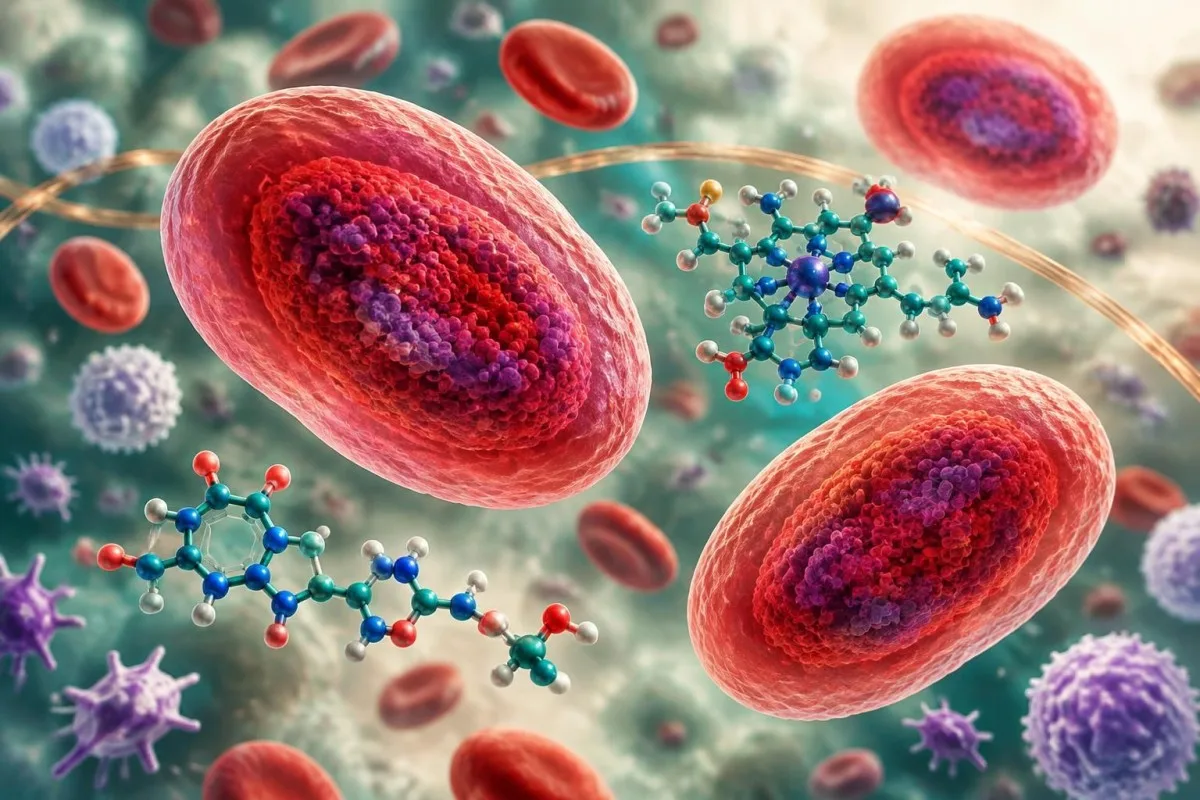
Vitamin B12 deficiency may cause macrocytosis before anemia becomes severe, and a serum B12 between about 200 and 300 pg/mL is often considered borderline rather than definitively normal. Methylmalonic acid can help when B12 is borderline, although kidney impairment can raise methylmalonic acid independently.
Folate deficiency, regular alcohol exposure, liver disease, hypothyroidism, and medicines such as hydroxyurea, methotrexate, and some antiseizure drugs can increase MCV. Reticulocytes are larger than mature red cells, so an absolute reticulocyte count above the laboratory interval can raise MCV during recovery from blood loss or increased red-cell destruction.
Aslinia, Mazza, and Yale described this broad differential in their 2006 Clinical Medicine and Research review on macrocytosis. Their approach supports checking the peripheral cell sample, reticulocyte count, B12 and folate status, liver and thyroid tests, and medication history rather than labeling every MCV above 100 fL as a vitamin deficiency.
A high MCV does not equal B12 deficiency
A hypothetical 52-year-old with MCV 104 fL, MCH 34 pg, normal hemoglobin, normal reticulocytes, and a B12 level of 520 pg/mL needs a broader review rather than an automatic B12 diagnosis. Alcohol exposure, thyroid function, liver tests, medicine effects, and previous CBC trends may be more informative.
A second hypothetical person with MCV 112 fL, hemoglobin 9.8 g/dL, low B12, numb feet, and a high methylmalonic acid level has a more coherent B12-deficiency pattern, but treatment should be arranged clinically because neurologic injury can progress even when anemia is modest.
Ing high MCV symptoms guide and the discussion of asil B12 sing winates cover why symptoms and confirmatory tests can matter more than the MCV number itself.
Nalika MCV lan MCH Ora Cocog
Discordant MCV and MCH results usually mean that red-cell size, hemoglobin mass, and cell-population variability are telling different parts of the story. Normal MCV with low MCH, low MCV with normal MCH, or high MCV with normal MCH can reflect early deficiency, mixed cell populations, inherited traits, recent transfusion, or analytical interference.

Normal MCV with low MCH can occur early in iron deficiency, when newly produced cells are smaller but the average remains within 80-100 fL. It can also occur when iron-restricted cells are mixed with larger reticulocytes or macrocytic cells, making RDW more informative than MCV alone.
Low MCV with normal MCH is less common but can occur when the RBC count and hemoglobin relationship produces a preserved average hemoglobin mass. A persistently low MCV with normal ferritin, a relatively high RBC count, and normal RDW may point toward a thalassemia trait, but hemoglobin testing is still needed.
Recent transfusion can create two red-cell populations for several weeks, and cold agglutination can make measured MCV and RBC count appear implausible. If MCV is very high while RBC count is unexpectedly low or the analyzer reports clumping, a repeat specimen and laboratory review may be more useful than interpreting the number literally.
Use RDW, reticulocytes, and the smear as tie-breakers
RDW measures size variation, not average size, and a value above roughly 14.5% often indicates greater heterogeneity. A high RDW with MCV 88 fL can therefore be more concerning for a changing deficiency than a stable MCV of 76 fL with RDW 12.5%, depending on hemoglobin and history.
Reticulocyte hemoglobin reflects the hemoglobin available to newly produced red cells and may change earlier than mature-cell MCH. The reticulocyte hemoglobin explanation is particularly relevant when ferritin is difficult to interpret because inflammation is present.
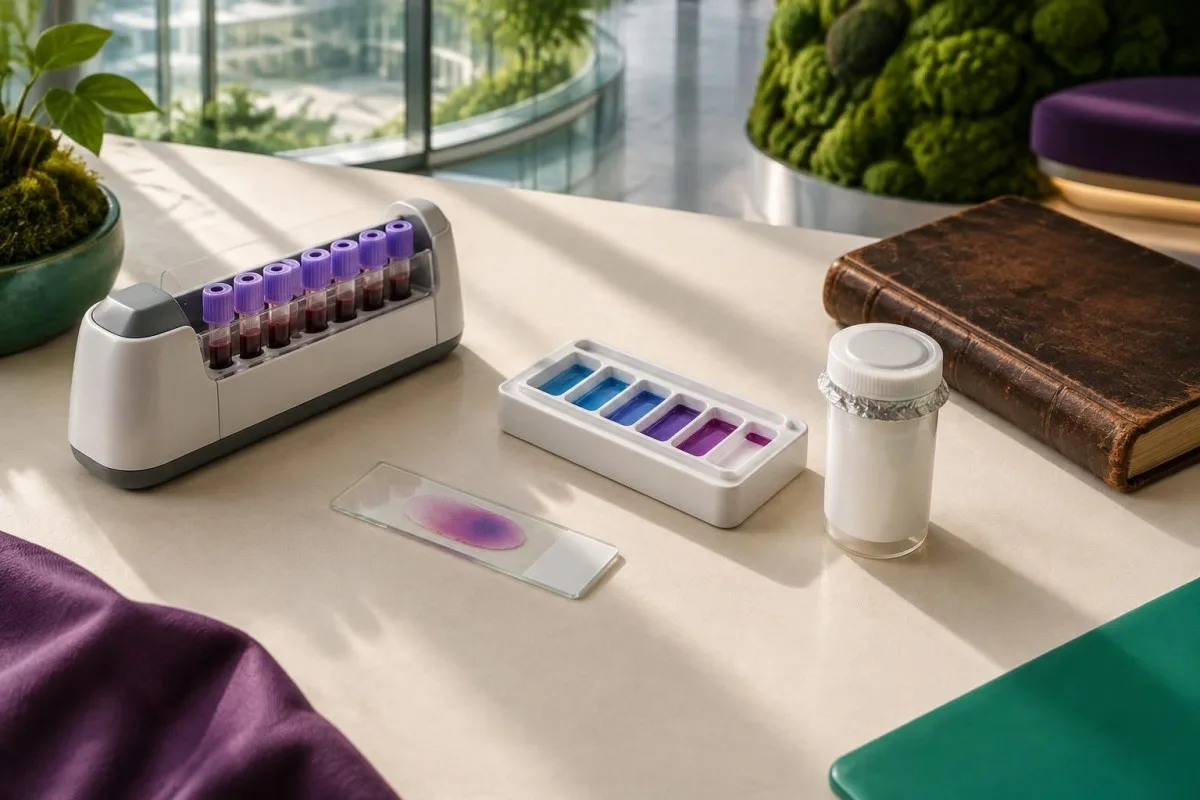
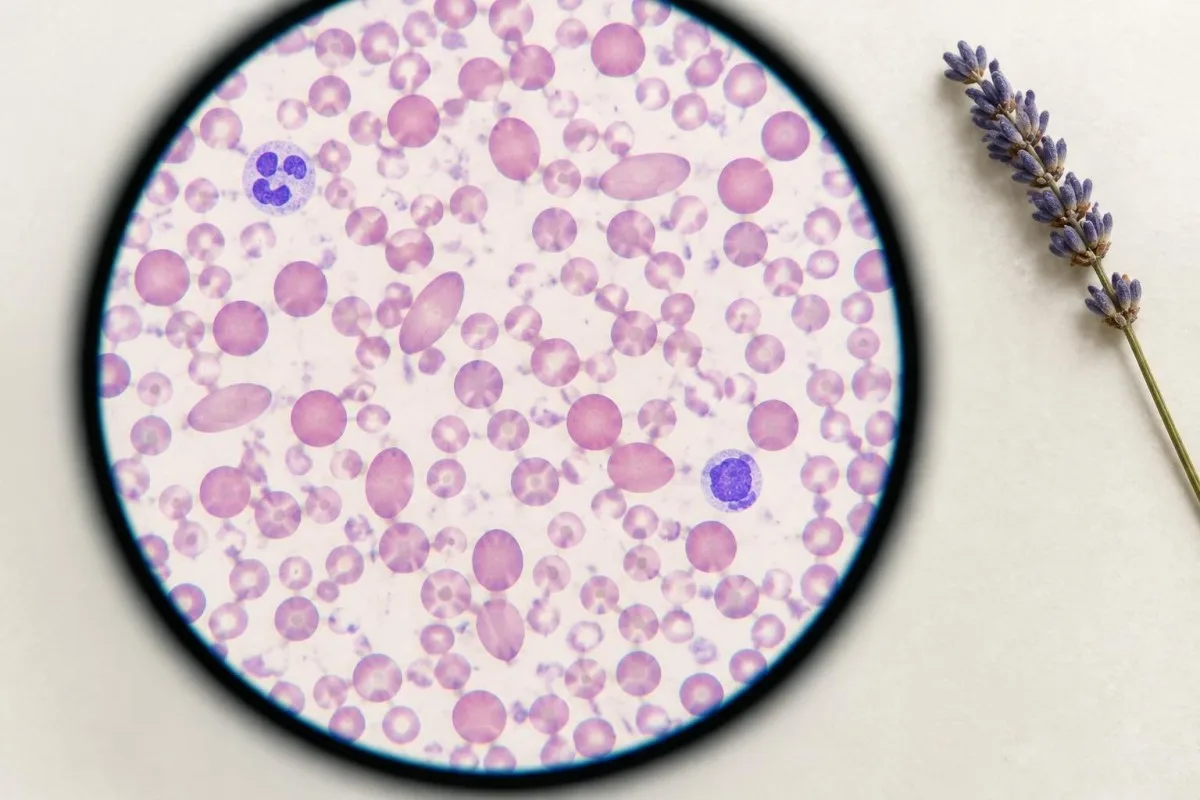
A cell sample slide can reveal size variation, oval macrocytes, target-like cells, fragments, or agglutination that an average index cannot show. It is not ordered for every mildly abnormal CBC, but it becomes more useful when several cell lines are abnormal or the automated results conflict.
Asil CBC Endi Sing Kudu Diwaca Bebarengan karo MCV?
MCV and MCH should be read beside hemoglobin, hematocrit, RBC count, RDW, reticulocytes, platelets, and white-cell results. Hemoglobin determines whether anemia is present, while MCV and MCH help classify the red-cell pattern; neither index explains symptoms without the rest of the CBC and clinical history.

For many nonpregnant adults, anemia is commonly defined as hemoglobin below 12 g/dL in women and below 13 g/dL in men, although altitude, pregnancy, age, sex, and laboratory policy affect interpretation. A normal hemoglobin with an abnormal MCV is a different clinical situation from hemoglobin 8.5 g/dL with the same MCV.
Hematocrit generally tracks hemoglobin, but the relationship can be distorted by dehydration, fluid overload, unusual cell size, or analytical factors. Platelets below 150,000/µL or white-cell abnormalities alongside macrocytosis may increase concern for a broader marrow or systemic process, particularly when the pattern persists on repeat testing.
Ing panduan tes getih taunan explains why screening results need a risk-based context rather than a checklist reaction. The 2005 Mayo Clinic Proceedings review by Tefferi, Hanson, and Inwards also emphasizes interpreting an abnormal CBC through patterns, chronology, and examination rather than one isolated flag.
Symptoms change the priority
Fatigue, breathlessness on ordinary activity, palpitations, chest discomfort, fainting, black stools, heavy menstrual bleeding, numbness, balance changes, or jaundice can make an abnormal CBC more urgent. A hemoglobin of 10.5 g/dL with mild fatigue is not assessed the same way as hemoglobin 7.5 g/dL with chest pain or fainting.
A trend can reveal what a single CBC misses. For example, hemoglobin falling from 13.6 to 11.9 g/dL over 6 months with MCV declining from 91 to 82 fL may signal developing iron deficiency even if both individual MCV values are close to the printed range.
Ing heavy menstrual bleeding guide may be relevant when low MCV and low MCH occur with recurrent menstrual loss. Menstrual history, diet, gastrointestinal symptoms, recent surgery, blood donation, and medicines such as acid suppressants can change the correct follow-up.
Apa Sing Kudu Ditindakaké Yen MCV utawa MCH Ora Normal
An isolated, mild MCV or MCH abnormality usually calls for review and sometimes a repeat CBC rather than immediate treatment. The appropriate next test depends on the direction of the abnormality, hemoglobin level, RDW, symptoms, age, pregnancy status, medicines, diet, bleeding history, and whether the result is new or persistent.
For low MCV or low MCH, clinicians commonly consider ferritin, transferrin saturation, serum iron, total iron-binding capacity, and a blood count trend. Ferritin below 15 ng/mL is highly supportive of depleted stores, while a value between 15 and 30 ng/mL may still support iron deficiency when symptoms, transferrin saturation, or blood loss history fit.
For high MCV or high MCH, reasonable follow-up may include B12, folate, reticulocytes, liver enzymes, thyroid-stimulating hormone, medication review, alcohol history, and a cell sample examination. A B12 result below about 200 pg/mL is commonly considered deficient, but laboratory cutoffs vary and borderline values need clinical correlation.
Ing pandhuan tes getih dhasar explains why documenting a reliable starting point improves future comparison. Keeping reports from different dates side by side, including the laboratory's reference ranges, can show whether MCV changed by 2 fL or by 15 fL and whether other CBC values moved with it.
When to contact a clinician promptly
Prompt medical advice is appropriate for severe or worsening breathlessness, chest pain, fainting, confusion, black or bloody stools, rapidly increasing weakness, new neurologic symptoms, pregnancy with significant anemia, or a CBC showing abnormalities in several cell lines. The urgency comes from the symptoms and associated results, not from an MCV cutoff alone.
Do not self-treat presumed iron deficiency for months without confirming the cause, particularly in adult men, postmenopausal women, or anyone with gastrointestinal symptoms. Iron can cause side effects and may delay investigation of blood loss; a persistent low ferritin should lead to an age- and risk-appropriate search for why stores are depleted.
A clinician may repeat the CBC in a few weeks or months when the abnormality is mild and the person is well, but the interval depends on severity and context. The informasi dewan penasihat medis describes why clinical review remains necessary when laboratory patterns are complex or symptoms are present.
Cara Praktis Maca Laporan Sampeyan Dhéwé
To read MCV and MCH safely, first identify the units and laboratory range, then check hemoglobin, RBC count, RDW, and reticulocytes before considering causes. MCV tells you the average red-cell size, MCH estimates hemoglobin mass per cell, and the combination is a classification clue rather than a diagnosis.

Start with three questions: Is hemoglobin low, normal, or high; is MCV below 80, near 80-100, or above 100 fL; and is MCH below 27, near 27-33, or above the local interval? Then check RDW, because a high value can reveal mixed or changing red-cell populations even when MCV looks ordinary.
Next, ask whether the pattern is stable. A single MCV of 79 fL with normal hemoglobin may need a different response from an MCV falling from 92 to 79 fL with RDW rising from 12% to 17% over a year; the second pattern suggests an evolving process that deserves explanation.
Finally, connect the pattern with plausible exposures and symptoms: diet, menstrual or gastrointestinal loss, pregnancy, alcohol, medicines, thyroid symptoms, numbness, kidney disease, inflammation, recent transfusion, and family ancestry. This is where the supplement interactions guide can help because supplements may alter B12, folate, iron, or test interpretation.
The shortest safe interpretation
MCV below 80 fL means the average red cell is small, and MCH below about 27 pg means the average cell carries less hemoglobin mass; together they often prompt iron and hemoglobin evaluation. MCV above 100 fL means the average red cell is large, and MCH may rise because cell volume has increased.
A normal MCV and MCH do not rule out anemia, nutrient deficiency, blood loss, kidney disease, or inflammation. Conversely, a mild flag outside 80-100 fL or 27-33 pg does not establish illness without a compatible CBC pattern or clinical context.
Ing kaca validasi medis discusses why laboratory interpretation should be tied to measurement limits, clinical context, and appropriate follow-up. Bring the complete report rather than only the flagged MCV or MCH value when discussing results.
Pitakon sing kerep ditakoni
Apa tegesé MCV ing CBC?
MCV iku cekakan saka mean corpuscular volume, yaiku volume rata-rata sel getih abang. MCV wong diwasa umume dilaporake nganggo femtoliter, lan akèh laboratorium nggunakake kira-kira 80-100 fL minangka interval referensi. MCV ing ngisor 80 fL biasane diarani mikrositosis, déné MCV ing ndhuwur 100 fL biasane diarani makrositosis; ora ana siji waé asil kasebut sing bisa ngenali panyebabe.
Apa tegesé MCH ing tes getih?
MCH tegese mean corpuscular hemoglobin lan ngira-ngira massa hemoglobin ing njero siji sel getih abang. Akeh laboratorium kanggo wong diwasa nggunakake interval MCH watara 27-33 pg, sanajan rentang sing dicithak ing laporan dadi prioritas. MCH sing kurang kerep diiringi sel cilik lan bisa kedadeyan amarga kekurangan zat besi, dene MCH sing dhuwur kerep diiringi sel sing luwih gedhe, nanging MCH ora ngukur simpenan zat besi kanthi langsung.
Apa tegesé MCV lan MCH sing kurang nalika bebarengan?
MCV lan MCH sing cendhek biasane ateges sel getih abang luwih cilik tinimbang rata-rata lan nggawa massa hemoglobin luwih sithik saben sel. Kemungkinan umum kalebu kekurangan zat besi, sifat talasemia, lan inflamasi kronis; ferritin ing ngisor 15 ng/mL ndhukung banget cadhangan zat besi sing wis entek, dene saturasi transferrin ing ngisor 20% bisa ndhukung anané watesan zat besi. Asil kasebut kudu ditafsirake bebarengan karo hemoglobin, jumlah RBC, RDW, lan kadhangkala elektroforesis hemoglobin.
Apa MCV dhuwur kanthi MCH dhuwur mesthi kekurangan vitamin B12?
MCV dhuwur karo MCH dhuwur ora mesthi kekurangan vitamin B12. MCV ing ndhuwur 100 fL uga bisa disebabake kekurangan folat, alkohol, penyakit ati, hipotiroidisme, obat-obatan tartamtu, retikulositosis, utawa kelainan sumsum balung. Asil B12 ing ngisor kira-kira 200 pg/mL umume dianggep kurang, dene 200-300 pg/mL kerep dianggep watesan lan bisa mbutuhake pemeriksaan asam metilmalonat utawa penilaian klinis tambahan.
Apa sampeyan bisa ngalami anemia kanthi MCV lan MCH normal?
Ya, anemia bisa kedadeyan kanthi MCV normal watara 80-100 fL lan MCH normal kira-kira 27-33 pg. Kelangan getih, penyakit ginjel, inflamasi, kekurangan zat besi tahap awal, lan kekurangan nutrisi campuran wiwitane bisa ngasilake indeks sel getih abang sing katon normal. Hemoglobin, hematokrit, RDW, retikulosit, gejala, lan tren sajrone sawetara wulan dibutuhake kanggo napsirake MCV lan MCH normal kanthi aman.
Kapan asil MCV sing ora normal kudu dipriksa kanthi cepet?
MCV sing ora normal kudu ditaksir kanthi cepet nalika kedadeyan bebarengan karo nyeri dada, semaput, sesak napas abot, kebingungan, tinja ireng utawa ana getih, kelemahan sing saya parah kanthi cepet, gejala neurologis anyar, keprihatinan sing ana gandhengane karo meteng, utawa kelainan ing sawetara garis sel CBC. Ora ana ambang darurat universal sing mung adhedhasar MCV, sanajan nilai luwih saka 120 fL pantes dievaluasi kanthi cepet amarga bisa uga ana kekurangan nutrisi sing signifikan, efek obat, retikulositosis, utawa penyakit sumsum balung. Tingkat hemoglobin lan gejala biasane luwih nemtokake urgensi tinimbang MCV wae.
Entuk penjelasan babagan asil tes getih sampeyan
Unggah laporan laboratorium sampeyan lan AI Kantesti bakal nerangake saben biomarker nganggo basa sing prasaja sajrone sawetara detik. Digunakake luwih saka 2 yuta wong ing saindenging donya.
Referensi
- Klein, T., Mitchell, S., & Weber, H. (2026). Pandhuan Protein Serum: Globulin, Albumin & Rasio A/G ing Tes Getih. Riset Medis AI Kantesti. DOI
- Klein, T., Mitchell, S., & Weber, H. (2026). Pandhuan Tes Getih C3 C4 Komplemen & Titer ANA. Riset Medis AI Kantesti. DOI
- Tefferi A et al. (2005). How to interpret and pursue an abnormal complete blood cell count in adults. Mayo Clinic Proceedings. DOI PubMed
- Aslinia F et al. (2006). Megaloblastic anemia and other causes of macrocytosis. Clinical Medicine & Research. DOI PubMed
- Van Vranken M. (2010). Evaluation of microcytosis. Dokter Kulawarga Amerika. PubMed
- 2M+Tes sing dianalisis
- 127+negara-negara
- 100+Basa
Babagan tim medis


Sinyal Kepercayaan E-E-A-T
Pengalaman
Tinjauan klinis sing dipimpin dokter babagan alur kerja interpretasi lab.
Keahlian
Fokus kedokteran laboratorium babagan carane biomarker tumindak ing konteks klinis.
Kewibawaan
Ditinjau sacara medis dening Dr. Thomas Klein, kanthi kontribusi saka Dr. Sarah Mitchell lan Prof. Dr. Hans Weber.
Kapercayan
Interpretasi adhedhasar bukti kanthi tindak lanjut sing cetha kanggo nyuda rasa kaget.





Sanggahan medis
Artikel iki mung kanggo tujuan edukasi lan ora dadi saran medis. Tansah konsultasi karo panyedhiya layanan kesehatan sing mumpuni kanggo keputusan diagnosis lan perawatan.
Diterbitake · Hubungi tim editorial
Diterbitake dening Kantesti Ltd, kadhaptar ing Inggris & Wales, nomer perusahaan. 17090423, London, Britania Raya.
