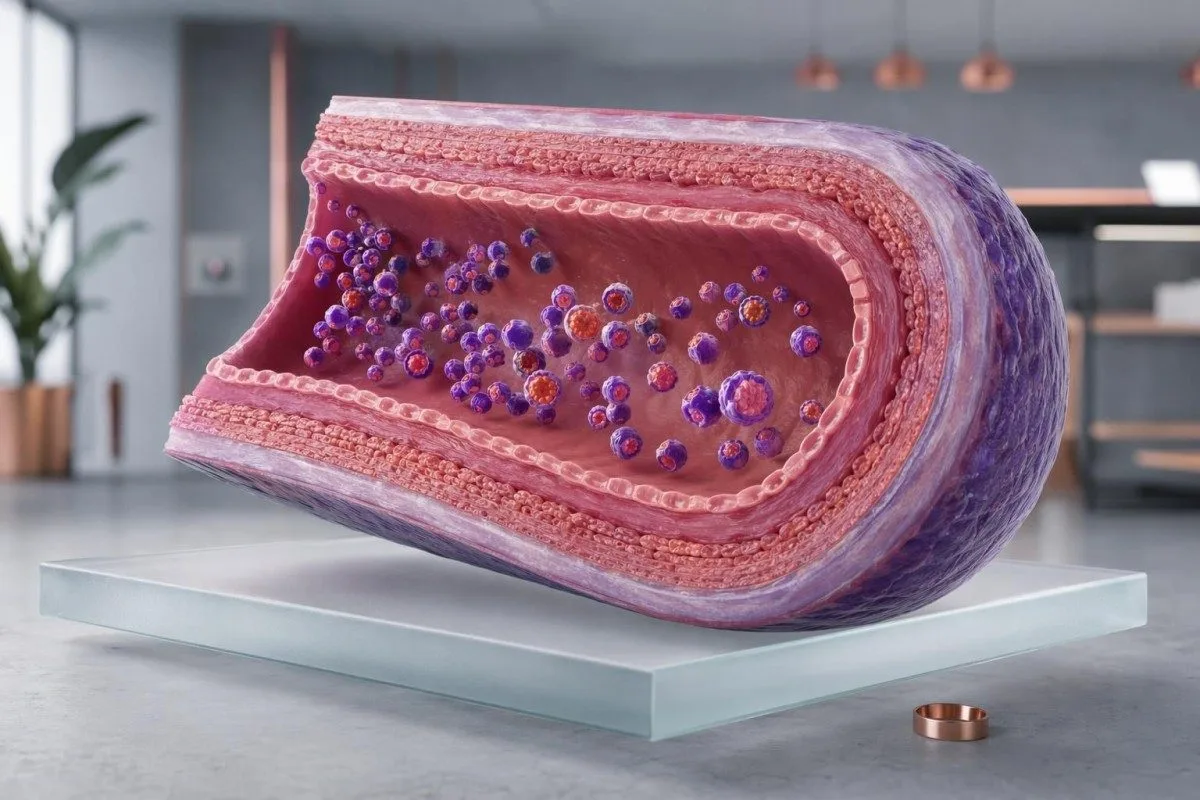
Standard LDL cholesterol measures how much cholesterol rides inside LDL particles. Particle number estimates how many atherogenic vehicles are on the road — and that difference can matter.


- LDL particle number estimates the number of LDL particles in blood, usually reported as LDL-P in nmol/L; values below 1000 nmol/L are often considered lower risk.
- LDL-C can look normal when LDL particles are small and numerous, especially with insulin resistance, high triglycerides, low HDL, or abdominal weight gain.
- NMR lipid profile is the common test that reports LDL-P, small LDL-P, HDL particle measures, and sometimes an insulin-resistance score.
- ApoB is a close cousin of LDL particle number because each LDL, VLDL, IDL, and Lp(a) particle carries one ApoB protein.
- Discordance matters when LDL-C is below 100 mg/dL but LDL-P is above 1300 nmol/L, or ApoB is higher than expected for LDL-C.
- Advanced lipid panel testing is most useful for people with diabetes, metabolic syndrome, premature family heart disease, high Lp(a), chronic kidney disease, or unexplained coronary calcium.
- triglycerides nga labaw sa 150 mg/dL and HDL-C below 40 mg/dL in men or below 50 mg/dL in women often signal cholesterol-depleted, particle-rich LDL.
- Treatment targets vary: US guidelines use ApoB mainly as a risk-enhancing factor, while European guidelines provide ApoB goals such as below 65 mg/dL for very-high-risk patients.
- Balik nga pagsulay is usually best after 8-12 weeks of stable diet, medication, weight, and thyroid status; LDL-P can shift meaningfully after illness or major weight loss.
- Kantesti AI can interpret LDL-P alongside LDL-C, ApoB, triglycerides, HbA1c, hs-CRP, kidney markers, liver enzymes, and family-risk patterns in about 60 seconds.
Why normal LDL-C can still hide particle risk
LDL particle number can reveal atherosclerosis risk when LDL-C looks normal because arteries are exposed to particles, not just cholesterol mass. As of May 1, 2026, I would ask about advanced lipid testing when LDL-C and overall risk do not match: diabetes, high triglycerides, low HDL, premature family heart disease, high Lp(a), or coronary calcium despite acceptable LDL-C.
LDL-C is the cholesterol cargo inside LDL particles, while LDL particle number counts the approximate number of LDL vehicles carrying that cargo. Two people can both have LDL-C of 95 mg/dL, yet one may carry 850 LDL particles per microliter-equivalent and another may carry 1600 nmol/L by NMR because each particle contains less cholesterol.
I see this pattern often in our analysis of 2M+ blood tests: triglycerides are 180 mg/dL, HDL-C is 38 mg/dL, HbA1c is 5.8%, and the LDL-C report says near normal. When those clues cluster, Kantesti AI flags possible LDL-C and particle discordance instead of treating the LDL-C number as reassuring.
The 2018 AHA/ACC cholesterol guideline recognizes ApoB as a risk-enhancing factor, especially when triglycerides are 200 mg/dL or higher (Grundy et al., 2019). That is the practical reason patients with a normal LDL range can still deserve a deeper lipid conversation.
A simple way to explain it to patients: LDL-C estimates the cholesterol traffic volume, but LDL particle number estimates how many cars keep bumping into the arterial lining. More cars usually means more opportunities for retention, oxidation, immune response, and plaque formation.
What LDL particle number actually measures
LDL particle number measures how many LDL particles circulate in plasma, usually reported as LDL-P in nmol/L. LDL-P is not the same as LDL-C, and it often aligns more closely with ApoB than with standard cholesterol values.
Each LDL particle has one ApoB-100 protein wrapped around a lipid core, so ApoB is often used as a practical surrogate for atherogenic particle count. ApoB includes LDL, IDL, VLDL remnants, and Lp(a), while LDL-P focuses specifically on LDL particles measured by particle-size methods.
In clinic, I usually explain ApoB as the broader count and LDL-P as the LDL-specific count. If a patient has ApoB of 115 mg/dL with LDL-C of 92 mg/dL, I do not call that normal risk; I look for insulin resistance, remnant cholesterol, thyroid dysfunction, kidney disease, or high Lp(a).
Ang ApoB blood test is often easier to order than LDL-P in many countries, and it has strong guideline support. LDL-P can still add value when a lab already offers an NMR lipid profile or when LDL size and small LDL-P are clinically relevant.
Otvos and colleagues reported in the Journal of Clinical Lipidology that when LDL-C and LDL-P were discordant, cardiovascular risk tracked more closely with LDL-P than LDL-C in multi-ethnic cohort data (Otvos et al., 2011). That finding matches my day-to-day experience: discordance is where the useful information lives.
How an NMR lipid profile reports LDL-P
Usa ka NMR lipid profile reports LDL particle number by using nuclear magnetic resonance signals from lipoprotein particles. Most reports include total LDL-P, small LDL-P, LDL size, HDL particle measures, triglycerides, and calculated LDL-C.
NMR testing does not count particles one by one like beads under a microscope. It detects characteristic methyl-group signals from lipid particles, then uses validated algorithms to estimate particle concentrations in nmol/L.
A typical report may classify LDL-P below 1000 nmol/L as lower, 1000-1299 nmol/L as moderate, 1300-1599 nmol/L as borderline high, 1600-2000 nmol/L as high, and above 2000 nmol/L as very high. These categories are risk markers, not automatic diagnoses.
Kung akong repasohon ang advanced lipid panel, I pay attention to whether LDL size is small, medium, or large only after I have checked total particle burden. Small LDL is not harmless, but a very high number of any atherogenic particles is the bigger issue.
The thing is, NMR platforms and reference intervals are not identical across laboratories. Some European labs lean toward ApoB reporting instead, while many US specialty labs offer LDL-P; patients should compare trends within the same lab whenever possible.
Reference ranges and discordance cutoffs that matter
LDL-P below 1000 nmol/L is commonly considered a lower-risk particle number, while LDL-P above 1600 nmol/L usually suggests increased atherogenic particle burden. Discordance is clinically meaningful when LDL-C is acceptable but LDL-P, ApoB, or non-HDL-C remains high.
LDL-C below 100 mg/dL is often called near optimal for average-risk adults, but that label can mislead a patient with LDL-P of 1700 nmol/L. In particle-rich states, each LDL particle carries less cholesterol, so LDL-C underestimates the number of artery-facing particles.
Triglycerides help expose the mismatch. A triglyceride level above 150 mg/dL often points toward VLDL excess and smaller, cholesterol-depleted LDL particles, which is why I pair LDL-P interpretation with the triglyceride range rather than reading it alone.
A practical discordance pattern is LDL-C below 100 mg/dL with ApoB above 90 mg/dL in a moderate-risk patient, or ApoB above 80 mg/dL in a high-risk patient. Very-high-risk patients, such as those with known coronary disease, often need still lower particle-related targets.
The metabolic pattern that drives high LDL-P
High LDL-P with normal LDL-C most often appears in insulin resistance, metabolic syndrome, type 2 diabetes, fatty liver physiology, and high triglyceride states. The pattern is usually high triglycerides, low HDL-C, normal-looking LDL-C, and unexpectedly high particle count.
A 48-year-old executive with LDL-C of 101 mg/dL may feel relieved until the rest of the panel shows triglycerides of 212 mg/dL, HDL-C of 36 mg/dL, fasting insulin of 18 µIU/mL, and LDL-P of 1780 nmol/L. That is not a cholesterol problem alone; it is a metabolic trafficking problem.
Insulin resistance increases liver VLDL production, and VLDL-triglyceride exchange can leave LDL particles smaller and more numerous. A fasting insulin above about 15 µIU/mL or HOMA-IR above 2.0-2.5 often supports this mechanism, though cutoffs vary by assay and population.
If this looks like your pattern, the giya sa HOMA-IR is worth reading before you assume the answer is only a stronger statin. In my experience, waist circumference, sleep timing, liver enzymes, and post-meal glucose often explain why LDL-P is high despite average LDL-C.
HbA1c can lag behind particle changes. I have seen LDL-P improve by 300-500 nmol/L after 12 weeks of lower refined carbohydrate intake and resistance training, while HbA1c moved only from 5.8% to 5.6%.
Who should ask about advanced lipid testing
Patients should ask about an advanced lipid panel when standard LDL-C does not match personal risk. The highest-yield groups are people with premature family heart disease, diabetes, metabolic syndrome, high triglycerides, low HDL, high Lp(a), chronic kidney disease, or coronary calcium.
I am more likely to suggest LDL-P or ApoB for a 42-year-old with a father who had a stent at 49 than for a 24-year-old athlete with LDL-C of 88 mg/dL, triglycerides of 55 mg/dL, HDL-C of 72 mg/dL, and no family history. Pre-test probability matters.
High Lp(a) changes the conversation because Lp(a) particles also carry ApoB and can raise measured atherogenic particle burden. If your Lp(a) is above 50 mg/dL or above 125 nmol/L, review our Lp(a) risk guide and ask your clinician how it affects targets.
Advanced lipid testing is also reasonable when coronary artery calcium is above 0 before age 45 in men or before age 55 in women, even if LDL-C looks ordinary. A CAC score of 100 or above usually pushes me to treat risk more assertively.
Not everyone needs NMR testing. If LDL-C is 190 mg/dL or higher, the result already signals severe hypercholesterolemia; waiting for LDL-P before acting can delay care.
How guidelines use ApoB versus LDL-P
Major guidelines use ApoB more explicitly than LDL-P because ApoB is standardized, widely available, and represents all atherogenic particles. LDL-P is still clinically useful, but it is less commonly written into treatment targets.
The AHA/ACC guideline lists ApoB of 130 mg/dL or higher as a risk-enhancing factor, particularly when triglycerides are 200 mg/dL or higher (Grundy et al., 2019). That ApoB threshold roughly corresponds to high particle burden, not merely high cholesterol mass.
The 2019 ESC/EAS dyslipidaemia guideline gives ApoB treatment goals: below 65 mg/dL for very-high-risk patients, below 80 mg/dL for high-risk patients, and below 100 mg/dL for moderate-risk patients (Mach et al., 2020). Those targets are stricter than many patients expect when their LDL-C appears only mildly abnormal.
LDL-P targets are often used by laboratories and lipid clinics, but clinicians disagree on exactly how aggressively to treat a borderline LDL-P of 1350 nmol/L in a low-risk person. This is one of those areas where context matters more than the number.
For a broader view of standard lipids before advanced markers, I usually point patients to our giya sa range sa kolesterol. A normal total cholesterol does not cancel a high ApoB or LDL-P result.
How Kantesti reads particle risk in context
Kantesti AI interprets LDL particle number by checking whether LDL-P fits the rest of the metabolic, inflammatory, renal, thyroid, liver, and family-risk picture. Our platform does not treat a single advanced lipid value as a diagnosis.
When I, Thomas Klein, MD, review an LDL-P result, I ask a few blunt questions: Is the patient insulin resistant? Are triglycerides above 150 mg/dL? Is ApoB high? Is TSH abnormal? Are ALT and GGT suggesting fatty liver physiology?
Kantesti's neural network compares LDL-P against more than 15,000 biomarkers and learned lab-pattern relationships from global, anonymised data. Our mga sumbanan sa medikal nga pag-validate describe how clinical review, benchmark cases, and safety constraints shape our interpretation logic.
A useful pattern is LDL-P of 1650 nmol/L, hs-CRP of 0.4 mg/L, triglycerides of 85 mg/dL, HDL-C of 66 mg/dL, and ApoB of 82 mg/dL. That combination does not mean the same thing as LDL-P of 1650 nmol/L with hs-CRP of 4.2 mg/L, triglycerides of 240 mg/dL, and HbA1c of 6.3%.
For readers who want the technical validation layer, the Kantesti AI Engine benchmark is published as a pre-registered population-scale evaluation with hyperdiagnosis trap cases at clinical validation data. I prefer that level of scrutiny for YMYL lab interpretation.
What to do if LDL-P is high but LDL-C is normal
If LDL-P is high while LDL-C is normal, the next step is not panic; it is risk stratification. Confirm the result, check ApoB or non-HDL-C, look for metabolic drivers, and decide treatment intensity based on absolute cardiovascular risk.
A single LDL-P of 1450 nmol/L in a low-risk 35-year-old is a different situation from the same LDL-P in a 61-year-old smoker with hypertension and coronary calcium. The number starts the conversation; it does not finish it.
I usually want ApoB, non-HDL-C, triglycerides, HDL-C, HbA1c, fasting glucose, TSH, creatinine/eGFR, ALT, and sometimes urine albumin-creatinine ratio. If chest pain, exertional pressure, or new shortness of breath is present, the lab discussion should pause and urgent clinical evaluation comes first.
Medication choices depend on risk category and clinician judgment. Statins can reduce LDL-C by 30-50% at moderate to high intensity, but ApoB and LDL-P sometimes remain higher than expected, which is why follow-up testing matters.
For people trying to understand which cardiac labs actually predict events, our giya sa heart marker compares lipids, ApoB, hs-CRP, troponin, BNP, and glucose markers without pretending they all answer the same question.
Atherosclerosis biomarkers that complete the picture
Atherosclerosis biomarkers that add context to LDL particle number include ApoB, non-HDL-C, Lp(a), hs-CRP, HbA1c, fasting insulin, urine albumin-creatinine ratio, and coronary artery calcium. No single blood test fully measures plaque burden.
ApoB tells us particle burden, Lp(a) tells us inherited particle risk, hs-CRP tells us inflammatory tone, and HbA1c tells us glycation exposure. Coronary calcium, when used appropriately, shows calcified plaque already present in the artery wall.
hs-CRP below 1 mg/L is often considered lower inflammatory cardiovascular risk, 1-3 mg/L average risk, and above 3 mg/L higher risk if infection or injury is not present. Our hs-CRP comparison explains why a regular CRP and a high-sensitivity CRP are not interchangeable.
I am cautious with inflammatory markers during illness. A patient with LDL-P of 1250 nmol/L and hs-CRP of 9 mg/L two days after influenza does not have the same vascular interpretation as someone with hs-CRP of 4 mg/L on three stable tests.
Urine albumin-creatinine ratio above 30 mg/g can signal endothelial and kidney microvascular stress, especially in diabetes or hypertension. In that setting, a modestly high LDL-P may carry more practical weight than it would in an otherwise healthy endurance athlete.
Lifestyle changes that can lower particle burden
Lifestyle can lower LDL particle number when the driver is insulin resistance, high triglycerides, excess visceral fat, or low fitness. The biggest particle shifts usually come from weight loss of 5-10%, lower refined carbohydrates, higher soluble fibre, and consistent resistance plus aerobic training.
Soluble fibre around 5-10 g/day from oats, legumes, psyllium, chia, or vegetables can lower LDL-C modestly and may improve ApoB in some patients. I usually start with food first, then consider psyllium if the patient can tolerate bloating during the first 1-2 weeks.
Triglyceride-driven LDL-P often responds to reducing sugar-sweetened drinks, refined grains, late-night snacking, and alcohol excess. For fatty liver patterns, the fatty liver diet guide is more relevant than a generic low-fat diet sheet.
Exercise dose matters. A practical target is 150-300 minutes per week of moderate aerobic activity plus 2-3 resistance sessions, but I have seen particle markers improve with just 20-minute post-meal walks after the largest meal.
There is honest variability here. Some lean patients with genetically high ApoB or familial hypercholesterolemia need medication even with excellent diet, while many insulin-resistant patients can move LDL-P substantially by changing the metabolic environment.
Repeat testing and lab variability
LDL-P should usually be repeated after 8-12 weeks if treatment, weight, diet, thyroid status, or illness has recently changed. Comparing LDL-P across different NMR platforms or during acute illness can create misleading trend stories.
A viral illness, major calorie deficit, pregnancy, thyroid medication change, or rapid weight loss can distort lipid values for several weeks. I rarely make a permanent risk decision from one advanced lipid panel collected during a messy physiologic moment.
Fasting is not always required for standard cholesterol, but fasting can help when triglycerides, remnant cholesterol, and LDL-P discordance are the main questions. Our nonfasting cholesterol guide explains when a meal before testing still counts and when it muddies the water.
Kantesti can trend LDL-C, ApoB, LDL-P, triglycerides, and HDL-C across uploads, but our AI still marks major lab-method changes as a caution. A 12% LDL-P difference may be noise; a persistent 35-50% reduction after therapy is usually clinically meaningful.
Store the PDF. Lab portals change, reference ranges update, and patients forget whether they used the same laboratory; keeping the original report prevents a surprising amount of clinical confusion.
Questions to bring to your clinician
The best questions about LDL particle number are specific, risk-based, and tied to action. Ask whether LDL-P changes your risk category, whether ApoB would be enough, and what treatment target fits your age, history, and imaging results.
I like patients to bring five numbers: LDL-C, non-HDL-C, triglycerides, HDL-C, and ApoB or LDL-P. If you also have Lp(a), HbA1c, blood pressure, smoking status, and family history, the visit becomes much more productive.
Useful questions include: Is my LDL-P discordant with LDL-C? Should we confirm with ApoB? Do my triglycerides suggest insulin resistance? Would coronary calcium imaging change treatment? What target should we recheck in 8-12 weeks?
You can upload your lipid panel to sulayan ang libre nga AI analysis before the appointment and bring the interpretation to your clinician. Kantesti does not replace medical care, but it helps patients notice the exact pattern they need to discuss.
If a result says LDL-P is high, do not arrive asking only for a medication name. Arrive asking what caused the high particle count, how risk was estimated, and how success will be measured.
Red flags and when LDL-P is not enough
LDL-P is not enough when symptoms, very high LDL-C, inherited lipid disorders, kidney disease, thyroid disease, pregnancy physiology, or abnormal cardiac markers are present. In those cases, LDL-P is one piece of a larger medical evaluation.
Seek urgent care for chest pressure, fainting, severe shortness of breath, new neurological symptoms, or pain radiating to the jaw or left arm. A normal LDL-P never rules out an acute coronary syndrome, and a troponin trend is the relevant test in that moment.
LDL-C of 190 mg/dL or higher suggests severe primary hypercholesterolemia until proven otherwise, even before LDL-P returns. Tendon xanthomas, corneal arcus before age 45, or multiple relatives with early events should trigger inherited-lipid evaluation.
Secondary causes are common. Hypothyroidism, nephrotic-range protein loss, cholestatic liver disease, uncontrolled diabetes, certain medications, and menopause transition can all change LDL-C, ApoB, and LDL-P in different directions.
If kidney function is part of your risk picture, compare particle testing with the giya sa eGFR base sa edad. Chronic kidney disease can raise cardiovascular risk even when LDL-C does not look frightening.
Kantesti research publications and medical review
Kantesti medical content is reviewed against clinical standards, guideline evidence, and real-world lab-pattern safety checks. Thomas Klein, MD, and our physician reviewers treat advanced lipid interpretation as risk communication, not automated diagnosis.
Atong Medical Advisory Board reviews how we discuss YMYL topics such as LDL particle number, ApoB, and atherosclerosis biomarkers. I prefer transparent uncertainty: LDL-P is useful in discordance, but ApoB has stronger international guideline footing.
Kantesti LTD is a UK healthtech company building AI-powered blood test interpretation for patients and clinicians across 127+ countries. You can read more about the organization, certifications, and clinical governance on Mahitungod sa Kantesti.
Klein, T., & Kantesti Medical Research Group. (2026). aPTT Normal Range: D-Dimer, Protein C Blood Clotting Guide. Zenodo. https://doi.org/10.5281/zenodo.18262555. Link sa ResearchGate: ResearchGate publication search. Link sa Academia.edu: Academia publication search.
Klein, T., & Kantesti Medical Research Group. (2026). Serum Proteins Guide: Globulins, Albumin & A/G Ratio Blood Test. Zenodo. https://doi.org/10.5281/zenodo.18316300. Link sa ResearchGate: ResearchGate publication search. Link sa Academia.edu: Academia publication search.
Kanunay nga Gipangutana nga mga Pangutana
Unsa man ang maayong gidaghanon sa LDL nga mga partikulo?
Ang kasagarang gigamit nga mas ubos-risgo nga gidaghanon sa LDL particle kay ubos sa 1000 nmol/L sa usa ka NMR lipid profile. Ang LDL-P tali sa 1000 ug 1299 nmol/L kasagaran giisip nga kasarangan, 1300 hangtod 1599 nmol/L borderline taas, 1600 hangtod 2000 nmol/L taas, ug labaw sa 2000 nmol/L kaayo taas. Kini nga mga sakup kinahanglan sabton uban sa LDL-C, ApoB, triglycerides, HDL-C, kahimtang sa diabetes, presyon sa dugo, pagpanigarilyo, kasaysayan sa panglawas sa pamilya, ug coronary calcium kung magamit.
Mahimo bang normal ang LDL-C apan taas ang gidaghanon sa LDL nga mga partikulo?
Oo, ang LDL-C mahimong normal samtang ang gidaghanon sa LDL nga mga partikulo (LDL particle number) taas kung ang LDL nga mga partikulo gagmay ug nagdala ug mas gamay nga kolesterol kada partikulo. Kini nga sumbanan kasagaran sa insulin resistance, triglycerides nga labaw sa 150 mg/dL, ubos nga HDL-C, pisyolohiya sa tambok nga atay (fatty liver), type 2 diabetes, ug pipila ka minanang mga sumbanan sa lipid. Ang usa ka pasyente nga adunay LDL-C nga 95 mg/dL ug LDL-P nga 1700 nmol/L mahimong adunay mas daghang pagkakaladlad sa mga partikulo nga makapadugang sa pagkaporma sa atherosclerosis kaysa sa ipakita sa LDL-C ra.
Mas maayo ba ang ApoB kaysa sa gidaghanon sa LDL particle?
Ang ApoB kasagaran mas praktikal kaysa sa gidaghanon sa LDL particle tungod kay kini standardized, kaylap nga magamit, ug suportado sa dagkong mga giya. Ang matag atherogenic nga partikulo kasagaran nagdala ug usa ka protina nga ApoB, mao nga ang ApoB nag-estimate sa kinatibuk-ang gidaghanon sa LDL, IDL, VLDL remnant, ug Lp(a) nga mga partikulo. Ang LDL-P mahimo gihapon nga mapuslanon kung adunay available nga NMR lipid profile, labi na kung adunay mga sumbanan sa discordance nga nalambigit sa gagmay nga LDL nga mga partikulo.
Kanus-a ko kinahanglan mangayo og NMR lipid profile?
Kinahanglan nimo mangutana bahin sa usa ka NMR lipid profile kung ang standard nga LDL-C dili mohaom sa imong klinikal nga risgo. Mga hinungdan nga taas ug kasagaran nga makahatag ug daghang impormasyon naglakip sa triglycerides nga labaw sa 150-200 mg/dL, HDL-C nga ubos sa 40 mg/dL sa mga lalaki o ubos sa 50 mg/dL sa mga babaye, diabetes, metabolic syndrome, taas nga Lp(a), sayo nga sakit sa kasingkasing sa pamilya, chronic kidney disease, o coronary calcium bisan pa nga normal ang LDL-C. Kung ang LDL-C anaa na sa 190 mg/dL o mas taas, ang mga desisyon sa pagtambal kasagaran dili na kinahanglan maghulat pa sa NMR testing.
Ang pagpaubos ba sa gidaghanon sa LDL nga mga partikulo makapakunhod sa risgo sa sakit sa kasingkasing?
Ang pagpaubos sa pasanin sa atherogenic nga mga partikulo lig-on nga nalambigit sa pagkunhod sa risgo sa cardiovascular, bisan pa nga kadaghanan sa mga outcome trial naggamit sa mga epekto sa pagtambal nga may kalabotan sa LDL-C ug ApoB imbis nga LDL-P ra. Ang mga statin, ezetimibe, mga therapy nga gitumong sa PCSK9, pagkunhod sa timbang, pagpaayo sa insulin resistance, ug pagpaubos sa triglycerides makapakunhod sa pasanin sa partikulo sa lain-laing lebel. Ang pinakaluwas nga tumong mao ang pagpaubos sa LDL-P o ApoB sa paagi nga mohaom sa tinuod nga absolute nga risgo sa pasyente ug sa iyang pagtugot sa pagtambal.
Makapakunhod ba ang pagkaon sa gidaghanon sa LDL particle?
Ang pagkaon makapakunhod sa gidaghanon sa LDL nga mga partikulo kung ang nag-unang hinungdan mao ang insulin resistance, taas nga triglycerides, o sobra nga visceral fat. Ang pagkunhod sa timbang nga 5-10%, 5-10 g/araw nga matunaw nga fibre, mas gamay nga pinino nga carbohydrates, ug pagkunhod sa mga ilimnon nga ginasabaan ug asukal makatabang sa pagpaayo sa LDL-P sa daghang mga metabolic nga sumbanan. Ang mga tawo nga adunay familial hypercholesterolemia o genetically nga taas ug ApoB mahimong kinahanglan ug tambal bisan pa sa usa ka maayo kaayo nga pagkaon.
Unsa kadaghan kanunay kinahanglan nga i-reulit ang LDL-P?
Ang LDL-P kasagaran ginapabalik-balik human sa 8-12 ka semana kung nausab ang usa ka tambal, pagkaon, gibug-aton, kahimtang sa thyroid, o plano sa ehersisyo. Ang pagpa-test dayon mahimong makalibog tungod kay ang mga lipoprotein naglihok panahon sa sakit, paspas nga pagkunhod sa timbang, pisyolohiya sa pagbuntis, o dako nga paglimite sa kaloriya. Para sa dugay nga pagmonitor, mas kasaligan ang mga uso (trends) gikan sa parehas nga pamaagi sa parehas nga laboratoryo kaysa sa pagtandi sa usa ka beses nga resulta gikan sa lain-laing mga platform.
Karon na ang AI-Powered Blood Test Analysis
Apil sa kapin sa 2 milyon nga mga user sa tibuok kalibutan nga nagsalig sa Kantesti para sa dayon ug tukma nga pag-analisa sa lab test. I-upload ang imong resulta sa blood test ug makadawat og komprehensibong pagsabot sa 15,000+ nga mga biomarker sulod sa mga segundo.
📚 Mga Napangalan nga Research Publications
Klein, T., Mitchell, S., & Weber, H. (2026). Normal nga Sakop sa aPTT: D-Dimer, Giya sa Pag-ihap sa Dugo gamit ang Protina C. Kantesti AI Medical Research.
Klein, T., Mitchell, S., & Weber, H. (2026). Giya sa mga Protina sa Serum: Pagsulay sa Dugo sa mga Globulin, Albumin ug A/G Ratio. Kantesti AI Medical Research.
📖 Mga Panlabas nga Sanggunian sa Medisina
⚕️ Pagpasabot sa Medikal
Kini nga artikulo para sa katuyoan sa edukasyon ra ug dili kini mosangpot sa medikal nga tambag. Kanunay mokonsulta sa usa ka kwalipikado nga healthcare provider alang sa mga desisyon sa diagnosis ug pagtambal.
Mga E-E-A-T Trust Signals
Kasinatian
Pagsusi sa klinika nga gipangulohan sa doktor sa mga workflow sa interpretasyon sa lab.
Kahanas
Pokus sa medisina sa laboratoryo kung giunsa paglihok ang mga biomarker sa konteksto sa klinika.
Pagka-awtorisado
Gisulat ni Dr. Thomas Klein ug gisusi ni Dr. Sarah Mitchell ug Prof. Dr. Hans Weber.
Kasaligan
Interpretasyon nga base sa ebidensya, nga adunay klaro nga mga agianan sa sunod nga buhat aron makunhuran ang kabalaka.