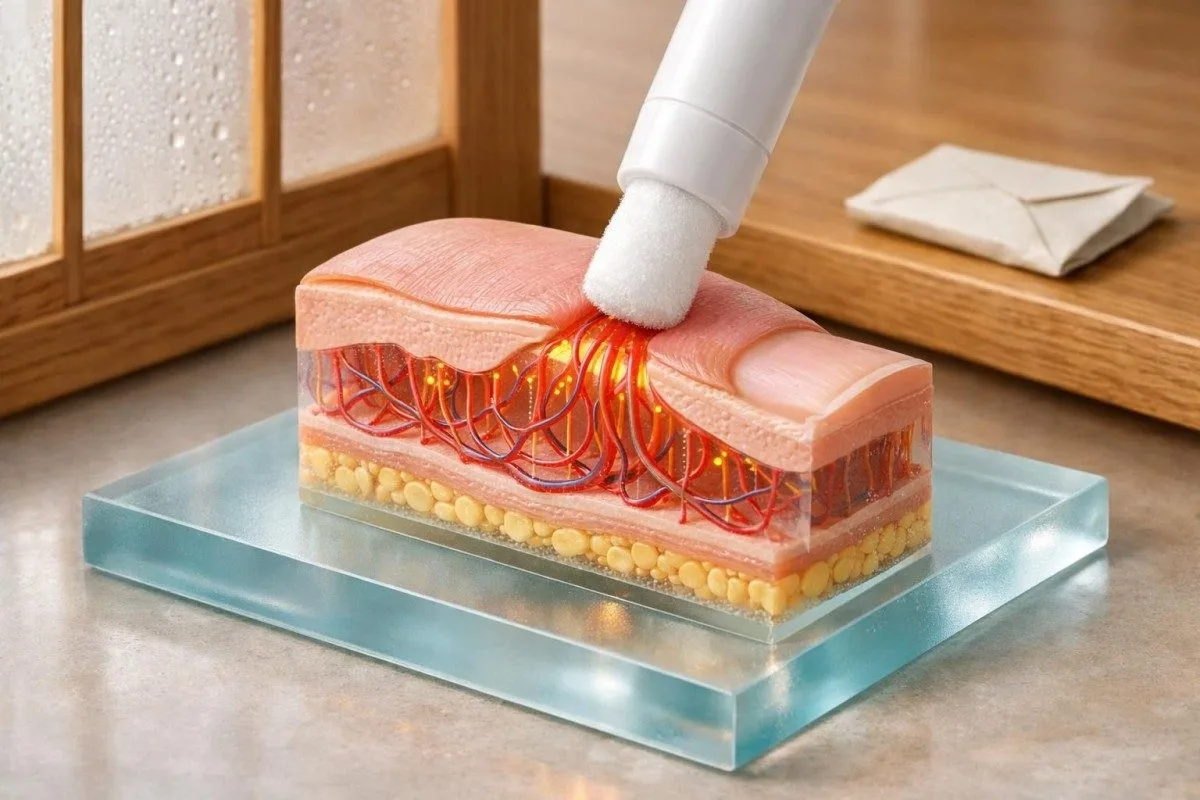
Finger-prick kits can be very good for some markers and genuinely misleading for others. This is the patient-first way I help people decide when home sampling is enough and when a proper venous draw is the smarter move.


- HbA1c below 5.7% is normal; 5.7-6.4% suggests prediabetes, and 6.5% or higher usually needs confirmation on a second test.
- Калий should usually sit between 3.5 and 5.0 mmol/L; home results above 5.5 mmol/L are common false alarms when a finger sample is hemolyzed.
- Триглицериддер under 150 mg/dL are normal, while 500 mg/dL or higher raises pancreatitis risk and should not be handled with home retesting alone.
- Ферритин below 30 ng/mL strongly supports iron deficiency in many adults, but an elevated CRP can make ferritin look falsely reassuring.
- натрий below 130 mmol/L or above 150 mmol/L needs urgent venous confirmation, not another finger-prick attempt.
- TSH is commonly referenced around 0.4-4.0 mIU/L, yet pregnancy, childhood, and lab method can change what counts as normal.
- Sample stability drops when capillary kits sit in heat or freezing conditions for more than 24-48 hours during transport.
- Best use of an at home blood test is screening or trend tracking every 3-6 months, not emergency diagnosis or medication-critical decisions.
When an at home blood test is accurate enough to trust
Yes—an at home blood test can be reliable for HbA1c, липиддер, hs-CRP, жана айрым TSH же витамин D assays when the kit uses validated capillary methods and you follow the collection steps exactly. It is less reliable for калийди, натрий, CBC parameters, креатинин/eGFR, жана көбүнчө clotting tests. In practice, finger-prick testing works best for screening and trend tracking; a venous draw is smarter when symptoms are significant, the result is borderline, or treatment depends on tight precision. You can upload either format to Кантести AI and compare image-quality pitfalls in our home report photo scan guide.
Capillary blood is not simply mini-venous blood. It is a mixture of arterial blood, venous blood, and a small amount of interstitial fluid, which is why capillary glucose after a meal can run slightly higher than venous glucose and why aggressive squeezing can dilute the sample. The classic hematocrit effect also matters: a high hematocrit makes a dried spot spread less, while a low hematocrit makes it spread more, changing analyte recovery in older dried blood spot systems.
In our review of more than 2M uploaded reports across 127+ countries, the commonest mistake is comparing unlike with unlike. A capillary result from this month and a venous result from last year may differ because of collection method, assay platform, units, and reference comments rather than real biology. As of April 8, 2026, the better kits increasingly use volumetric absorptive microsampling because it reduces some of the dried-spot bias; we explain how we judge method quality in our клиникалык тастыктоо стандарттарыбызга.
I tell patients the same thing in clinic: use home testing when you want a strong signal, not the final word. If a result would trigger a medication change, an iron infusion, anticoagulant adjustment, or an urgent referral, I—Thomas Klein, MD—usually want venous confirmation first. Most patients find that rule easier to remember than memorizing every biomarker.
Which biomarkers work best from finger-prick samples
The most reliable finger-prick biomarkers are usually HbA1c, жалпы холестерол, HDL, триглицериддер, жана көбүнчө hs-CRP; some validated kits also do a reasonable job with 25-OH витамин D жана TSH. These markers are either analytically stable or clinically useful even when small capillary-versus-venous bias exists. If you are tracking glucose risk, start with our HbA1c чектөө боюнча колдонмо жана lipid panel explainer.
HbA1c is one of the better home markers because it reflects average glycation over roughly 8 to 12 weeks rather than what you ate that morning. HbA1c below 5.7% is normal, 5.7-6.4% suggests prediabetes, and 6.5% or higher supports diabetes when confirmed appropriately. In validation work, capillary and venous HbA1c often agree within about 0.2 to 0.3 percentage points when the collection is clean and the assay is calibrated properly.
Lipids also perform fairly well, especially for broad risk tracking. Total cholesterol below 200 mg/dL is desirable, HDL above 40 mg/dL in men and 50 mg/dL in women is generally favorable, and triglycerides below 150 mg/dL are normal. Where people get tripped up is LDL: calculated LDL becomes less reliable when triglycerides are high, and if your cardiovascular question is really about treatment intensity, I often prefer a venous panel with ApoB rather than a minimalist home kit.
Бул жерде дагы бир башка көз караш бар. hs-CRP below 1.0 mg/L suggests low cardiovascular inflammatory risk, 1.0-3.0 mg/L average risk, and above 3.0 mg/L higher risk—but values above 10 mg/L usually reflect acute illness, not long-term heart risk. Vitamin D is also workable for many patients: 25-OH vitamin D below 20 ng/mL is deficiency, 20-29 ng/mL insufficiency, and many clinicians aim for 30-50 ng/mL, although some European groups are comfortable with a lower threshold than many US endocrinologists.
Ferritin deserves a nuanced word. A capillary ferritin can be helpful for screening, and ferritin below 30 ng/mL strongly suggests iron deficiency in most adults without active inflammation. But ferritin is an acute-phase reactant, so a ferritin of 80 ng/mL with a 12 мг/л CRP may still coexist with depleted iron stores. This is one of those places where context matters more than the number.
Why HbA1c behaves better than most home markers
HbA1c is less vulnerable to whether you skipped breakfast, drank coffee, or mailed the kit an hour later than planned. It can still mislead in anemia, hemoglobin variants, recent transfusion, or severe kidney disease, but analytically it is one of the steadiest markers we see in home testing.
Which markers often fail or need venous confirmation
The least reliable home markers are калийди, натрий, кальций, креатинин/eGFR, most CBC components, and essentially all уюу тесттери. These analytes are sensitive to hemolysis, microclotting, dilution, or time-to-processing in ways that capillary kits cannot always control. For kidney chemistry, our креатинин боюнча колдонмо is a better starting point than a generic home panel, and for cell counts see our CBC дифференциалынын түшүндүрмөсү.
Potassium is the classic trap. Potassium normally ranges from 3.5 to 5.0 mmol/L, but capillary samples that are squeezed, underfilled, or delayed often hemolyze and release intracellular potassium, creating a false high. I get nervous when someone sends me a home potassium of 5,8 ммоль/л collected after struggling with the finger; more than once I have seen that fall to 4.6 mmol/L on a same-day venous repeat.
A full CBC is also a poor fit for many home kits. Гемоглобин can be screened capillary with decent performance, but a true CBC дифференциалы depends on intact cellular elements and prompt mixing with anticoagulant; microclots can falsely lower platelets, distort white cell counts, and create bizarre differentials. When the question is anemia, infection, bruising, or leukemia evaluation, a finger-prick panel is simply not enough.
Creatinine is another one I rarely trust from casual home collection. eGFR is only as good as the creatinine assay feeding it, and that requires standardized serum methods plus age and sex inputs; a small analytic error in creatinine can swing eGFR meaningfully when kidney function is borderline. Liver enzymes are mixed: ALT tends to be more liver-specific than AST, and an athlete with AST 89 U/L, ALT 24 U/L, and a high CK after a marathon probably has muscle signal, not primary liver disease.
Some companies sell something labeled a толук кан панели from one tiny capillary sample. Be careful. If that panel includes electrolytes, renal function, coagulation, differential counts, and several hormones all at once, I assume the failure rate or repeat rate is higher than the marketing page implies.
The hidden technical issue: microclots
Microclots are easy to miss and surprisingly destructive. They start forming when a capillary tube fills slowly or is not mixed promptly, and once that happens platelet counts, MCV, and even white cell distribution can drift enough to create a story that is not biologically real.
Why collection technique changes home results more than most people realize
The biggest source of error in a home kit is usually the collection step, not the interpretation. Warm hands for 3 to 5 minutes, sit quietly for 10 minutes, avoid hard squeezing, collect at the instructed time, and mail the sample the same day when possible. If fasting is required, follow a proper ороз кармоо боюнча колдонмо божомол кылуунун ордуна.
Capillary collection punishes rushed technique. The first drop can contain more tissue fluid than later drops, and excessive squeezing lowers sample quality while increasing hemolysis risk. A small thing—cold hands on a winter morning—can mean the difference between a smooth collection and a sample that arrives underfilled, clotted, or visibly degraded.
Timing matters more than marketing pages admit. Жалпы тестостерон should usually be drawn between саат 7ден 10го чейин., кортизол is heavily circadian, and пролактини can rise two- to threefold after stress, exertion, or poor sampling conditions. Even lipids are timing-sensitive: nonfasting triglycerides are often acceptable, but if the number comes back 350 mg/dL after a late dinner, I repeat it fasting before doing anything serious with it.
Mail transport adds another variable. Summer mailboxes can exceed 40°C, winter delivery routes can drop below freezing, and desiccant only helps up to a point. We built Kantesti's neural network to flag physiologically odd combinations—say, a plausible HbA1c beside an implausible potassium jump—but our AI cannot rescue a sample that degraded in transit; if you are unsure about delays, compare them with our real-world result timing guide.
One practical tip that prevents a lot of bad samples
Do not collect on a Friday afternoon unless the company clearly processes weekend arrivals. I see more unusable capillary specimens from late-week collections than almost any other avoidable mistake.
When a blood test near me is safer than an online kit
A blood test near me is the safer choice when you have red-flag symptoms, need electrolytes or coagulation studies, take medication that requires tight monitoring, or need a true chemistry workup. Capillary kits are not the place to sort out chest pain, black stools, jaundice, severe dehydration, fainting, or medication-related kidney injury. For a better sense of what a standard chemistry panel covers, see our CMP vs BMP guide жана clotting test explainer.
Here is the blunt version. If the answer could change care today, use venous testing today. PT/INR, aPTT, D-димер, тропонинди, most urgent electrolytes, and anything tied to active bleeding or clotting belong in a proper lab environment with controlled tubes, transport, and turnaround.
Medication monitoring is another clear dividing line. Warfarin requires reliable INR testing, spironolactone жана ACE ингибиторлору can push potassium dangerously high, литий can affect kidneys and thyroid, and methotrexate же isotretinoin monitoring usually needs a real CBC and liver panel. In these cases, convenience loses to precision every time.
I also steer people to a local lab when the clinical picture is messy. A patient with heavy periods, breathlessness, and a home ferritin of 14. (This is a placeholder? Actually keep as given) probably needs venous CBC, ferritin, transferrin saturation, and CRP, not just another mail-in kit. The reason we worry about low ferritin plus falling MCV is that together they suggest true iron-restricted erythropoiesis, whereas ferritin alone can still be confounded by inflammation.
Same-day confirmation is reasonable if these numbers appear
A home калий 6.0 ммоль/лден жогору, натрий 130 ммоль/лден төмөн, же CRP above 10 mg/L with fever and clinical deterioration should not be treated as trivia. Even if the home result ends up being partly artifactual, the downside of ignoring a true abnormality is much worse than the inconvenience of a same-day venous repeat.
How to choose between a home kit, an online blood test, and a full blood panel
If convenience matters most, use a home kit. If decision quality matters most, an онлайн кан анализи ordered digitally but collected by a phlebotomist is usually the sweet spot. And a толук кан панели only helps when it includes the markers your symptoms actually point to. Many people assume a standard panel is exhaustive, but our стандарттуу кан анализи боюнча колдонмо shows how often it misses the real question.
An online blood test often gives you the best of both worlds. You book digitally, choose the markers you actually need, then have a trained phlebotomist collect a venous sample under controlled conditions. For people with new fatigue, hair loss, medication monitoring, or kidney concerns, that setup is usually better than forcing too many markers into one capillary card.
Cost is more complicated than websites suggest. In US cash-pay settings I commonly see a basic home kit priced around $29 to $99, specialty hormone or micronutrient kits $79 to $199, and venous panels through online ordering or local labs anywhere from $20 to $250 depending on breadth and region. Before buying, compare with our cash price breakdown because repeat rates and rejected samples quietly increase the real cost of home testing.
A generic full panel is often less useful than a targeted panel. A woman in her 30s with fatigue and heavy periods may learn more from толук кан анализи (CBC), ферритин, TSH, B12 жана HbA1c than from a flashy wellness bundle; our women's annual checklist is built around that reality. The same principle holds for older adults, athletes, and people on long medication lists.
What I usually choose instead of a 'full panel'
I start with the symptom, then the mechanism. Fatigue pushes me toward iron studies, thyroid markers, CBC, renal function, and glucose regulation; palpitations or diuretic use push me toward electrolytes and kidney function; inflammatory complaints push me toward CRP, ESR, and sometimes autoimmune workup rather than a vague wellness package.
How to read home results without overreacting to one number
Do not interpret a home result in isolation. The safest approach is to compare the value with symptoms, sample type, timing, prior trends, and paired markers such as ferritin with CRP же TSH менен эркин T4. If you have a PDF or phone image rather than a neat spreadsheet, our blood test PDF upload guide shows how биздин AI кан анализи платформасы reads method notes, reference ranges, and units that many people overlook.
Reference ranges are not universal. Some European labs use a slightly different upper limit for TSH, some US labs still report vitamin D sufficiency more aggressively, and unit conversion alone causes a lot of panic when mg/dL and mmol/L get mixed. I, Thomas Klein, MD, probably spend more time correcting unit confusion than correcting actual disease in otherwise healthy patients.
Patterns are where the real clinical signal lives. Ферритин 30 нг/млден төмөн with low MCV and rising RDW strongly supports iron deficiency; hs-CRP above 10 mg/L is more consistent with acute inflammation than long-term cardiac risk; and AST 89 U/L менен ALT 24 U/L after a race points me toward muscle, not liver. Our physicians on the Медициналык кеңеш review exactly these pattern-level problems because isolated values are notoriously noisy.
Repeat timing matters too. Borderline non-urgent abnormalities are often worth repeating in 1ден 4 жумага чейин depending on the marker, while HbA1c should usually be rechecked after roughly 8ден 12 жумага чейинки because red-cell turnover takes time. Potassium, sodium, or concerning kidney values are different—they are same-day venous problems, not watch-and-wait numbers.
Pregnancy, athletes, hormone therapy, and other situations that need more caution
Pregnancy, childhood, elite training, and hormone therapy reduce the margin for error. In these groups, a home result may be a useful preview, but I usually want venous confirmation before making a real decision. Timing is especially important in endocrine workups, which is why our PCOS hormone timing guide жана morning testosterone guide focus so much on when the sample is drawn.
Pregnancy changes the rules. TSH reference targets are trimester-specific, ferritin can fall as plasma volume expands, and symptoms such as fatigue or dizziness are too high-stakes to pin on a casual home kit alone. If the question is anemia, thyroid disease, cholestasis, preeclampsia risk, or severe nausea with dehydration, I go straight to structured venous testing.
Hormone testing is another area where collection timing can make a good kit look bad. Жалпы тестостерон should usually be checked between саат 7ден 10го чейин. on two separate mornings, and sleep loss, acute illness, calorie restriction, and heavy training can lower it by 10% to 30%. That is why one offhand finger-prick result is rarely enough to diagnose hypogonadism or justify treatment.
Athletes are their own category. Endurance training can raise AST, CK, and sometimes hematocrit, while iron stores quietly fall despite normal hemoglobin. We also see dried spot problems more often in people with higher hematocrit, because the sample may spread poorly and alter recovery; that is not pathology, just physics.
How to judge quality, privacy, and red flags before you buy
A good kit tells you the assay method, specimen stability window, sample rejection policy, and clinical escalation pathway. A weak one hides all four. That difference matters far more than sleek packaging or celebrity-style marketing. If you want to know who is behind Kantesti and how we work, start with Биз жөнүндө and our regularly updated medical blog.
Here is the technical question most patients never get told to ask: did the company validate capillary results against venous results using agreement analysis, not just correlation? A correlation of 0.95 can still hide clinically unacceptable bias. For decision-grade testing, I want to know the mean bias, the limits of agreement, and the percentage of samples that fall within a clinically acceptable error band—often around ±10% for many routine analytes, though tighter for some decisions and looser for others.
Privacy matters as much as chemistry. Kantesti AI is CE Белгиленген and operates under HIPAA, GDPR, жана ISO 27001 controls, which is one reason clinicians feel more comfortable sending us sensitive lab PDFs and phone photos. Across 2M+ users, what people value most is not a shiny dashboard—it is knowing their data and the interpretation pathway are handled like medical information, not retail analytics.
Red flags are usually obvious once you know them. No named medical reviewer. No specimen stability statement. No explanation of what happens when a result is critical. And my least favorite one: promises that one finger-prick can reliably diagnose complex autoimmune, clotting, or cancer problems without any confirmatory pathway.
A sensible 2026 plan for using home blood tests without fooling yourself
For most adults, the sensible plan is simple: use an at home blood test every 3төн 6 айга чейин for markers that track change well—usually HbA1c, липиддер, кээде витамин D же hs-CRP—then confirm with a venous lab yearly or sooner if symptoms appear. If you want to try it safely, upload a report to our акысыз демону and compare the explanation with our plain-language жыйынтык котормо боюнча колдонмо.
The interval depends on the marker's biology. HbA1c makes sense roughly every 3 айдан ашык because red blood cells live about 120 days; lipids are worth revisiting 6дан 12 жумага чейин after a major diet, exercise, or statin change; ferritin usually needs 6–8 жума after iron treatment before you can judge a meaningful shift. Testing more often than the biology allows mostly buys anxiety.
I use different rules for different patients. A healthy 38-year-old with prediabetes can do very well with quarterly home HbA1c and a yearly venous check; a 67-year-old on spironolactone, ACE inhibition, and chronic kidney disease should not rely on home potassium at all. And when I, Thomas Klein, MD, see a 29-year-old with hair loss, heavy periods, and fatigue, I want venous CBC, ferritin, TSH, and iron studies before anybody starts supplements blindly.
That is where Kantesti is most useful. Our AI can read the PDF or photo in about 60 секундда, compare trends, flag patterns that deserve repeat testing, and generate practical next-step questions for a doctor visit. Most patients do best when they treat home testing as a smart screening layer—convenient, fast, and helpful—but not as a replacement for clinical judgment.
Кыскача айтканда
Use home testing for stable biomarkers, repeated trends, and convenience. Use venous testing when the number is surprising, symptoms are real, or the result could change treatment now. That simple split prevents most of the bad calls I see.
Research publications and method notes
The two publications below are relevant because , мен целиакия антителолору, өнөкөт ич өткөк, заңдын өзгөрүшү, арыктоо жана дары-дармек таасиринин тоскоолдугу жөнүндө сурай баштайм. Туура бейтапта чоңураак белги чындыгында темир, B12, альбумин же белок маркерлеринен чыгышы мүмкүн — эгер бул тааныш угулса, биздин, complement markers, and autoimmune-style workups usually sit well outside the sweet spot of casual capillary testing. If a home kit hints at abnormalities in these domains, I strongly prefer standard venous confirmation and careful interpretation alongside our deeper кан сарысуусундагы белоктор боюнча колдонмону жана C3/C4 complement guide.
Serum Proteins Guide: Globulins, Albumin & A/G Ratio Blood Test. (n.d.). Зенодо. DOI: 10.5281/zenodo.18316300. ResearchGate: издөө жазуусу. Academia.edu: издөө жазуусу.
C3 C4 Complement Blood Test & ANA Titer Guide. (n.d.). Зенодо. DOI: 10.5281/zenodo.18353989. ResearchGate: издөө жазуусу. Academia.edu: издөө жазуусу.
The practical takeaway is straightforward. The farther a test moves from stable metabolic markers and toward protein fractions, immune proteins, clotting, or cell morphology, the more I lean toward standard venous processing and formal lab oversight.
Көп берилүүчү суроолор
Үйдө жасалган кан анализдери лабораториялык анализдердей эле такпы?
An at home blood test can be very accurate for selected biomarkers, but it is not universally equal to a venous lab test. Home kits do best with markers such as HbA1c, жалпы холестерол, HDL, триглицериддер, жана көбүнчө hs-CRP, where small capillary bias does not usually change the clinical meaning. They do much worse with калийди, натрий, креатинин/eGFR, CBC differentials, жана clotting tests, which are sensitive to hemolysis, microclots, or processing delays. If the result could change treatment immediately, venous confirmation is the safer standard.
Манжадан алынган кайсы биомаркерлер эң ишенимдүү?
The most reliable finger-prick biomarkers are usually HbA1c, жалпы холестерол, HDL, триглицериддер, and many validated hs-CRP assays. HbA1c below 5.7% is normal, 5.7-6.4% suggests prediabetes, and 6.5% or higher supports diabetes when confirmed appropriately. Many patients can also use capillary витамин D жана кээде TSH for trend tracking, although pregnancy, childhood, and borderline results deserve more caution. In my experience, ferritin can be useful for screening, but values between about 30 and 100 ng/mL need context from CRP and symptoms.
Үйдөгү комплект толук кан анализин алмаштыра алабы?
No—a home kit should not be treated as a full replacement for a true venous workup. Many products market a толук кан панели, but capillary sampling is a weak fit for electrolytes, kidney function, cell morphology, and coagulation markers. A person with anemia symptoms, medication monitoring, kidney disease, or unexplained weight loss usually needs venous CBC, chemistry, and targeted add-on tests, not a broad mail-in wellness card. Home testing is strongest as a screening or trend tool, not as a one-stop diagnostic panel.
Менин жанымдагы кан анализин онлайн кан анализи топтомуна караганда качан тандашым керек?
Choose a blood test near me when symptoms are urgent, the test result could change medication now, or the marker is technically poor from finger-prick sampling. Examples include chest pain, fainting, severe dehydration, black stools, jaundice, suspected kidney injury, калий 6.0 ммоль/лден жогору, or any need for PT/INR же aPTT. А онлайн кан анализи with local venous collection is also a better choice when you need a real CBC, kidney panel, liver panel, or endocrine workup that depends on tight timing. In short: the more clinically consequential the result, the more I favor venous testing.
Үй шартында жасалган ферритин жана темир анализдери темир жетишсиздигин аныктоо үчүн жетиштүү ишенимдүүбү?
A home ferritin can be helpful, but it does not diagnose iron deficiency by itself in every case. Ферритин 30 нг/млден төмөн strongly supports iron deficiency in many adults, yet ferritin is also an acute-phase reactant and can look falsely normal when CRP is elevated or liver inflammation is present. If symptoms are significant, I usually want venous CBC, ferritin, transferrin saturation, and CRP together. That combination is far better at separating low iron stores from inflammation-driven ferritin noise.
Kantesti үйдөгү тесттин жыйынтыктарын да, стандарттуу лабораториялык отчетторду да чечмелей алабы?
Yes. Kantesti AI can interpret uploaded blood test PDFs and clear report photos in about 60 секундда, including many home kit formats and conventional venous lab reports. The useful part is not just identifying high or low values; our system compares units, reference ranges, paired markers, and prior trends so a mildly abnormal number is not read in isolation. That said, Kantesti does not turn a poor sample into a good one, and we still recommend same-day medical care for urgent abnormalities or red-flag symptoms. The best results come when patients use our interpretation alongside clinician follow-up, not instead of it.
Бүгүн AI менен күчөтүлгөн кан анализин талдоону алыңыз
Дүйнө жүзү боюнча 2 миллиондон ашык колдонуучу Kantestiти заматта, так лабораториялык анализ талдоосу үчүн ишенет. Кан анализиңизди жүктөп, бир нече секунд ичинде 15,000+ биомаркерлеринин комплекстүү чечмелөөсүн алыңыз.
📚 Шилтемеленген изилдөө басылмалары
Klein, T., Mitchell, S., & Weber, H. (2026). Кан сары суусунун белоктору боюнча колдонмо: Глобулиндер, альбуминдер жана A/G катышы боюнча кан анализи. Kantesti AI медициналык изилдөө.
Klein, T., Mitchell, S., & Weber, H. (2026). C3 C4 комплемент кан анализи жана ANA титр боюнча колдонмо. Kantesti AI медициналык изилдөө.
⚕️ Медициналык эскертүү
Бул макала билим берүү максатында гана жана медициналык кеңеш болуп саналбайт. Диагноз коюу жана дарылоо чечимдери үчүн дайыма квалификациялуу саламаттыкты сактоо адисине кайрылыңыз.
E-E-A-T ишеним сигналдары
Тажрыйба
Дарыгер жетектеген лабораториялык чечмелөө иш процесстерин клиникалык кароо.
Экспертиза
Биомаркерлер клиникалык контекстте кандай жүрөрүнө лабораториялык медицина багыты.
Авторитеттүүлүк
Доктор Томас Клейн жазган, доктор Сара Митчелл жана профессор доктор Ханс Вебер тарабынан каралган.
Ишенимдүүлүк
Тынчсызданууну азайтуу үчүн так кийинки кадамдар менен далилге негизделген чечмелөө.